How YPrime Eliminated Commission Errors and Reclaimed 80+ Hours Every Quarter

quotapath customer yprime finance leader

Finance teams often inherit commission management because payouts affect accounting, revenue recognition, and payroll.

But when commissions live in spreadsheets, the process becomes fragile and time-consuming. Manual data entry, complex formula management, and no real-time visibility often lead to calculation errors and payout disputes. Reduced finance team efficiency and eroded trust typically follow.

YPrime, a global provider of eClinical solutions that simplify the complexity of global clinical trials, was starting to feel this pain. Before automation, YPrime’s finance team spent more than 80 hours every quarter calculating commissions manually. Even after investing in NetSuite, the process still required spreadsheets, exports, and manual reconciliation.

Michael Bishop, YPrime’s SVP of Finance and Controller, managed all finance operations, including commissions. “Either me or someone on my team was responsible for calculating, communicating, and answering questions on commissions,” Michael said.

After implementing QuotaPath, YPrime eliminated spreadsheet chaos, saved 80+ hours per quarter, and rebuilt trust across Finance and Sales.

Watch our interview with Michael or read for yourself below.

The Breaking Point: 80 Hours Every Quarter

Before QuotaPath, Yprime had a finance-owned commission process that involved time-consuming quarterly manual calculations, spreadsheet workflows, and manual data consolidation across multiple systems. “It took us about 80 total man-hours a quarter to calculate commissions,” said Michael.

Hoping for relief, YPrime transitioned from QuickBooks to NetSuite. Despite improving financial infrastructure, commissions still required manual, error-prone processes. “Humans doing human things… they make mistakes,” said Michael.

Finance needed a system that could bring data together, automatically calculate commissions, and maintain traceability.

Evaluating Solutions: Why Integration Mattered Most

YPrime evaluated QuotaPath and CaptivateIQ and selected QuotaPath for its native HubSpot integration.

“We use HubSpot as our CRM, and that was a huge selling feature,” said Michael.

QuotaPath’s admin-friendly setup, a Finance-led configuration, and no dependence on engineering enable the Finance team to control comp rule changes without assistance.

“Even I know how to use it. It’s immensely easy for me to go find the field that I want and map it,” Michael said.

Streamline commissions for your RevOps, Finance, and Sales teams

Design, track, and manage variable incentives with QuotaPath. Give your RevOps, finance, and sales teams transparency into sales compensation.

Talk to Sales

Building a Connected Commission System

YPrime’s FinTech stack includes HubSpot (CRM), NetSuite (ERP), and QuotaPath (commission system). Deal data flows from HubSpot, and some commission logic originates from NetSuite financial data, which is combined in QuotaPath to calculate commissions.

With the assistance of the QuotaPath team, Michael created a report that makes payout-accuracy validation as easy as comparing NetSuite outputs to QuotaPath calculations.

“I could look at the report in NetSuite, pull the report from QuotaPath, match them up, and know the system was working,” said Michael.

From Spreadsheet Firefighting to Strategic Finance Work

Commission automation completely changed Michael’s team’s workflow.

BeforeAfter
80 hours per quarter2-4 hours per quarter reviewing payouts
Spreadsheet reconciliationAutomated calculations
Manual math verificationTraceable commission logic
Constant payout questionsFaster answers for sales teams

The impact was significant. “We had a return on investment almost immediately,” said Michael.

Not only did YPrime experience a boost in efficiency, but the finance team also regained mental bandwidth.

“We’re now applying our mental capacity elsewhere — on work that actually adds value,” Michael said.

Restoring Trust Between Finance and Sales

Before automating their commissions with QuotaPath, Finance wasn’t fully confident commissions were accurate, and sales reps weren’t fully confident payouts were correct either. “

We never really had trust that we were paying people right,” said Michael.

Having a shared system of record changes this by reducing payout questions and the back-and-forth of dispute resolution. Everyone sees the same math, commissions logic is traceable, and questions are easier to answer. “Everyone is singing from the same song sheet,” Michael said.

deal visibility in quotapath

Lessons Learned: Communicate Early and Often

Commission systems are emotionally charged because they affect pay. That’s why “Your user base is inherently emotionally tied to the effectiveness of this platform,” said Michael.

A successful compensation system change requires:

  • Communication to keep everyone in the loop about upcoming changes.
  • Change management, such as training and sufficient opportunities for reps to get their questions answered.
  • Setting expectations early, such as the importance of accurate HubSpot data for commission calculations, helps reduce frustration after implementation.

When moving from spreadsheets to automation, there’s a mindset shift about CRM data accuracy to ensure accurate commission calculations. “You’ve got to put your checks on the front end when you automate something,” Michael said.

Try QuotaPath for free

Try the most collaborative solution to manage, track and payout variable compensation. Calculate commissions and pay your team accurately, and on time.

Start Trial

The Bottom Line

After automating commissions with QuotaPath, YPrime’s finance department saved 80+ hours per quarter, a 95% reduction in commission processing time.

The integration across HubSpot and NetSuite streamlined sales compensation and increased commission accuracy and visibility,  ultimately restoring trust between Finance and Sales.

“Don’t waste your time in spreadsheets and don’t waste your mental capacity doing something that doesn’t add value to the business,” Michael said, “Technology is your friend. Invest the upfront time, and you will reap the rewards.”

Schedule a demo to see how QuotaPath can enhance your compensation infrastructure.
RevOps Guide to Sales Compensation Management

revops guide to sales compensation management

The scope of Revenue Operations (RevOps) has grown from a narrow sales-focused function to a strategic role overseeing the entire customer lifecycle. This transformation includes the evolution of sales compensation ownership from SalesOps to RevOps, replacing an ad hoc process with a continuous, strategic, cross-functional process.

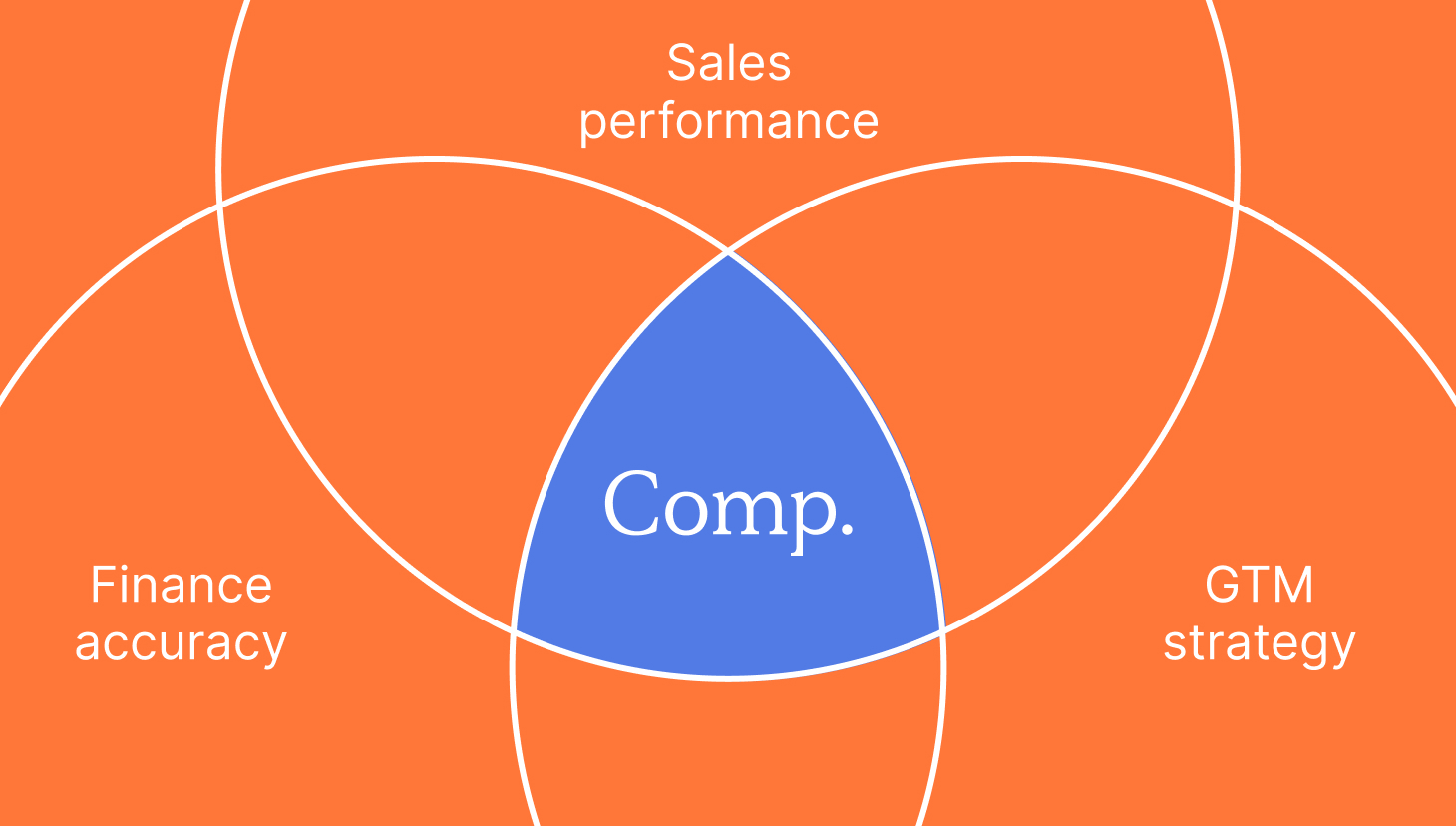
Compensation sits at the intersection of sales performance, Finance accuracy, and Go-to-market (GTM) strategy, aligning sales rep behavior with company objectives to reward performance, drive revenue, and ensure budgetary control.

By contrast, fragmented compensation ownership carries risks, including misaligned incentives, shadow accounting, and commission disputes arising from complexity or errors.

For instance, a QuotaPath report found that 78% of revenue leaders said their sales reps struggle to understand their compensation plans. Consequently, 60% of reps take 3 to 6 months to fully understand how they earn commissions under their compensation plan.

RevOps can avoid these issues by owning a “single source of truth” for sales compensation, providing all stakeholders with a shared data source. This boosts transparency, accuracy, and alignment throughout the sales compensation process.

Use our AI Revenue Strategist

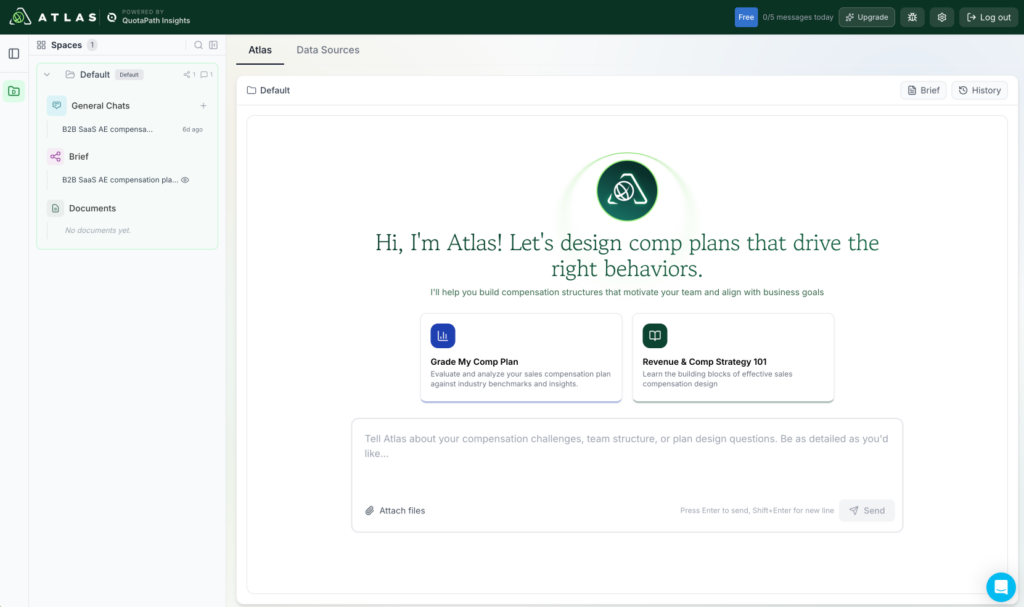
Build, test and measure your compensation strategy with QuotaPath’s AI Revenue Strategist, Atlas.

Enter Atlas

What Revops Actually Manages Across The Comp Lifecycle

Clearly, there are benefits to RevOps owning compensation, including establishing a reiterative process that better aligns with organizational objectives and drives greater revenue. But what exactly does sales compensation management by RevOps entail?

  • Plan design: RevOps data-driven incentive design process uses CRM insights, historical sales performance data, and financial modeling to create plans that align sales behaviors with company growth objectives.
  • Quota modeling: Scenario modeling and territory planning ensure RevOps quota setting is realistic, balanced, and aligned with company revenue goals.
  • Rollout: Creating clear documentation and ensuring proper enablement is overseen by RevOps during sales comp plan rollout to ensure salespeople understand and trust the new plan.
  • Real-time tracking: RevOps enforces CRM data integrity and uses dashboards to monitor KPIs, customer journey, and revenue performance. This enables them to track comp plan performance to motivate the right behaviors to drive business goal attainment.
  • Payout reconciliation: RevOps creates financial alignment by comparing compensation with money received to prevent overpayments and ensure profitability.

How Revops Should Build a Sales Compensation Plan

Now that you know what RevOps manages throughout the compensation lifecycle, let’s look more closely at the RevOps compensation plan design process.

Tie plan design to business goals first

Start by defining GTM priorities aligned with organizational objectives. These priorities translate business goals into sales activities that drive goal attainment. For example, new logo acquisition to drive revenue growth or market expansion; expansion revenue to support revenue growth from existing customers; and multi-year deals to increase ARR or reduce CAC.

Once you’ve determined your priorities, you should reinforce these goals with incentives that reward desired behaviors. Reps will naturally focus on prospects and deals that boost their earnings, motivating them to support the attainment of business objectives.

Define roles and what each one controls

Ensure your plan drives the right behaviors, remains fair, and aligns with organizational objectives by clearly defining roles and the scope of control they have. Sales Development Reps (SDRs) generate new business and book meetings for Account Executives (AEs) through activities such as cold calling, emailing, and social selling. SDRs are paid based on their completed activities, including meetings booked, qualified leads (SQLs), and pipeline created.

Account Executives (AEs) manage the full sales cycle from discovery through signing and are paid based on revenue targets. Customer Success (CS) is responsible for helping customers maximize value from their use of products or services. CS is rewarded for customer retention and growth through increased revenue.

Set OTE and quota using real math

With an understanding of key revenue team roles, you’re ready to set On-Target Earnings (OTE) and quota for each role. OTE represents a salesperson’s earning potential if they achieve 100% of quota. OTE is calculated by adding the base salary plus total incentives. To ensure each target is fair and attainable, it’s best to use a data-backed quota-setting process using historical data, market trends, and overall organizational sales objectives.

After setting quotas and calculating OTEs, use the quota-to-OTE ratio to confirm the fairness and efficacy of a rep’s pay plan to motivate desired behaviors. This ratio is calculated by dividing a rep’s quota by their average monthly on-target earnings. According to a SaaStr survey, a sales rep’s quota should be 3x to 5x their OTE.

Example:

  • $100K OTE
  • 50/50 split → $50K base / $50K variable
  • 5x quota ratio → $250K quota

Choose your commission structure

Now it’s time to set the rules for the incentive portion of the compensation plan, called a commission structure. The commission structure details what, when, and how reps get rewarded. There are three popular commission structures to choose from.

Flat rate pays a fixed value reward for every deal closed. A tiered commission structure increases based on milestones such as quota, and is also known as multiple rates, accelerators, escalators, or multipliers. A revenue-based commission structure pays reps a fixed percentage of total sales revenue generated and is often used to drive top-line sales figures rather than profitability.

While a flat rate is best for high-volume, low-cost sales or early-stage businesses with consistent pricing, revenue-based commission structures are best for high or consistent-margin products, and both drive volume and offer simplicity. Tiered commission structures, by contrast, are intended to motivate and reward overperformance, but can be complex to manage for large teams.

Layer in accelerators, decelerators, and kickers

Add specific incentives to motivate sales reps’ behaviors that drive achievement of business objectives.

  • Accelerators → rewards overperformance with a bonus or incentive for exceeding a sales goal, such as 100% quota attainment. For example, 1.5x rate after 100% attainment.
  • Decelerators → protect downside by reducing a rep’s commission rate until they hit quota, or on less profitable deals. For example, if the standard rate is 10%, the decelerator would be 8% if the deal falls outside of the ideal customer profile.
  • Kicker incentives → encourage short-term behavior shifts by offering an additional incentive or bonus to achieve a specific goal. For example, a bonus for multi-year deals.

Scaling with compensation software

Incentive compensation management (ICM) software is a tool that simplifies the design, implementation, and management of sales compensation plans. It eliminates manual processes through automation and real-time visibility enabled by sales tech stack integration, resulting in reduced admin time, increased payout accuracy, building rep trust, and enabling operational scalability.

Sales Compensation Mistakes RevOps Teams Make

Now that you know you should build a sales compensation plan, remember to avoid the following errors.

  • Overcomplicating plans: If reps cannot easily explain the plan back to you, it indicates there are too many components and that reps are unsure what to focus on.
  • Ignoring CRM data integrity: Failure to clean up CRM data inconsistencies, terms, dates, and stages results in inaccurate commission payouts, revenue loss, rep frustration, and time-consuming commission dispute resolution challenges.
  • Not modeling scenarios: Untested compensation plans often lead to missed revenue goals, overpaid commissions, and rep turnover due to lack of trust.
  • Delayed payouts: Manual commission calculations often lead to errors, slow payouts, and increase reconciliation work for Finance, while frustrating reps and eroding trust.
  • Lack of transparency: If reps can track their earnings and their goal progress or understand how they earn, they are not motivated by their sales incentives and distrust how their payouts are calculated, increasing shadow accounting risk.
Streamline commissions for your RevOps, Finance, and Sales teams

Design, track, and manage variable incentives with QuotaPath. Give your RevOps, finance, and sales teams transparency into sales compensation.

Talk to Sales

FAQ’s to RevOps leaders’ practical concerns

What parts of sales compensation should RevOps own vs. finance?

RevOps should own the design, tracking, and communication of sales compensation in collaboration with Finance, which owns approvals, compliance, and payouts.

How does RevOps set quotas without historical data at early-stage companies?

RevOps uses benchmarks, scenario modeling, and iterative adjustments to set quotas for early-stage companies without historical data.

What should RevOps do when reps dispute commission payouts?

RevOps should create an escalation path for when reps dispute commission payouts. Document the plan clearly at rollout to help reps understand how they earn commissions. Using real-time dashboards, such as those in QuotaPath, reduces disputes proactively by serving as a single source of truth. This visibility provides reps with clarity and keeps everyone on the same page.

How does RevOps handle comp plan changes mid-fiscal year without breaking trust?

To avoid breaking rep trust when making comp plan changes mid-fiscal year, RevOps should communicate early and clearly, avoid retroactive changes, and provide visibility into how the plan changes impact rep earnings.

Schedule a demo to see how QuotaPath streamlines RevOps sales compensation management.

Introducing Atlas: Your AI Revenue Strategist

atlas quotapath ai comp consultant

Every company gets exactly the behavior it pays for. Atlas helps you make sure it’s the right one.

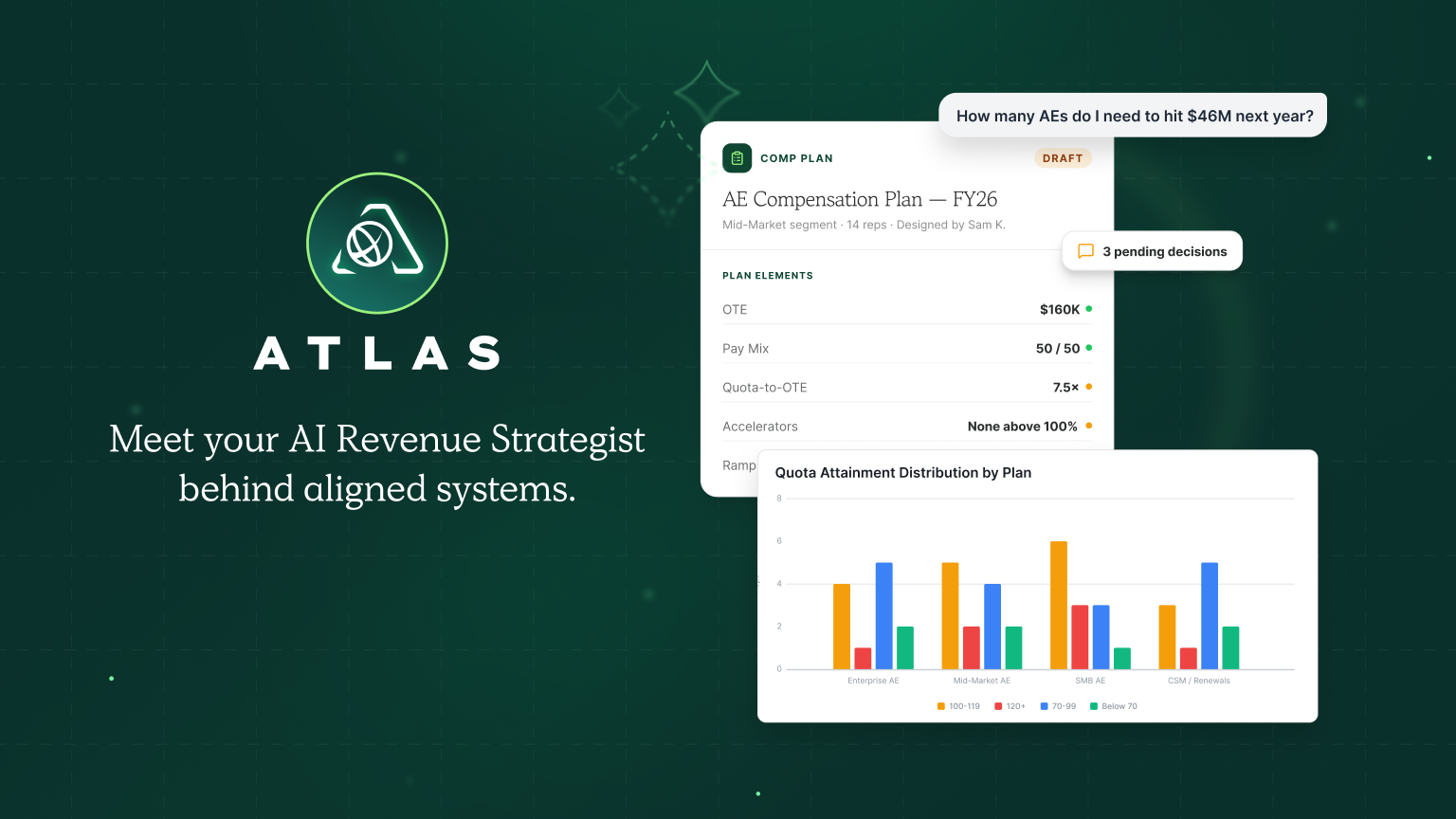
Today, we’re thrilled to announce the full launch of Atlas, our AI Revenue Strategist, powered by proprietary QuotaPath data and tens of thousands of comp plans.

Atlas acts as a comp expert and GTM consultant on demand,  answering whether your comp plans are driving the right behavior and whether your GTM is built to hit the number.

For years, QuotaPath has helped you run commissions accurately and efficiently through automation, with the end-user in mind. But running commissions is only part of the equation. The bigger challenge is in connecting your compensation plans to your GTM motion and designing both to drive the outcomes your business needs.

We built Atlas to help you validate, stress-test, and align your compensation plans to business goals while modeling the GTM strategy required to hit your number.

“From day ONE, QuotaPath’s vision has been to help leaders align company objectives to incentives in order to drive the right behavior,” said Co-founder and CEO AJ Bruno. “We have eight years of data, history, and experience to back the release of our AI Revenue Strategist product, Atlas, and I couldn’t be more thrilled to dynamically help our customers navigate the complexities of their variable comp plans.”

The problem: Most Comp Plans Are Built on Guesswork

If you’ve ever built or adjusted a comp plan, you’ve likely asked:

  • Are we driving the right behaviors?
  • Are we overpaying or underpaying?
  • Will this plan actually achieve our goals?
  • Is our GTM built to hit our number?

The reality is that most teams don’t get clear answers up front.

Instead, they find out after rollout, when the impact on performance, cost, and morale is already felt.

And you’re not alone. We found that nearly 40% of revenue leaders report struggling with misaligned incentives.

Meet Atlas: From Guesswork to Confidence

Atlas changes how compensation planning works.

Built on QuotaPath’s proprietary data, Atlas gives you the ability to design, test, and validate comp plans before they impact your business and model the GTM strategy required to hit your number.

Instead of reacting to problems, you can prevent them.

ai revenue strategist and ai comp consultant

What you can do with Atlas

With Atlas, you can:

  • Validate your plans against benchmarks and best practices: Compare your compensation strategy against benchmarks and best practices—so you know what “good” looks like.
  • Stress-test scenarios before rollout: Model different scenarios to understand the financial and behavioral impacts of your plans.
  • Align incentives with business goals: Design comp plans based on your company objectives (not opinions).
  • Connect comp plans to your broader GTM motion: See if your plan is logically built to support your GTM goals.
  • Get instant, trusted performance insights: Answer questions about team performance quickly, with data you can trust.

Bring RevOps, Finance, and Sales into one shared model, and bid adieu to your spreadsheets and scattered docs.

Built for How Modern Revenue Teams Operate

Using Atlas, you can begin to use comp plans as a strategic lever and collaboratively with your leadership team.

  • RevOps gets faster, more reliable planning
  • Finance gets visibility into cost and risk
  • Sales leaders get clarity on performance and behavior

All powered by the commission and performance data you already trust in QuotaPath.

Streamline commissions for your RevOps, Finance, and Sales teams

Design, track, and manage variable incentives with QuotaPath. Give your RevOps, finance, and sales teams transparency into sales compensation.

Talk to Sales

From execution → strategy

QuotaPath executes your commissions. Atlas makes sure they’re worth executing in the first place.

Get started with Atlas

Atlas is now available. Try it for free here.

What Finance and RevOps Lose by Waiting to Ditch Commission Spreadsheets

commission spreadsheets

Everyone is automating everything to streamline operations and increase productivity. Companies invest in systems such as CRM, payroll, finance systems, and reporting tools, yet commissions often remain manual.

We’ve found that 70% of organizations still use spreadsheets for commissions. Commission management often gets delayed because it’s “good enough for now.” Companies also put off automating commissions due to fear of implementation work, a lack of clean documentation, or a CRM structure.

Teams don’t usually wake up and decide they love spreadsheets. They inherit them, patch them, and keep pushing modernization until later. Meanwhile, risk compounds quietly.

In a recent webinar, we discussed the value of compensation automation with the Head of Finance and Operations at Hona, Jordan Rupp; the Sr. Sales Compensation Manager at Rippling, Jose Rodriguez; and the CRO at QuotaPath, Ryan Milligan.

This post will include their thoughts and quantify what Finance and RevOps lose by waiting to switch from spreadsheets to sales compensation automation.

webinar rippling

Webinar: How RevOps & Finance Are Modernizing Comp

Join QuotaPath, Rippling, and Hona to learn how top companies automate compensation workflows from calculation to payroll.

Watch Recording

The Cost of Waiting Starts with Accuracy

Manual systems can “work” until a single bad cycle causes real damage. Reps lose confidence in the accuracy of their commission payments, potentially leading to rep turnover.

Spreadsheet errors are not edge cases

Manual compensation processes result in errors ranging from 3% to 8% of total incentive payouts. Formula errors, version control issues, manual overrides, disconnected data sources, and handoffs between systems are common causes of inaccurate payout calculations. So, it’s not surprising that these errors occur.

“Calculating commission is such a high-risk, low-reward activity,” Ryan said. “A rep never says thank you for doing the math right, but they definitely get annoyed when you do the math wrong.”

Payroll mistakes carry outsized consequences

“There are no accounting emergencies unless it has to do with payroll,” said Amy Walker.

  •  Commission payouts are emotionally charged because they are tied to personal income.
  • Errors create immediate escalation as reps initiate dispute resolution.
  • Payroll-related mistakes damage credibility faster than many other accounting mistakes, causing reps to lose confidence and trust in the accuracy of their payouts.

“I’ve seen orgs lose top reps by messing up their commissions over and over again,” said Ryan. This is why commission should be treated with the same seriousness as payroll operations, not like a side spreadsheet Finance fixes at month-end.

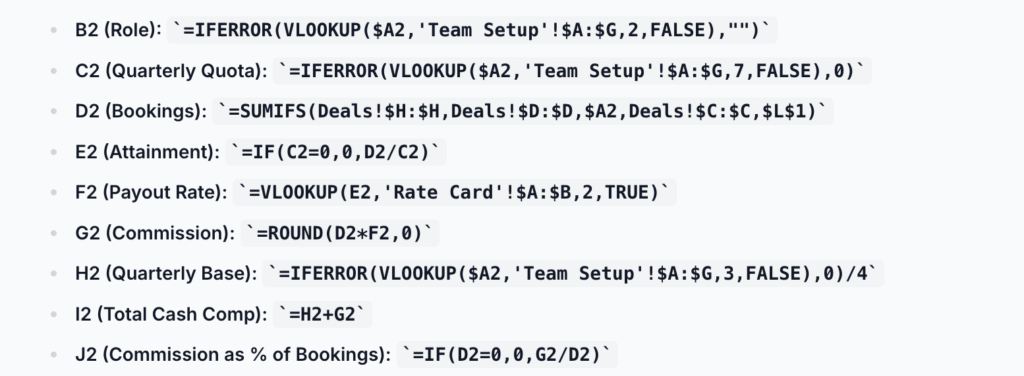
commission spreadsheets formulas
Sample commission spreadsheets formulas

What Finance Loses by Staying in Spreadsheets

Beyond the administrative burden of spreadsheets, Finance loses visibility, confidence, and speed by postponing sales compensation automation.

Less visibility into commission expense

Reliable financials depend on reliable operational inputs. When compensation data lives in spreadsheets, visibility into accruals, real-time payout liability, and plan performance and payout patterns is limited. If compensation data is messy, downstream planning is weaker.

Even routine activities, like preparing for board and planning conversations, are slower because data must be cleaned and reconciled first, delaying insights and reducing confidence in the numbers being presented.

More audit and compliance risk

Commissions do not live in isolation. They connect to close processes, expense recognition, and financial controls. However, sticking with manual commission processes results in a weak audit trail and inconsistent documentation. Signoff and reconciliation, often completed via email, is harder. Consequently, spreadsheet-based approvals are difficult to defend and review later.

“If your bookkeeping isn’t right, the rest of it’s not right,” said Amy Walker. Messy data and documentation increase audit and compliance risk.

Slower close and more last-minute anxiety

Emotionally draining manual reconciliations mean more time spent checking formulas and correcting disputes in hopes of catching errors before submitting commission calculations for payroll. It’s scary to rely more on specific people who “know the spreadsheet.” And if they aren’t available, payroll could be delayed, further raising the payroll timing pressure.

“The mistakes in these processes typically happen when there’s some kind of handoff,” said Jordan. Regardless of how hard you try, the handoff between commission calculation and payroll is where risk often peaks.

What RevOps Loses by Staying Manual

Finance isn’t the only one affected by manual commission processes. RevOps teams are rarely hired to babysit spreadsheets, yet too much of their time goes to that.

Time gets consumed by maintenance, not strategy

Manual commission management is “very difficult,” said Jose. Pulling data, checking logic, handling disputes, answering “how did you calculate this?” questions, and updating formulas for plan changes become more complex as teams grow. “Large team size and operational complexity made automation an immediate need,” said Jose.

Less time for modeling and forecasting

For leaders trying to support a growing sales team, it can be easy to automatically think of hiring another staff member based on invoice volume and closed-won deals. However, manual commission systems keep teams reactive instead of strategic.

Focus on systems to address processes first, before adding staff to handle that process. This frees up time for more strategic measures such as scenario modeling, quota planning, territory strategy, GTM experimentation, and incentive alignment. The result is improved productivity and profitability, while reducing stress and anxiety.

Slower comp plan iteration

The goal is getting to the point where you “have the comp plan drive the behavior you want, to close better revenue for the business,” said Ryan. This process requires consistent review and adjustments based on performance data and feedback.

However, staying with manual commission processes makes it hard to test new incentives and align comp with changing revenue priorities to drive desired behaviors and organizational objectives. Instead, plan changes often feel risky because every spreadsheet edit introduces a new risk: either blowing the budget or not incentivizing reps sufficiently.

The Trust Cost Is Often Bigger Than the Time Cost

Compensation is emotional, and manual processes create uncertainty that spreads quickly. Reps want visibility into how they are paid. When Rippling’s reps were finally able to see their earnings daily, it was evident that visibility was something reps had wanted “for a very long time,” said Jose.

If reps cannot see the math, they build shadow calculations, disputes become common, and confidence in Finance and RevOps drops. “The last thing you want is your sales team to not have confidence in you as their business partner,” said Jordan. If you screw that up, it is difficult to overcome.

Trust is not built only by being accurate. Trust is built through transparency, timeliness, and consistency. “I don’t want reps wasting time coming and arguing with accounting and finance about how they’re being paid. I want them closing deals,” said Jordan.

Automation not only provides transparency and accuracy by modernizing compensation from a platform perspective, but it also modernizes compensation from a relationship perspective. It gets Finance, Sales, and RevOps on the same page and enables collaborative win-win communication that drives organizational results.

Automation Gives Teams More Than Time Back. It Gives Them Peace of Mind.

Teams often buy automation, thinking they are buying speed, but what they actually gain is confidence, control, and consistency.

“It was kind of like a breath of fresh air,” said Jordan. “I thought, ‘Oh, this will save us time.’ But I’ve realized, as we’ve used it, it’s really just getting more peace of mind.”

  • Fewer handoff errors: When Finance teams run their jobs-to-be-done through shared, connected processes, they eliminate the chances of errors that arise amid handoffs.
  • Cleaner payroll process: Integrations throughout the payroll process simplify it to a click.
  • Stronger confidence that what reps see is what they get paid: When reps can see what they earn as deals close, they stop shadow accounting and trust Finance and the accuracy of their paycheck.
  • Reduced anxiety for Finance and RevOps each cycle: Eliminating manual processes prevents the errors that made payroll so scary and stressful each time it was run.

Why the Best Time to Automate Is Earlier Than Most Teams Think

Companies often wait until there are too many reps, plans, exceptions, or disputes to automate sales compensation. However, rapid hiring compounds spreadsheet risk, making cleanup work harder. Undocumented comp plans are harder to automate later, too.

Although team size and complexity are forcing functions, they should not be the first trigger. “I think it should be day one,” said Jordan. Besides, automation is easier to adopt before complexity explodes.

The right time is not when spreadsheets fail publicly. By then, it’s too late because the damage has already been done, and reps have lost confidence in Finance and payroll accuracy. The right time is before spreadsheets become a hidden tax on growth. “The earlier you can set up a system to scale, the easier it is to actually scale in the way that you want,” said Ryan.

QuotaPath ROI Calculator

Calculate the potential return on investment for implementing QuotaPath in your organization.

Use Calculator

Commission Automation Is a Finance ROI Story

Companies automate CRM, payroll, financial systems, and reporting tools, yet commissions are often left in manual spreadsheets. Waiting until the costs and operational risk become visible only makes the transition harder.

Commission automation is ultimately a finance ROI decision. It reduces payout errors, improves audit readiness, speeds up close, and provides real-time visibility into commission expenses. At the same time, it frees RevOps to focus on modeling and forecasting, improves rep trust, and reduces friction across teams.

Finance and Sales do not need to operate as opposing sides. A well-structured compensation process aligns both teams around shared goals, creating better visibility, stronger collaboration, and more predictable business outcomes.

Streamline commissions for your RevOps, Finance, and Sales teams

Design, track, and manage variable incentives with QuotaPath. Give your RevOps, finance, and sales teams transparency into sales compensation.

Talk to Sales

Conclusion: The Cost of Waiting Is Higher Than the Cost of Change

Spreadsheets feel cheap until you measure what they are costing across the business. Commissions should not be the last mission-critical process left in spreadsheets. Every delayed automation decision has a hidden cost in trust, accuracy, and strategic focus. Modern teams should treat commission automation like core infrastructure, not a back-office afterthought. Schedule a demo to see how QuotaPath connects your pipeline to payroll in a single, automated workflow, giving you greater peace of mind.

SPIFs, Summer Slumps, and Science: How to Motivate Sales When Deals Slow Down

motivating sales summer slump

Summer slowdowns are real, but wouldn’t you know that they’re not just a pipeline problem. 

They’re an incentive design problem. 

When buying cycles stretch, the biggest risk is not always lost demand. Often, it loses momentum. Reps keep working, but the connection between effort and reward grows weaker. If the only meaningful payout sits at quarter-end, motivation can flatten right when managers need sharper execution.

The companies that maintain high productivity are usually the ones that shorten the feedback loop between effort and reward.

Instead of raising compensation costs across the board, they redirect a small amount of variable spend toward the specific behaviors most likely to preserve pipeline velocity.

Our latest blog shares ways to motivate sales reps ahead of the summer months. 

Key Takeaways

    • The best summer programs are targeted and temporary. A focused SPIF or micro-accelerator can support productivity without permanently inflating cost of sales

    • Summer slowdowns are predictable, not mysterious. Vacations, budget pauses, and fiscal timing all reduce deal velocity.

    • Short-term incentives work because they shorten the feedback loop. Small, visible wins can keep motivation up when larger deals take longer to close.

    • The best summer programs are targeted and temporary. A focused SPIF or micro-accelerator can support productivity without permanently inflating cost of sales

Why Seasonality Hits Saas in the Summer

Why summer? Well, summer softness tends to show up the same way across many SaaS motions, especially in mid-market and enterprise:

  • Buyer availability drops: Decision committees are harder to assemble when champions, finance stakeholders, or procurement teams are on vacation.
  • Budget timing gets messy: Mid-year re-forecasting, half-year planning, and fiscal boundaries can delay approvals even when deals are healthy.
  • Procurement and legal cycles stretch: The deal may still close, but not on the original timeline.
  • Rep psychology changes: When close dates slide, urgency fades. Teams can start treating the quarter like a waiting game instead of a production period.

That last point matters more than most teams admit. 

A summer slowdown becomes more expensive when it results in lower-quality activity, weaker follow-up, or less disciplined deal progression.

Grade Your Comp Plan

Get an immediate pulse on how your comp plan stacks up against your business goals and market benchmarks using our AI Revenue Strategist, Atlas.

Enter Atlas

Why Comp Matters More When Deals Take Longer

In a fast quarter, reps can rely on natural momentum. Meetings convert, deals move, and the standard comp plan does enough to keep energy high.

In a slow quarter, that changes. If rewards feel too far away, effort often shifts toward the minimum required activity rather than the highest-value behavior.

This is where compensation design becomes a management tool versus a payout mechanism.

A well-structured short-term incentive can restore line of sight between action and outcome. It gives reps a reason to push the deal forward now rather than waiting for the market to normalize.

That works because it aligns with a few simple behavioral principles:

  • Present bias: People respond more strongly to near-term rewards than delayed ones.
  • Goal-gradient effect: Effort tends to increase when a target feels close and achievable.
  • Visible reinforcement: Frequent progress signals keep motivation higher than vague end-of-quarter upside.

Simply put: If a rep sees that one more qualified meeting, one more multithreaded deal, or one more prepaid contract creates an immediate earnings impact, behavior changes faster.

What Successful Summer Incentives Actually Look Like

Now, let’s take a look at what this looks like in practice.

The best summer incentive structures are narrow, time-bound, and tied to a measurable business outcome.

Here are a few structures that tend to work well.

1. Weekly pipeline SPIFs

These reward very specific activities that improve deal quality and progression, such as:

  • qualified meetings held
  • next-step completion
  • stage progression with defined exit criteria
  • adding a buying committee stakeholder

Why it works:

– It creates immediate momentum in a period when closed revenue may take longer to materialize.

– It gives managers something concrete to coach against every week.

Finance tradeoff:

– This can be efficient if quality gates are tight.

– It becomes wasteful if “activity” is rewarded without clear definitions.

2. Micro-accelerators on late-summer bookings

A temporary rate bump for August or September bookings can help preserve urgency in a slow window.

Why it works:

– It reconnects effort to a near-term revenue outcome.

– It is more directly tied to bookings than generic activity contests.

Finance tradeoff:

– It is usually easier to justify because the payout stays linked to revenue.

– The main risk is pulling deals forward without improving total demand.

3. Multi-threading bonuses

This pays for actions that make deals more resilient during vacation season, such as:

  • securing finance participation
  • engaging legal early
  • adding executive sponsorship
  • confirming implementation stakeholders

Why it works:

– It addresses one of the real causes of summer slippage: incomplete buying groups.

– It improves forecast quality and conversion durability, not just activity volume.

Finance tradeoff:

– Lower risk than pure meeting-count contests.

– Strong choice when leadership wants better pipeline hygiene, not just more top-of-funnel noise.

4. Annual prepay or cash-collection kickers

If finance is focused on working capital, summer is a sensible time to reward faster cash behavior.

Why it works:

– It improves deal quality, not only booking speed.

– It supports both revenue timing and cash efficiency.

Finance tradeoff:

– Especially useful when the business wants to protect cash conversion, not just ARR optics.

 5. Team-based leaderboard payouts

A modest team prize tied to a shared target can add social energy during a slower period.

Why it works:

– It adds visibility and momentum.

– It can help maintain culture when individual close rates are uneven.

Finance tradeoff:

– Best used in moderation.

– Works better when the rules are simple, and the payout pool is capped.

The Behavioral Economics Behind “Short-Term Wins”

Short-term incentives make progress immediately tangible.

A small SPIF can outperform a larger theoretical quarter-end payout if it is:

  • easy to understand
  • visible day to day
  • achievable within a short window
  • clearly connected to valuable behavior

That is why gamified payout mechanics can be effective when used carefully. Leaderboards, sprint targets, and milestone-based rewards do not have to feel gimmicky. At their best, they create clarity. They tell reps what matters now, how close they are, and what the next win is worth.

The real objective is shortened feedback loops.

spif examples

Additional Reading

Q2 SPIF Examples & Best Practices (By Role

Read Blog

What Good Summer Comp Design Has In Common

Just remember that not every seasonal incentive works. The strongest ones share a few design traits:

  • Short duration: Think 4 to 8 weeks, not a permanent plan change.
  • Tight scope: Focus on one or two behaviors, not six.
  • Visible progress: Reps should know where they stand without waiting for a month-end report.
  • Capped cost: Finance should know the maximum exposure before launch.
  • Quality controls: If the business is paying for activity, it should define what “qualified” means.

The best summer SPIFs do not pay more for everything. They pay more for the few actions most likely to protect conversion and revenue timing.

Why Visibility Matters As Much As The Payout

A summer incentive only works if reps can actually feel it working.

That is where dashboards and payout visibility matter. If the plan exists in a PDF and the earnings impact shows up weeks later, much of the motivational value is lost. But if reps can see progress in real time, the incentive becomes immediate and behavioral.

That visibility matters for two reasons:

  • For Reps: It turns compensation from an abstract formula into a concrete signal. One more action has a visible payoff.
  • For Managers: It creates cleaner coaching. Instead of saying “push harder,” they can say “you are one qualified next step away from the weekly target.”

This is also where QuotaPath fits naturally into the conversation. 

When teams have clear dashboards and faster visibility into progress and earnings, short-term incentives become more effective. The motivational lift does not come only from the dollar amount. It comes from seeing the connection between action, progress, and payout.

Summer Incentives Should Sharpen Spend, Not Expand It

The common mistake is treating a slow quarter as a reason to spend more on compensation overall. But a better approach we’ve found is to treat it as a capital allocation decision inside the variable plan.

Instead of broadly increasing rates, companies can use a small, temporary portion of variable spend to reinforce the handful of actions most likely to preserve:

  • pipeline movement
  • booking urgency
  • cash efficiency
  • forecast reliability

That is a better trade for finance, and usually a better experience for sales teams too.

Streamline commissions for your RevOps, Finance, and Sales teams

Design, track, and manage variable incentives with QuotaPath. Give your RevOps, finance, and sales teams transparency into sales compensation.

Talk to Sales

Final Thoughts

Seasonality is part of SaaS. Slower summers do not mean your team is broken, nor do they automatically call for bigger comp plans.

What they do call for is a sharper design.

When buyers move more slowly, the companies that hold productivity best are usually the ones that shorten the distance between effort and reward. A focused SPIF, a temporary accelerator, or a visible sprint target can do more for summer execution than another round of generic pressure from management.

Smart comp design cannot eliminate seasonality. But it can keep a predictable slowdown from becoming a performance slide.

Need immediate feedback to see how your comp plan is performing? Run it through our AI Revenue Strategist Atlas for a quick grade. 

Why This Company Left Spiff for QuotaPath (and What Happened Next)

quotapath vs spiff customer

What happens when your commission tool becomes harder to manage than the commissions themselves?

For many RevOps teams, what starts as a system meant to bring structure quickly turns into a source of friction. Instead of saving time, teams find themselves troubleshooting errors, fielding rep questions, and relying on technical support just to make basic updates.

That’s exactly where AirDNA found itself.

As a global data company in the short-term rental space, AirDNA operates with a distributed go-to-market team and increasingly complex compensation structures. But their previous tool couldn’t keep up.

So they made a switch.

This is the story of how AirDNA replaced Spiff with QuotaPath—and turned commissions into a system their RevOps, Finance, and Sales teams actually trust.

Key Takeaways

  • Complexity in commission tools often creates more work, not less
  • Ease of use and support can outweigh feature depth
  • Visibility into earnings builds trust across Sales and Finance
  • Flexibility is critical when comp plans evolve mid-year

The Breaking Point: When the Tool Becomes the Problem

When Alejandra Gutierrez, Revenue Operations Associate at AirDNA, stepped into her role, one issue became obvious almost immediately: commissions were taking too much time.

It wasn’t just the calculations; it was everything around them.

“We were spending a lot of time fixing errors, answering questions from the team, and trying to understand the tool,” she explained.

Even simple updates became time-intensive. Every change required a full review of commission structures, and the team couldn’t make adjustments on their own.

Instead, they were dependent on external support.

“You had to request a technical person to make the changes for you,” Alejandra said.

That combination (complexity, lack of autonomy, and constant back-and-forth) created a system that simply couldn’t scale.

Evaluating Alternatives: Simplicity Without Tradeoffs

Once the team decided to move on, the goal wasn’t just to replace their existing tool; it was to fix what had been broken.

They needed something intuitive, flexible, and easy to manage internally.

QuotaPath stood out right away.

“It was really intuitive, really easy to understand… from the first moment,” Alejandra said.

But usability wasn’t the only differentiator.

During the trial period, the level of support helped reinforce their decision.

“We were receiving quick videos with the solution and the steps… it was really easy for us to understand the tool,” she added.

That experience reframed the evaluation process to focus on whether the team could actually own and operate the system themselves.

Implementation: Faster Than Expected, Even With Complexity

After making the decision, AirDNA moved quickly.

Despite managing multiple business units, evolving comp plans, and historical data, implementation took just about a month and a half.

That speed wasn’t expected.

“We expected maybe three months… and in the end, we did it super quick,” Alejandra said.

Even more importantly, the platform proved flexible during implementation.

At the time, their 2026 commission plans weren’t even fully finalized.

That didn’t slow things down.

“All the use cases that we have… it was always doable,” she said.

Instead of delaying progress, the team built, adjusted, and refined plans in real time.

Managing Complexity Without the Fear

As implementation progressed, one of the biggest concerns started to fade: whether the system could actually handle their complexity.

AirDNA’s comp structure includes multiple teams, business units, and layered incentives.

Initially, there was hesitation.

“At the beginning, we were a little bit scared… if this is going to work or not,” Alejandra shared.

But that concern didn’t last long.

“It was super easy… now we are super confident. We don’t have any errors,” she said.

Three months in, the team was operating confidently.

HubSpot Integration: From Data Sync to Full Visibility

With HubSpot as their CRM, an integration was critical.

QuotaPath allowed AirDNA to map fields across different plan components, supporting their varied commission logic without limitations.

“I really like that part of the HubSpot integration… we have all the possibilities,” Alejandra said.

But the real impact showed up in visibility.

Instead of just seeing final commission totals, both RevOps and reps could now access detailed, real-time data.

“It helps us have more visibility… not only the final earning number,” she explained.

That shift, from outputs to full transparency, changed how commissions were understood across the organization.

sales commissions software
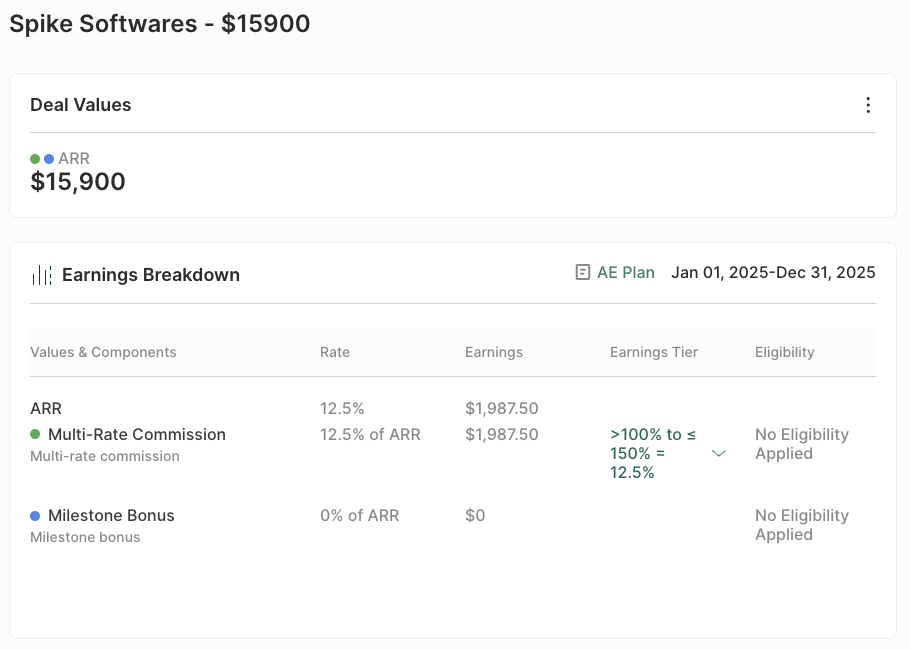
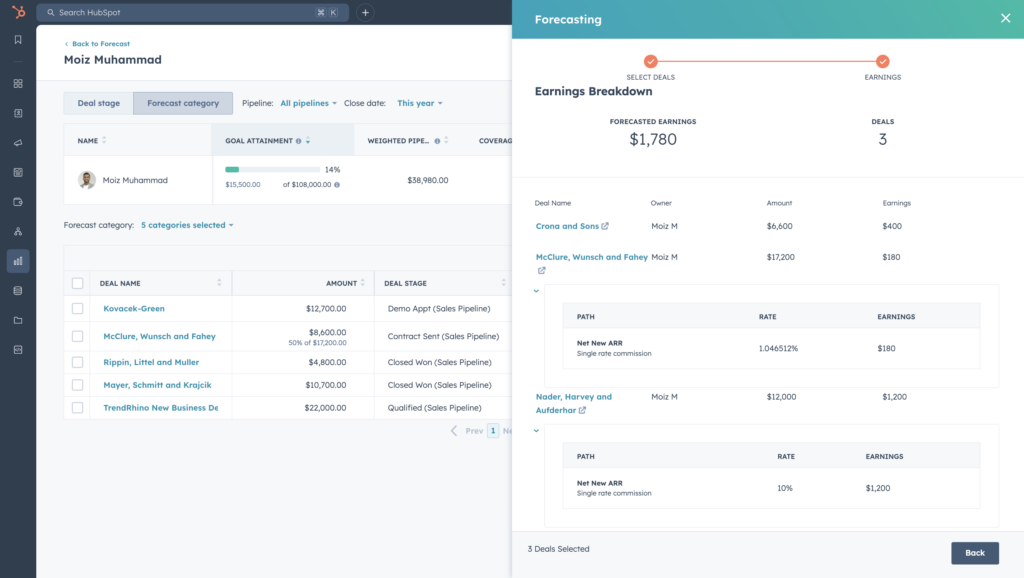
Commissio breakdown by deal as visible in the rep view via QuotaPath.

Rep Experience: Fewer Questions, More Clarity

In addition to supporting RevOps, QuotaPath transformed the rep experience.

Sales reps can now:

  • See how each component contributes to their earnings
  • Forecast commissions before closing deals
  • Access compensation plans directly within the platform

“This is something that is really visual… we didn’t have it before,” Alejandra said.

The result is fewer questions, less confusion, and more trust in the numbers.

Instead of relying on RevOps for answers, reps can find what they need themselves.

Adapting Compensation Plans Without Risk

As with most growing companies, AirDNA’s comp plans don’t stay static.

Quotas change. Goals shift. Incentives evolve.

Previously, those updates were painful and risky.

Now, they’re simple.

“It’s pretty simple… just go to the plan, adjust it, and update it,” Alejandra said.

Even more importantly, historical data remains protected.

“We can block past data… and make changes moving forward. That gave us confidence,” she explained.

That ability, to evolve plans without breaking what’s already been calculated, removed a major source of hesitation.

The Bigger Impact: From Maintenance to Momentum

Before QuotaPath, commissions at AirDNA were reactive.

Time was spent fixing issues, answering questions, and managing a tool that required constant attention.

Now, that time is redirected.

“It helped us focus our time more efficiently… not spending time creating plans or fixing issues,” Alejandra said.

Across RevOps, Finance, and Sales, the system has shifted from a bottleneck to a foundation.

One that’s accurate, visible, and scalable.

Streamline commissions for your RevOps, Finance, and Sales teams

Design, track, and manage variable incentives with QuotaPath. Give your RevOps, finance, and sales teams transparency into sales compensation.

Talk to Sales

The Takeaway: Simplicity Enables Scale

AirDNA’s story highlights something many teams overlook:

Complex commission structures don’t require complex tools.

They require clarity, flexibility, and control.

By replacing a system that slowed them down with one they could actually operate, AirDNA didn’t just improve commissions—they unlocked time, confidence, and alignment across teams.

And just a few months in, the result is already clear.

“It’s really self-explanatory… we don’t receive a lot of questions… everything is working pretty well,” Alejandra said.

For growing teams, that’s what scalable commission software should look like.

To learn more about QuotaPath, book time with our team here. 

Motivational Accelerator Plans: How to Design

motivational accelerator plans concept

Accelerators are widely used but poorly understood, often intended as a motivational lever without a clearly defined goal. Commission accelerators are tiered compensation structures where the commission rate increases at pre-defined thresholds, such as quota. Companies use accelerators to motivate overperformance and reward top performers with strong upside to boost rep retention.

Poorly designed accelerators fail to motivate reps because they are too complex, tied to unrealistic thresholds, or poorly defined. Reps, unable to see the relationship between effort and payoff, end up feeling like they can’t control their earnings. This reduces their trust in the plan.

However, visibility into earnings increases rep performance. “Visibility into their earnings has changed what the reps are pushing for…showing your reps how much more they can make on longer contracts changed how they sell,” said Andre King, Director of Sales, Rootly.

accelerators in QuotaPath
Implement and track accelerators in QuotaPath.

What Are Motivational Accelerators?

Accelerators are a tiered payout structure in a compensation model, designed to incentivize sales overperformance. Commission accelerators are sales incentives that reward a salesperson for hitting a designated goal, such as quota attainment. These incentives trigger an increased payout rate once reps exceed a quota threshold. 

Accelerators are common in SaaS compensation models to motivate sales reps to exceed quotas, inspire top performers, and drive rapid revenue growth, which is essential to the SaaS business model.

Simple formula example:

  • Base rate: 10%
  • Accelerator: 1.5x after 100%
  • Rep closing $50K above quota earns higher payout

Do Accelerators Actually Motivate Reps?

The short answer: Yes, accelerators motivate reps. But how do accelerators change rep selling behavior?

We’ve found that reps push harder once they cross 80-90% attainment. Visibility into the next tier increases deal urgency as they approach an accelerator threshold. According to research by Harvard Business School, overachievement rewards, such as accelerators, are effective for keeping high-performing salespeople motivated beyond their quotas and throughout the year.

A clear payout upside in a well-structured plan influences deal prioritization by motivating reps to select deals with higher commission potential. Plus, visibility has been found to reduce mental stress, enabling reps to sell more effectively.

However, accelerators motivate reps only when tiers feel achievable and visible.

How to Design a Motivational Accelerator Plan

Understanding what an accelerator does and which behaviors it influences is foundational, but it takes a well-designed accelerator plan to achieve your desired outcomes. Let’s look at how to create a sales compensation plan with a step-by-step design process.

Step 1: Define Your Comp Plan Baseline

Accelerators only work if the baseline compensation structure is correct, providing financial stability to reps until they achieve the first threshold. The accelerator tiers motivate continuous revenue growth.

ComponentExample
OTE$200,000
Pay Mix50/50
Quota$500,000
Base Commission Rate10%

On-Target Earnings (OTE), quota, and payout are closely related. OTE represents a rep’s total potential compensation based on quota attainment, including payouts for rewards like a variable pay accelerator.

Lock In OTE and Pay Mix First

The first step in defining your comp plan baseline is establishing your OTE and pay mix. OTE is the total annual earnings a salesperson can expect if they meet or exceed their goals. This figure includes base salary, commission, and incentive payouts. Pay mix designates the percentages of base salary and variable pay that constitute the OTE.

Example:

$200K OTE
50/50 pay mix
$500K quota

→ base rate = 10%

Key insight: Accelerators do not fix a poorly designed compensation plan.

Choose the Right Quota Period

A quota period is a designated timeframe, typically monthly, quarterly, or annual, during which a salesperson or team must achieve their sales targets to earn commissions within a sales compensation plan.

This timeframe is commonly based on the sales cycle length, average sales price, and company stage, with quarterly being the most common. However, SaaStr recommends a monthly quota until $10m ARR, after which they recommend adjusting to quarterly.

The shorter, monthly quota cycle often employed by startups creates a sense of urgency for their reps but also increases payout volatility. By contrast, older, more established companies typically choose longer quota periods, offering more stable costs and slower motivational cycles.

Shorter Periods vs Longer PeriodsLonger periods
More unlock momentsMore stable costs
More payout volatilitySlower motivation cycles

Step 2: Decide What Behaviors You Want to Accelerate

Accelerators should reward the specific outcome that leadership cares about most.

Many plans default to total revenue because it’s easy to measure and directly influences growth. However, it may be more beneficial to leverage more focused metrics in accelerator compensation plans to drive strategic behaviors, improve profitability, and align sales activity with organizational objectives.

Revenue-Only vs Multi-Metric Accelerators

A revenue-only commission accelerator increases reps’ payout rate based solely on quota attainment, without factoring in other variables, making for simpler and easier modeling. For example, a rep earns 10% commission up to 100% of quota and 15% on all revenue above quota.

A multi-metric accelerator increases a rep’s commission rate based on multiple factors, such as revenue attainment and contract length, which encourages strategic selling. For example, a rep earns 10% commission up to 100% of quota, 15% on revenue above quota, and a 1.5x commission multiplier on multi-year contracts.

Adjust by Role

Accelerator structures differ by role based on KPIs and compensation mix.

Examples:

  • Account Executives: Revenue accelerators: 10% commission up to quota and 15% on all revenue above 100% attainment.
  • SDRs: Meeting or pipeline accelerators: $100 per qualified meeting, increasing to $150 per meeting after exceeding 120% of their monthly meeting target.
  • Account Managers: Expansion revenue accelerators: 8% on expansion revenue, increasing to 12% after surpassing their quarterly growth target.
  • Non-quota roles: 2x multiplier capped at 150%: a target bonus based on team performance, with a 2x multiplier applied for exceeding goals, capped at 150% of their target payout.


This begs the question: Should accelerator payouts be capped or uncapped? Capping a multi-rate commission plan, such as an accelerator, contradicts the intention of a tiered payout structure by limiting how much a rep can earn. This can be demotivating and encourage negative behaviors such as sandbagging.

Step 3: Build Your Tier Structure

Most SaaS organizations use 3-tier accelerator structures in sales compensation plans to motivate overperformance and optimize revenue growth. They generally design these sales commission structures with a higher payout rate once reps exceed 100% quota attainment.

Example:

AttainmentMultiplierEffective Commission
0-100%1x10%
100-120%1.25x12.5%
120%+1.5x15%

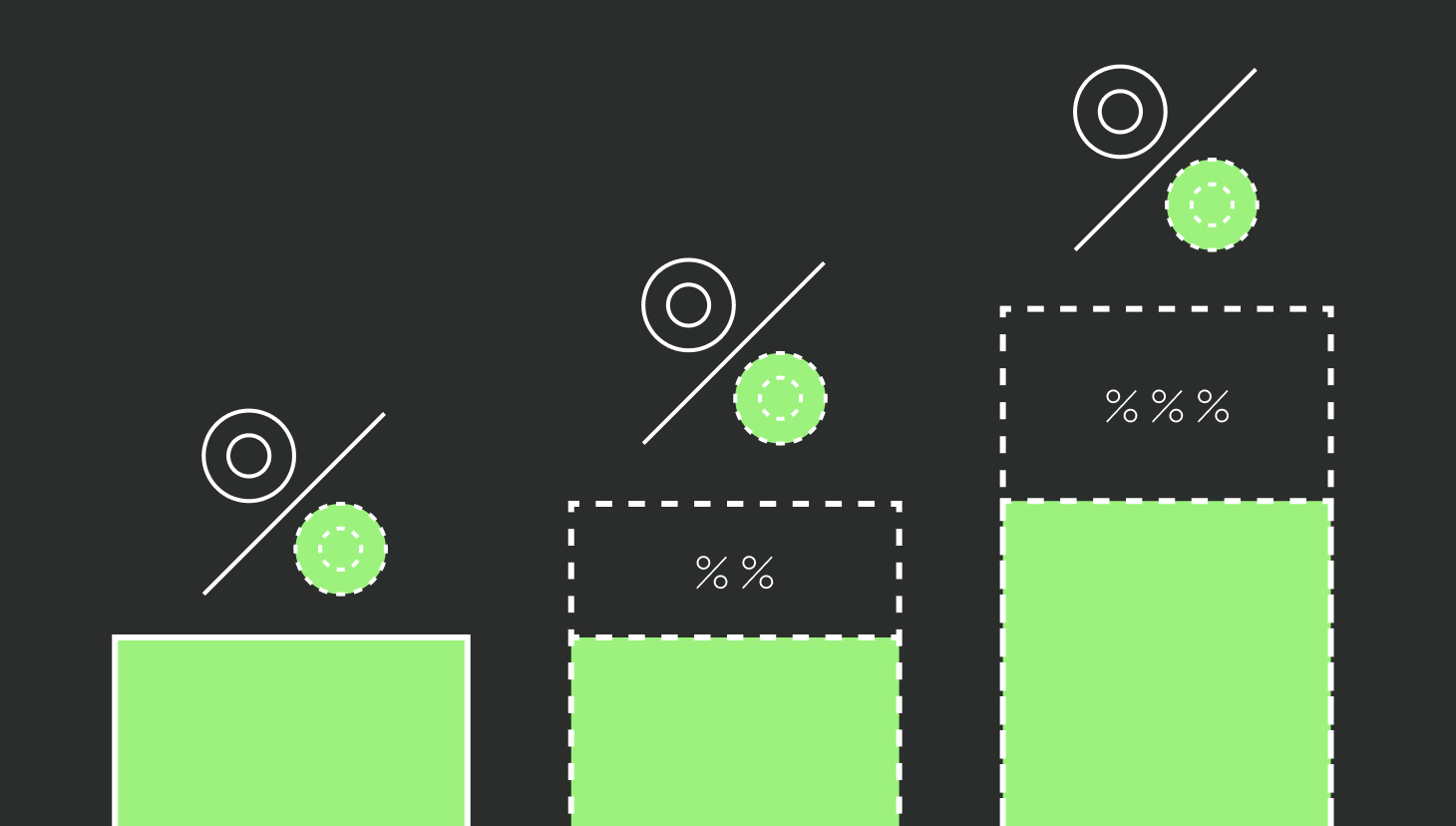
Tiered payout structures reinforce performance milestones by offering progressively higher commission rates as reps exceed defined incremental attainment bands. That’s the difference between single-rate and multi-tier accelerators. Instead of plateauing at a flat rate after hitting quota, tiered systems incentivize reps to push beyond their goals to achieve the next tier.

Pick an Accelerator Type: Linear vs Step vs Retroactive

There are three types of commission accelerators:

  • Linear: Gradual increase as each accelerator threshold is achieved. For instance, an increase of 1% at each threshold.
  • Step: Higher rate only after a specified threshold is met, such as quote attainment. Then the payout rate increases significantly. For instance, 10% for deals up to 100% of quota, then 15% commission rate for deals between 100-150% of quota, then a higher payout rate for 150% +
  • Retroactive: Higher rate applied to all revenue within a period once a specific threshold is reached

Set the Multiplier Without Breaking the Budget

Accelerator compensation plans commonly use commission multipliers ranging from 1.25x to 2x to dramatically boost sales rep payout rate once they exceed 100% quota attainment. Teams model cost impact by running scenarios using historical attainment data to limit budgetary risk. However, decelerators can also help offset aggressive accelerators.

Step 4: Stress-Test the Plan Before Launch

Now that you know how to design a sales accelerator plan, let’s take a final step before implementing: model payouts across the performance curve.

Model Payouts Across the Performance Curve

Attainment scenario modeling simulates various quota attainment levels to predict the impact on commission expenses, rep earnings, and total revenue.

AttainmentPayout
80%$80K
100%$100K
120%$130K
150%$180K

Modeling prevents runaway compensation costs, ensuring the plan is financially sustainable and motivating. Siloed data, manual formulas, version control, and a lack of transparency make running these scenarios in spreadsheets a high-risk, time-consuming, and error-prone process.

Common Design Mistakes

  • Confirm that your accelerator compensation plan doesn’t contain any of these common design flaws. Otherwise, your plan may backfire.
  • Unreachable accelerator thresholds damage trust, demotivate reps, and may cause high turnover
  • Too many attainment bands create unnecessary complexity, making the plan hard to understand and manage, while demotivating reps.
  • Tiers that reward only top performers disengage the majority of salespeople, encourage high-pressure sales tactics, decrease morale for those not hitting top tiers, and potentially cause burnout.
  • Overly complex payout math makes it difficult for reps to understand how they earn, leading to demotivation, reduced trust, and higher turnover.

Step 5: Roll Out and Give Reps Real-Time Visibility

Even the best accelerator structure fails if reps can’t see where they stand. Manual commission tracking breaks the connection between effort and reward that drives desired behaviors.

Relying on delayed reports, spreadsheets, or month-end calculations, reps don’t know how close they are to the next tier or what an extra deal is worth. Consequently, the urgency and motivation that the accelerators are intended to create never materialize.

Why Visibility Is the Multiplier on Your Multiplier

Visibility drives desired behaviors. Reps sell differently when they can see where they stand in relation to their targets, the next attainment threshold, and the reward. This visibility helps reps understand how they earn incentives and creates a motivational feedback loop. When reps can see their current attainment, they push to hit the next payout tier to maximize their earnings potential.

How QuotaPath Automates Accelerator Tracking

QuotaPath allows teams to build tiered plans with its AI-powered plan builder and simulate payouts using its plan performance modeling tool, without relying on manual, formula-heavy spreadsheets. By integrating directly with CRMs, QuotaPath automates commission calculations by syncing deal data and provides real-time earnings dashboards with clear visibility into earnings, pipeline, and quota attainment.

Streamline commissions for your RevOps, Finance, and Sales teams

Design, track, and manage variable incentives with QuotaPath. Give your RevOps, finance, and sales teams transparency into sales compensation.

Talk to Sales

Start with this Accelerator Plan Template

This template is a strong starting point for building your own motivational accelerator plan structure.

AttainmentMultiplierPayout
80%1x80% of target commission
100%1x100% of target commission
120%1.25150% of target commission
150%1.5x225% of target commission

Use this template to define attainment tiers and assign multipliers, then plug in your targets and commission rates to model how payouts scale with performance. From there, adjust thresholds and multipliers to align with your revenue goals, sales motion, and budget.

Use QuotaPath’s free sales compensation plan modeler to design and simulate accelerator plans before rollout.

Comp Metrics and Red Flags That Indicate a Change is Necessary

comp metrics

By mid-year, most finance and revenue leaders feel it before they can fully articulate it: The team is working, and strong pipeline exists. 

Deals are closing. Yet something is off.

The clearest signal is this: You’re getting activity (but not the kind of revenue the business actually needs).

Or more bluntly, if your composition of revenue (mix of deals) is wrong at mid-year, the comp plan is not neutral. Rather, it’s actively paying for the wrong outcome.

That’s because comps plans should shape behavior. 

And when the outputs don’t match company priorities, the issue falls with comp design.

Get More From Your Comp Plans

Use Atlas, our AI Revenue Strategist, to build, measure, and modify your comp structures.

Try Atlas

4 Metrics that Signal Need for Mid-year Changes

We’re not trying to scare you, though. So instead, let us help you determine if your comp plans need adjusting. Start with the business metric that matters most (retention, efficiency, growth quality), then work backward to the behaviors your comp plan is driving.

Here’s where to look: 

1. Revenue quality is lagging behind revenue volume

Revenue quality is the most common (and most overlooked) signal.

If bookings look “fine” on the surface but the underlying mix is weak, your plan is misaligned.

Watch for:

  • Low multi-year deal mix despite a push for retention
  • Weak ideal customer profile (ICP) penetration in new bookings
  • NRR / GRR by cohort showing stronger outcomes in specific segments—but comp not steering toward them
  • Expansion and renewal performance lagging because post-sale roles are paid for coverage, not outcomes

An example of this might look like:

  • ICP accounts retain at 110%+ NRR
  • Non-ICP accounts fall below 100%
  • But AEs are paid the same on both

2. Attainment distribution looks structurally broken

Then turn to attainment.

A healthy comp plan produces a usable spread of outcomes. When it doesn’t, you’re looking at a structural (not motivational) issue. 

Red flags:

  • Most reps are below threshold, with no one approaching accelerators
  • One or two outliers earn a disproportionate share of variable comp
  • Strong reps are stuck at 80–90% attainment
  • Payouts don’t align with expected OTE delivery

This is often tied to poor quota calibration.

As a benchmark, SaaS companies typically fall within these quota-to-OTE ranges:

  • Early-stage: 3x–4.5x
  • Mid-stage: 4x–5.5x
  • Scaled: ~5x

If your team sits materially outside these ranges, the issue is likely structural.

3. The company is overpaying for easier revenue motions

This next one is a classic H1 drift issue.

Over time, comp plans flatten, paying similar rates across motions with very different levels of effort and business value.

In most SaaS models, the expected hierarchy looks like:

  • New business: highest value (baseline = 100)
  • Expansion: ~50–60% of new business economics
  • Renewals: ~25–33%

When that hierarchy collapses, you’ll see:

  • Overspending on maintenance revenue
  • Under-incentivizing net-new growth
  • Reduced focus on harder, higher-value deals

The outcome? You pay more and get less strategic revenue.

Try QuotaPath for free

Try the most collaborative solution to manage, track and payout variable compensation. Calculate commissions and pay your team accurately, and on time.

Start Trial

4. Pipeline is growing, but not improving

You should also look at pipeline quality. More pipeline doesn’t always mean better pipeline.

For BDR and full-funnel teams, watch the conversion chain closely:

  • Meeting volume increases, but accepted pipeline stays flat
  • Accepted pipeline grows, but ICP rate declines
  • Coverage looks healthy, but win rates drop
  • Handoffs between BDR → AE → AM introduce leakage

This usually means that you’re paying for quantity before quality.

Quick wins for H2 vs. full redesigns

Still, not every problem requires a full rebuild.

The key is distinguishing between:

  • Behavioral misalignment (fixable mid-year)
  • Structural flaws (require full redesign)

Let’s take a look.

Quick wins (low risk, high impact)

These work mid-cycle because they adjust behavior without breaking trust.

1. Add targeted kickers

  • +2–4% for ICP, multi-year, or annual prepay
  • Best when incentives exist—but aren’t strong enough to matter

2. Tighten qualification gates

  • Example: BDR meetings only count if they convert to Stage 2
  • Improves quality without changing core economics

3. Introduce H2 overlays

  • Temporary Q3–Q4 bonuses tied to strategic priorities
  • Useful for testing behavior before a full redesign

4. Reweight scorecards

  • Example: shift AM comp from 80/20 renewal/expansion → 60/40
  • Aligns focus without changing total pay

5. Publish behavior dashboards (hint: Use QuotaPath)

Track monthly:

  • % ICP in new ARR
  • % multi-year deals
  • Accepted pipeline quality
  • Renewal performance by segment

If you’re not regularly inspecting behavior, the plan won’t stay effective.

Full redesigns (higher risk, higher impact)

These are necessary when the economics themselves are wrong, but they’re difficult to implement mid-year.

Typically better for a new fiscal cycle.

If the foundation is off, no amount of short-term incentives will fix it.

A Simple Mid-Year Decision Rule

So, where do you go from here? Use these below to help determine if your compensation strategy requires quick adjustments or a full redesign.

You likely need a quick win if:

  • Strategy is clear
  • The team understands it
  • But incentives aren’t strong enough to change behavior

You likely need a full redesign if:

  • Attainment is structurally broken
  • Economics are misaligned across roles or motions
  • You’re paying for outcomes you no longer value
Streamline commissions for your RevOps, Finance, and Sales teams

Design, track, and manage variable incentives with QuotaPath. Give your RevOps, finance, and sales teams transparency into sales compensation.

Talk to Sales

What a CRO and CFO should review (together)

Lastly, get your CRO and CFO in a room and have them align on these five cuts:

  1. Attainment distribution
  2. Quota-to-OTE by role
  3. Revenue mix (ICP, multi-year, product)
  4. NRR / GRR by cohort
  5. Payout concentration by motion

If those five tell conflicting stories, the comp plan isn’t aligned. And if it’s not aligned, it’s already driving the wrong behavior.

Need more assistance? Run your comp plan through our free Comp Plan Grader (powered by QuotaPath’s AI Revenue Strategist, Atlas) to check its alignment. 

How to Structure Variable Pay Programs in 2026

variable pay

Variable pay is one of the most widely used incentive structures across sales organizations and performance-driven teams. It is one of the most powerful tools companies use to motivate performance, drive revenue outcomes, and align compensation with business objectives. However, poorly structured variable compensation plans can create confusion, disputes, and misaligned performance incentives.

A well-structured variable pay plan directly links employee performance to measurable business outcomes. This blog will explain how to structure variable pay programs that are transparent, motivating, and scalable.

Key Takeaways

Structuring variable pay plans requires a clear compensation philosophy, well-defined performance metrics, and transparent payout structures that employees can easily understand.

  • Define your base salary vs variable pay mix
  • Align compensation metrics with company goals
  • Set realistic and measurable performance targets
  • Implement commission accelerators to reward overperformance
  • Ensure transparency through automation and real-time visibility

AI Revenue Strategist

Build, Test, and Improve Your Variable Pay Programs using our AI Revenue Strategist.

Try for Free

What Is Variable Pay?

Before structuring a plan, leaders must first understand variable compensation. Variable pay is compensation tied directly to performance outcomes rather than a fixed salary, and includes components such as:

  • Sales commissions: a fee or incentive paid to a sales rep for closing sales.
  • Performance bonuses: an amount of money earned based on hitting or exceeding specific goals, such as scheduling a designated number of meetings or demos.
  • Incentive compensation tied to KPIs: bonuses or commissions that reward employees for achieving specific, measurable goals such as quotas.
  • Revenue-based compensation plans: earnings based on a percentage of the revenue a sales rep generates, and directly aligns pay with top-line growth.

A variable pay structure differs from a fixed salary. A variable pay structure differs from a fixed salary. A fixed salary is consistent and unchanging. However, variable pay fluctuates based on performance, results, or company metrics.  It is commonly used in sales compensation plans to incentivize achieving specific goals while aligning employee behavior with business objectives.  

On-target earnings (OTE) is the total amount a sales rep can expect to earn annually if they meet or exceed their performance targets. This figure includes the rep’s base salary, commission, and other potential incentive payouts.

Example:
A SaaS account executive earning $120K OTE might have:

  • $60K base salary
  • $60K variable compensation tied to quota attainment

Why Variable Pay Matters for Your Business

Now that you understand what variable pay is, why is it important to businesses? Incentive compensation drives performance alignment and revenue growth by attracting and retaining high-performing talent and motivating sales behaviors that support company goals.

Attracting and Retaining Top Talent

Strong incentive plans help companies compete for top-tier candidates. “Bonuses and equity incentives can provide that extra layer of appeal for high-performing individuals,” said Daniel Raimondi, vice president of compensation and human resources at ADP.

Aligning Employee Performance with Company Goals

Variable pay aligns behavior with business outcomes by linking incentives to performance metrics, motivating employees to drive results like profitability, customer retention, and revenue growth.

Examples:

Sales compensation design shapes employee priorities by showing which activities, such as upselling, retention, or new logo acquisition, align with company objectives and are associated with higher incentive compensation.

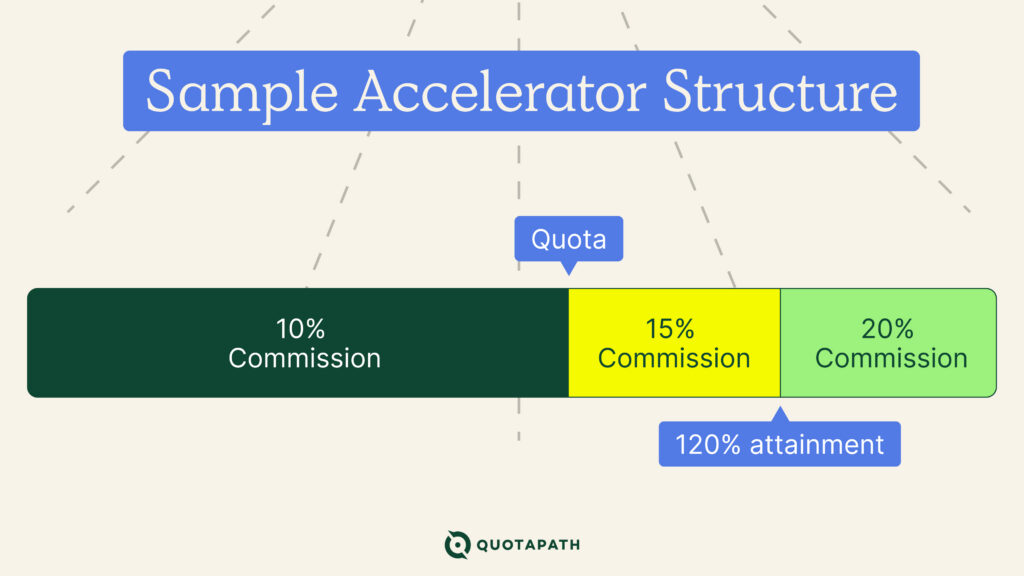
sample variable pay structure with accelerator

Key Components of a Variable Pay Structure

Now, let’s look at the building blocks of a strong incentive compensation program.

Base Salary to Variable Pay Ratio

Pay mix ratio is a combination of base salary vs variable pay, such as commissions and bonuses.  While the fixed portion provides stability, the variable portion motivates sales reps to deliver their best performance.

Which % of pay should be variable? Although common sales splits consist of 50% fixed salary, the pay mix varies by role:

  • 50/50 pay mix for Account Executives
  • 60/40 or 70/30 for Customer Success roles
  • 80/20 for SDRs or entry-level roles

What is the right variable pay ratio for sales reps? Pay mix depends on and varies according to:

  • Sales cycle length: shorter cycles typically have a lower base salary, based on the influence sales reps have on the rate of outcomes and results.
  • Deal complexity: more complex deals usually translate to a higher base and lower variable pay, such as 80/20.
  • Risk tolerance: companies with greater risk tolerance are typically more willing to offer a higher percentage of variable pay.
  • Role responsibility: roles that have greater control over their outcomes often have a higher percentage of variable pay.

Performance Metrics and KPIs

Variable pay should be tied to clear and measurable KPIs. They should be simple metrics that employees can directly influence, creating a clear line of sight between effort and reward.

Examples:

  • Revenue closed is the dollar value of deals that are won and is one of the clearest measures of sales output.
  • Quota attainment is the percentage of a rep’s sales target achieved in a specific timeframe. This is significant because other incentives, such as accelerators and bonuses, are based on quota attainment.
  • Expansion revenue is revenue from existing customers generated through upsells, upgrades, cross-sells, or added features or seats. This is essential for tracking growth within existing accounts and encouraging retention.
  • Product usage milestones are predefined activation or adoption events, such as achieving a usage threshold, activating a specific feature, or completing onboarding. These reward the behaviors that lead to future revenue in product-led or customer-success-driven sales motions.
  • Meetings booked are the number of qualified customer meetings scheduled, commonly used for SDRs, and are key to measuring pipeline creation activity and help reward work that supports future revenue.

Payout Frequency and Timing

Incentive compensation payout schedules are typically aligned with the length of the sales cycle and the percentage of variable pay in the plan. For instance, monthly for short sales cycles or high variable pay mix ratios, quarterly for medium-length cycles, and annual for long cycles and/or a low variable pay mix.

The best schedule typically pays close to the deal close, so the reward feels connected to performance.

Typical fit by organization

Payout scheduleTypical organization typesMain reason
MonthlyHigh-velocity SaaS, inside sales, retail, transactional selling, high-variable-pay rolesShort sales cycles and frequent closes
QuarterlyB2B sales, field sales, many account executive roles, moderate-complexity productsBalanced timing for medium sales cycles and meaningful check sizes
AnnualEnterprise software, complex industrials, capital equipment, long-cycle consultative salesLong sales cycles and low-frequency, high-value deals

There are tradeoffs to consider when establishing payout frequency and timing. Monthly payouts increase motivation and provide faster performance feedback. However, quarterly payouts reduce administrative time and complexity.

Whatever you decide, it’s essential to set a predictable commission payout schedule. This builds trust, boosts motivation, and improves retention. Otherwise, your sales team won’t know what to expect and may struggle to pay their bills. The mortgage or rent comes due on the same date each month; your reps need to be able to count on a predictable payout schedule, too.

Caps and Accelerators

Commission accelerators are a variable pay structure that rewards salespeople for overperformance by increasing the commission rate as attainment milestones are met.

Example structure:

  • 10% commission up to quota
  • 15% commission after 100% attainment
  • 20% commission after 120% attainment

Commission caps set a dollar limit on how much sales reps can earn regardless of their sales performance. There’s been a longstanding debate around capped commissions. The debate ties to cost control and motivation.

Organizations that are concerned about overpaying their sales reps may favor limiting commissions. However, commission caps tend to backfire, causing reps to stop selling once they hit the limit or encouraging sandbagging by delaying a deal until the next quota period. 

SaaS growth depends on reps continually pushing for every deal. Therefore, to encourage overperformance, many SaaS companies avoid caps.

Streamline commissions for your RevOps, Finance, and Sales teams

Design, track, and manage variable incentives with QuotaPath. Give your RevOps, finance, and sales teams transparency into sales compensation.

Talk to Sales

How to Design a Variable Pay Plan

Follow this practical step-by-step framework to successfully design a variable compensation plan.

Define Your Compensation Philosophy

Companies must first decide, “Do we prioritize revenue growth, profitability, or customer retention?” Answering this question allows you to identify the sales behaviors that will help the company achieve this goal. This philosophy shapes decisions about variable compensation, such as which KPIs are used, which incentive compensation elements are used, and whether payouts are based on individual or team results.

Identify Eligible Roles and Teams

Roles that directly impact revenue, such as sales reps like Account Executives (AEs), Sales Development Reps (SDRs), Customer Success Managers (CSMs), and channel partners, benefit most from variable compensation. Variable pay structures that include elements, such as commission, bonuses, and accelerators, align performance with high earning potential, higher engagement, and revenue growth.

Variable pay examples for SaaS teams:

  • Sales reps: 50/50 OTE with commission on closed-won ARR or ACV
  • SDRs: 60/40 or 70/30 OTE, with variable pay tied to qualified meetings, SQLs, or pipeline generated
  • Customer success: 80/20 OTE with variable pay tied to renewals, retention, and expansion revenue
  • Channel partners: Commission-only or tiered revenue commission, such as a percentage of revenue on partner-sourced deals

Set Realistic and Measurable Targets

Sales quotas and performance metrics set clear expectations and goals that help reps track progress and motivate behaviors that drive attainment of business objectives. Quotas must be achievable to inspire reps to strive for targets.

Unrealistic quotas typically demotivate reps, reduce engagement, and can increase rep turnover. However, challenging but realistic quotas help reps adopt desired behavior and improve performance.

Quota attainment benchmarks vary by industry. For instance, 70 – 80% is a good rule of thumb for SaaS sales reps, whereas 60 – 70% attainment is typical in many other types of sales organizations. Setting realistic and measurable targets will help you achieve this level of quota attainment.

Choose the Right Variable Pay Model

Selecting the right variable compensation plan is crucial to align sales rep behaviors with company goals, drive high performance, and manage compensation costs effectively. A well-chosen plan boosts motivation, helps attract top talent, and ensures financial flexibility. Consider these common models when making your selection.

  • Commission-based plans pay either a flat or tiered percentage of revenue or margin generated in deals closed.
  • Bonus-based plans pay a base plus a separate incentive payment for individual, team, or company goal or milestone attainment.
  • Hybrid incentive compensation combines base pay with one or more variable pay elements, such as salary plus commission or plus bonus.

Example SaaS structure:

  • Base salary + quota-based commission
  • Expansion revenue bonuses
  • Multi-year contract incentives

Communicate the Plan Clearly to Employees

Confusion around compensation leads to mistrust, making your compensation plan rollout essential because transparency improves motivation, trust, and performance. Follow these 5 best practices to increase the success of your new comp plan launch.

  1. Use various formats to share the new plan, such as group presentations, individual conversations, explainer videos, and written documents, communicating the same message each time. This provides reps with multiple opportunities to get their questions answered while increasing understanding.
  2. Written plan documents should be clear, concise, and detailed. So, avoid confusing jargon, include a Frequently Asked Questions (FAQs) attachment, and share examples of how to calculate earnings under the new plan.
  3. Messaging should progress from broad to specific, explaining the reasons for plan changes and the advantages of the new plan.
  4. Use real-time dashboards, such as those in QuotaPath, that show reps how to track performance, calculate commissions, and prioritize deals to optimize earnings.
  5. Gather continuous feedback to confirm understanding, reinforce transparency, and refine the plan. This can start with the plan verification process, where reps confirm they understand the new plan, followed by routine surveys, one-on-ones, and analysis of sales compensation plan performance.

Automate Calculations and Give Reps Real-Time Visibility

Managing variable pay manually introduces complexity. Tiered commissions, accelerators, splits, and one-off incentives often require intricate spreadsheet logic that’s difficult to maintain and even harder to audit. As a result, small formula errors or broken links can cascade into widespread miscalculations, increasing financial risk and eroding trust with sales teams.

Finance teams spend hours reconciling data across systems, delaying commission calculations and payouts, frustrating reps who rely on timely, accurate earnings. Lack of earnings visibility leaves reps guessing how deals impact their commissions, often leading to shadow tracking, disputes, and reduced confidence in the compensation process.

Modern compensation tools replace manual processes with software platforms that help organizations plan, manage, and administer employee compensation more accurately and efficiently.

Platforms like QuotaPath automate commission calculations by applying plan rules consistently across deals, reducing errors and eliminating manual work. Deal data is automatically synced via CRM integrations such as Salesforce or HubSpot, ensuring accurate payouts.

Real-time earnings dashboards give reps immediate visibility into their commissions, improving transparency and reducing disputes. When building compensation plans, plan modeling allows Finance and RevOps teams to test scenarios before rollout, helping them understand financial impact and avoid costly mistakes.

What Are the Top Mistakes When Structuring Variable Pay Plans?

As you create your variable compensation plan, watch out for these common pitfalls companies often face. 

  • Overly complex compensation formulas: Compensation plans including too many variables, tiers, and exceptions make it difficult for reps to understand how they’re paid, while Finance struggles to accurately calculate and audit payouts.
  • Unclear performance metrics: Vague or inconsistently defined metrics, such as “qualified pipeline” or “revenue contribution,” leave room for interpretation and lead to disputes over what counts toward commission.
  • Unrealistic quotas: Failure to align quotas with market conditions, territory potential, or historical performance results in a greater percentage of reps missing targets and becoming demotivated, disengaged, or churning.
  • Commission caps that discourage top performers: Limiting earnings for high performers reduces motivation to continue selling once hitting the cap.
  • Lack of visibility into earnings: The inability to track real-time commissions and performance reduces plan understanding and motivation while increasing shadow tracking.
  • Manual calculations causing payout errors: Relying on spreadsheets and manual processes is time-consuming and error-prone, delaying payouts while increasing pay disputes and rep turnover.

All of these variable pay structure mistakes can easily be resolved by plan simplicity and transparency.

Streamline commissions for your RevOps, Finance, and Sales teams

Design, track, and manage variable incentives with QuotaPath. Give your RevOps, finance, and sales teams transparency into sales compensation.

Talk to Sales

How to Simplify Variable Pay Structures with QuotaPath

Modern compensation platforms solve these common challenges. QuotaPath simplifies variable pay structure management with automated commission calculations, compensation plan modeling, real-time rep dashboards, and CRM integrations, ensuring accurate, real-time deal data. Transparent earnings tracking creates a single source of truth, improving alignment and confidence in commission data across the organization.

The result is a more efficient and trustworthy compensation process, with reduced administrative workload for Finance and RevOps teams, improved rep trust through greater transparency, and faster payout cycles that keep teams motivated and aligned.

Designing and managing variable pay plans doesn’t have to be complicated. With QuotaPath, RevOps and Finance teams can automate commission calculations, model new compensation plans, and give reps real-time visibility into their earnings. Book a demo to see how QuotaPath simplifies variable compensation management.

How Keen Built a Commission Engine That Scaled With GTM Complexity

quotapath customer success story

As revenue teams mature, commission complexity multiplies.

Leadership overrides. Expansion splits. SPIFs. Multi-role incentives.

What follows is a patchwork of manual HubSpot exports, quarterly reconciliation cycles, and email-based approvals. Audit trails are scattered across folders, and no one can confidently answer, “Who owns the master spreadsheet?”

Keen Decision Systems, a marketing operating system connecting marketing dollars to outcomes for an enterprise customer base, began to feel that strain. Mike Althoff, Keen’s COO, was overseeing deal approvals and commission approvals for 53 users across sales and leadership. He needed a way to bring structure, visibility, and control to a process that had outgrown spreadsheets.

“QuotaPath has been a really vital end-to-end tracker for me, to make sure that my thinking is visible to every individual rep and the sales team at large,” Mike said. This story shows how Keen built a scalable commission engine by connecting HubSpot, QuotaPath, and Rippling—replacing spreadsheets with structure and defensibility.

The Breaking Point: Spreadsheets Couldn’t Scale With GTM Complexity

Mike was managing commissions manually before implementing QuotaPath. Quarterly payouts were time-consuming, consisting of HubSpot deal data export, spreadsheet calculations, manual checks, and email approvals.

“It was spreadsheets and manual checks. We were reconciling HubSpot exports, calculating in spreadsheets, and emailing approvals to ensure there was some sort of audit happening,” said Mike.

Increasing plan complexity in response to Keen’s evolving go-to-market strategy included leadership rollups, expansion vs renewal rates, SPIF programs, and commission splits between sellers and account managers. Adopting QuotaPath wasn’t just about saving time. It was about preventing operational drift. “In short, we needed a system that would scale with us as we scaled,” said Mike.

From Manual Reconciliation to a Structured Commission Engine

Once the pain was clear, Keen needed structure.

The solution wasn’t just automation. It was auditability and consistency.

QuotaPath provides Keen with structured workflows from deal approval and commission calculation, through to payroll processing, eliminating manual, error-prone admin time. The resulting single system of record, end-to-end visibility, and rep-facing transparency increases trust and compliance.

Supporting Multi-Layer Incentives and Leadership Rollups

As teams grow, compensation layers multiply. As Keen has grown, their commission complexity has grown. They’re scaling leadership incentives without adding spreadsheet layers. The VP earns commission on their entire team, team leaders earn on their own deals plus team deals, and individual contributors earn on their closed deals. QuotaPath automated commission rollups and expansion commission splits, providing clear ownership and math, and no ambiguity.

“If an individual contributor closes a deal, it automatically calculates for their team lead and the VP. Having that clarity on who’s getting what and why has been really invaluable.”

Evolving Comp Strategy Year Over Year (Without Reinventing the Process)

If your comp plans remain static, you might have a problem. Your comp plans should evolve at least annually.

Scalability is maturing compensation plans without chaos. So, when Keen was ready to adjust their comp plan for 2026, Mike was able to duplicate the 2025 plans in QuotaPath’s AI compensation plans builder. He adjusted rates for expansion versus renewals and applied the new rates to 2026 deals, providing continuity and clarity.

“Reps can see how they earned last year and how they’re earning this year,” said Mike.

HubSpot commission software
See QuotaPath data directly in HubSpot.

HubSpot Integration: Driving Data Accuracy and Accountability

Commission accuracy starts with CRM accuracy. With HubSpot as Keen’s system of record, they’re able to leverage the HubSpot integration to sync with QuotaPath’s sales compensation software. The increased level of commission visibility forces CRM discipline. When commissions are tied directly to CRM, data quality improves because stakeholders care more about deal accuracy.

“Honestly, the integration between the two is almost essential,” said Mike.

Rippling Integration: Closing the Loop to Payroll

Commissions don’t stop at calculation … they end in payroll.

Keen now experiences true end-to-end commission automation thanks to QuotaPath’s Rippling payroll integration, enabling them to push payouts directly into Rippling. They receive immediate validation, with no manual uploads and no mapping errors.

“You literally just say, send these commissions… and it does it,” Mike said.

ROI: From Spreadsheet Ownership to Organizational Trust

Beyond automation, what changed?

For Keen, commission tracking software has become a form of governance infrastructure. They’ve gained transparency, trust, and defensibility, and they have seen faster acceptance of quarterly payouts. Rep compensation questions are handled in-platform, with screen sharing for clarity, to speed resolution and reduce defensiveness.

“Transparency is the number one thing… Before, it was ‘who’s the master of the spreadsheet?’ Now the numbers don’t lie,” Mike said.

The Operator’s Perspective: Outgrowing Spreadsheets

Mike’s advice to peers on accurately paying commissions is not about flashy features. It’s about operational maturity and control as complexity grows. “If you’re outgrowing spreadsheets and want confidence, consistency, tighter operational control… QuotaPath is a great place to find those things,” Mike said.

Streamline commissions for your RevOps, Finance, and Sales teams

Design, track, and manage variable incentives with QuotaPath. Give your RevOps, finance, and sales teams transparency into sales compensation.

Talk to Sales

Final Takeaway: Scaling Complexity Without Losing Control

As Keen’s GTM team scaled and commission complexity increased, spreadsheets weren’t up to the task. For Keen’s COO, Mike, overseeing deal and commission approvals for 53 users across sales and leadership was becoming an unwieldy manual process. He needed more structure, visibility, and control.

QuotaPath’s HubSpot and Rippling integrations created end-to-end control and 100% visibility, automating multilayer rollups and expansion splits accurately, while simplifying the annual comp evolution process. Addressing compensation questions is as easy as screen sharing to review the math.

For scaling revenue teams, commission management isn’t just math.
It’s infrastructure.

See how QuotaPath can help you scale commission complexity without losing control. Book a demo.

 5 Clawback Policy Best Practices for RevOps & Finance

clawback policies

Clawbacks are one of the most debated topics in sales compensation. Reps hate them. Finance needs them. RevOps is stuck in the middle.

Here’s the thing: clawbacks aren’t the problem. Poorly designed clawback policies are.

We analyzed 20,747 customer and prospect conversations and found that 12.1% touched on clawbacks, almost always tied to early churn, non-payment, or deals that failed to go live. These are predictable outcomes in most revenue models.

Your clawback policy should be built around them, not retrofitted afterward.

So what does an effective clawback policy actually look like? Here’s what the data shows.

clawback policies report

Clawback Policies Playbook: Report

In our analysis of 20,747 customer and prospect conversations, 12.1% included clawbacks. This report uncovers what policies are working and how to build your own successful one.

View Report

1. Design clawbacks as a standard mechanism, not an exception.

High-performing teams don’t treat clawbacks as rare or uncomfortable. They build them into the comp structure from day one. When reps know the rules upfront, clawbacks feel like a system… not a surprise penalty. That’s the goal.

2. Align payout timing with revenue risk.

The earlier a commission is paid, the more protection your business needs if a deal falls apart. Your policy should reflect this. Low-risk annual SaaS might pay ~70% at signature. Implementation-heavy deals should tie payouts to milestones. When payout timing matches revenue risk, you often reduce the need for clawbacks altogether.

3. Keep clawback windows short and clearly defined.

The data is consistent: 60-120 days is the sweet spot. Short windows protect the business from early churn while giving reps confidence that their deals become “safe” after a defined period. As one CRO put it: “Policies tied to a specific, reasonable window — 90 days or less — work well. Reps can stomach it when they know the rules going in.”

Long windows have the opposite effect. When commissions can be clawed back for a year, reps start treating their earnings like monopoly money. Keep it short.

4. Define your triggers explicitly (and in writing).

Disputes almost always come from ambiguity. Your policy should name exactly what triggers a clawback: customer cancellation, refund, non-payment, failure to complete onboarding. A simple clause — “Any commissions paid on deals that are refunded or canceled within four months will be deducted from future payouts” — eliminates most of the gray area and most of the arguments.

5. Automate the process.

Manually tracking original commission payouts, deal status changes, billing outcomes, clawback windows, and adjusted earnings is a recipe for errors. The teams with the cleanest clawback processes have taken the manual work out of the loop entirely.

Automation should flag deals inside clawback windows, adjust payouts when deals change, maintain an audit trail, and, critically, make clawback risk visible to reps in real time. When reps can see what’s at risk, nothing comes as a surprise.

Streamline commissions for your RevOps, Finance, and Sales teams

Design, track, and manage variable incentives with QuotaPath. Give your RevOps, finance, and sales teams transparency into sales compensation.

Talk to Sales

Final Thoughts

These five practices are what separate clawback policies that work from ones that create ongoing headaches. They’re also the foundation of our new Clawback Policy Playbook for RevOps and Finance — which includes benchmark data, policy frameworks by company stage and cash position, and sample language you can adapt today.

Download it here.

Build vs. Buy: The Hidden Costs of Building Your Own Commission Tool

build vs buy commission tool

 When ‘Building It Yourself’ Sounds Tempting

Automation. AI-first workflows. The push to make everything faster, cheaper, smarter. 

Every ops leader right now is asking: “Can we build this ourselves?” (including our QuotaPath Ops teams!)

AI platforms, low-code tools like Replit and Claude, internal dev teams, and budgets make this all feel very well within reach. 

But here’s the catch: while the idea of “we’ll just build our own comp plan agent” sounds appealing, the hidden costs and risks are far greater than most teams expect. And the moment you move from simple logic to real-world scenarios (multiple roles, accelerators, payout eligibilities, retroactive changes, integrations, auditing) those costs… and the technical debt.. climb.

Consider this: studies show that 90% of organizations are still relying on spreadsheets and similar manual tools for key business functions.

And when it comes to compensation planning, surveys today reveal between 62-75% of companies still rely on spreadsheets 

So yes, while most leaders are considering DIY’ing, most still haven’t moved to a purpose-built solution. 

That raises two questions:

  • If so many are still relying on inferior tools, why?
  • And at what point does building your own stop being a “clever DIY” and start being a strategic liability?

Below, we’ll go through the real cost of “build vs. buy” when it comes to your comp plan management agent, including pitfalls (aka: the “gotchas”) and help you compare that to the “buy” option.

Get Immediate Feedback on Your Comp Strategy

QuotaPath’s AI Comp Plan Consultant, Atlas, allows you to build, test, and model your compensation strategy against real benchmarks.

Try Atlas Now

 The Appeal of Building Your Own Comp Tool

At first glance, building your own compensation tool can seem like a clever move.

When every function in Sales Ops and RevOps is being automated or AI-enhanced, the temptation to spin up an internal “comp agent” makes sense. 

The logic is familiar: we know our business best, so why not build something that fits us perfectly?

And honestly, that reasoning is valid. 

RevOps professionals are some of the most innovative problem solvers in any org. You’re builders by nature, constantly bridging gaps between systems, data, and people. 

But when it comes to compensation management, that DIY instinct can sometimes lead to more complexity than clarity.

sales team attainment views commission tool
At-a-glance team attainment views in QuotaPath

Control and Customization

RevOps pros know exactly how comp plans should work, how formulas interact, and where the pitfalls are.

Building internally promises that level of precision. You can define your own logic, build custom integrations between your CRM and payroll, and design dashboards that mirror your sales motion. It’s a dream setup (on paper… erg… screen?).

And tools today make it seem simple to automate commissions with a few smart prompts. But what starts as a quick win often becomes a complex system that needs constant care and attention. Because it’s people’s paychecks, after all.

Perceived Cost Savings

Plus, it’s easy to think, “Why pay for software when our data team can handle it?” 

The absence of license fees looks like savings on paper, but how does it play out?

Maintenance, testing, compliance, and error resolution add up, often quietly outpacing the cost of a purpose-built platform. 

Retool’s data shows internal tools can cost 3–10x more in upkeep than expected.

Speed and Novelty

The speed of spinning up something fast is hard to ignore, especially if the idea spawns from a hackathon project. The early excitement is real, but speed often replaces structure. 

Within a few months, that “temporary fix” becomes a fragile system only one person truly understands. And when they move on, the maintenance burden comes due.

The Gotchas of Building Your Own Comp Plan Agent

Here’s where most homegrown comp tools start to unravel.

The first few months go smoothly 😍.

Calculations work, reps get paid, and the spreadsheet or AI agent seems to “just work.” 

But as soon as plans evolve, data shifts, or new roles are added, the cracks appear. What started as a cost-saving experiment turns into a cycle of manual fixes, mistrust, and technical debt.

 1. Data Drift and Formula Errors

Homegrown tools rarely have built-in data validation. 

A single CRM field rename or logic tweak can break the math, and it often goes unnoticed until payday. These small schema changes can lead to payout errors, overpayments, or reps missing commissions entirely.

PRO TIP: QuotaPath eliminates manual errors and centralizes commission logic through automation, ensuring every formula pulls from the same source of truth. That consistency is what keeps Finance, RevOps, and reps aligned… no debugging required.

2. Time Sink and Technical Debt

When you build, you also inherit the upkeep. 

Admins and RevOps leaders spend hours troubleshooting code, checking formulas, or re-running calculations, time that should be spent optimizing plans.

And if the person who built it leaves? The knowledge leaves too.

Over time, your “custom tool” becomes a fragile system, filled with hallucinations that no one wants to touch. 

3. Visibility and Rep Trust

Without rep-facing dashboards or payout audit trails, internal tools often operate like black boxes. Reps can’t see how numbers are calculated, which quickly erodes trust in the process. Disputes rise, motivation drops, and comp plans lose their impact.

4. Compliance and Auditability

When payout data lives across scripts, spreadsheets, and Slack messages, compliance becomes a nightmare. 

Homegrown tools rarely support ASC 606 requirements, audit trails, or payout documentation, and those gaps can turn into clawbacks or misreported earnings.

5. Scaling and Maintenance

The most common failure point? Scale. 

What works for ten reps and a simple quota structure can’t handle fifty reps, multiple roles, SPIFs, accelerators, or mid-cycle plan changes.

Your AI comp agent might handle basic math, but it doesn’t understand context, exceptions, or business nuance.

“I wouldn’t have the bandwidth to hire, train and own commissions — getting a tool was the best way for me to get some scale for myself and the team,” said Nancy McBee, VP of Finance at SeekOut, and customer of QuotaPath.

The Business Case for Buying Instead of Building

When you step back from the DIY appeal and look at long-term impact, buying a purpose-built platform isn’t just about convenience: it’s about focus. The right software pays for itself in time, accuracy, and confidence. That’s where QuotaPath stands apart.

“We essentially paid for QuotaPath in one month. It caught a lot of mistakes.”

Time to Value

Speed matters, especially in RevOps. While internal builds can take months of coding, testing, and debugging, QuotaPath customers go live in weeks, not quarters.

Like Alejandra at AirDNA, for example.

“We expected maybe three months… and in the end, we did it super quick,” said Alejandra, who completed onboarding and implementation in six weeks.

Our onboarding is designed for momentum fast, guided, and supported every step of the way. From day one, you’re working with a dedicated customer success manager, pre-built integrations, and AI-assisted plan setup. Instead of waiting to prove value, your team is tracking and paying commissions accurately within your first payout cycle.

Cost Efficiency

On paper, building looks “free.” But the real cost is sunk in time, maintenance, and opportunity.

Every week spent debugging or adjusting formulas costs more than most leaders realize. 

Let’s put numbers to it:

“Building” may look like $0 upfront, but 4 hours of RevOps time per week at $100/hour = $20,000 per year (and that’s before factoring QA, compliance, or the cost of a single payout error). 

In contrast, QuotaPath’s subscription model scales predictably with your team. 

You get automation, compliance, and support built in … no hidden upkeep, no surprise engineering backlog. The TCO (total cost of ownership) favors buying almost every time once you account for time saved and risk avoided.

Strategic Focus

Internal tools require constant maintenance. Every schema change, new role, or payout tweak pulls your RevOps team back into reactive mode.

QuotaPath shifts that equation. By automating commission logic and reporting, customers reclaim up to 25+ days per quarter. This is time they now spend on forecasting, GTM strategy, and optimizing plan performance.

So, ask yourself: Would you rather maintain code or scale revenue?

Streamline commissions for your RevOps, Finance, and Sales teams

Design, track, and manage variable incentives with QuotaPath. Give your RevOps, finance, and sales teams transparency into sales compensation.

Talk to Sales

How QuotaPath Makes ‘Buying’ a No-Brainer

The right platform should automate the math and make compensation strategic.

QuotaPath was built to eliminate the trade-offs of “build vs. buy,” giving RevOps teams total flexibility without the maintenance burden. Instead of managing code, your team can focus on driving performance, forecasting revenue, and scaling confidently.

Here’s what makes QuotaPath the obvious choice:

  • AI-Powered Plan Builder: Spin up new plans or update existing ones in minutes (no code or spreadsheets required).
  • CRM + Payroll Integrations: Connect Salesforce, HubSpot, Rippling, and more for a single, accurate source of truth.
  • Real-Time Earnings Dashboards: Give reps full visibility into attainment, pipeline, and potential payouts to drive motivation.
  • Compliance-Ready Audit Trails: Stay ASC 606-aligned and audit-safe with automated approval workflows.
  • Guided Onboarding and Support: Go live fast with expert-led setup, dedicated CSMs, and in-app tutorials.

And the proof is in the experience:

“We essentially paid for QuotaPath in one month. It caught a lot of mistakes.”
David Taub, RevOps @ HydroCorp

“Commissions were this multi-hour monthly nightmare. QuotaPath simplified all of it.” Kenza Sebbar, RevOps Leader @ Actabl

“Quarterly, we’re saving 25 days in commission processing.”
David Thai, RevOps Lead @ Augury

Yes, QuotaPath builds automation and accuracy into a previously error-prone process. But more importantly, it’s giving RevOps teams their time, trust, and visibility back. Ready to learn more? Book time with our team today.