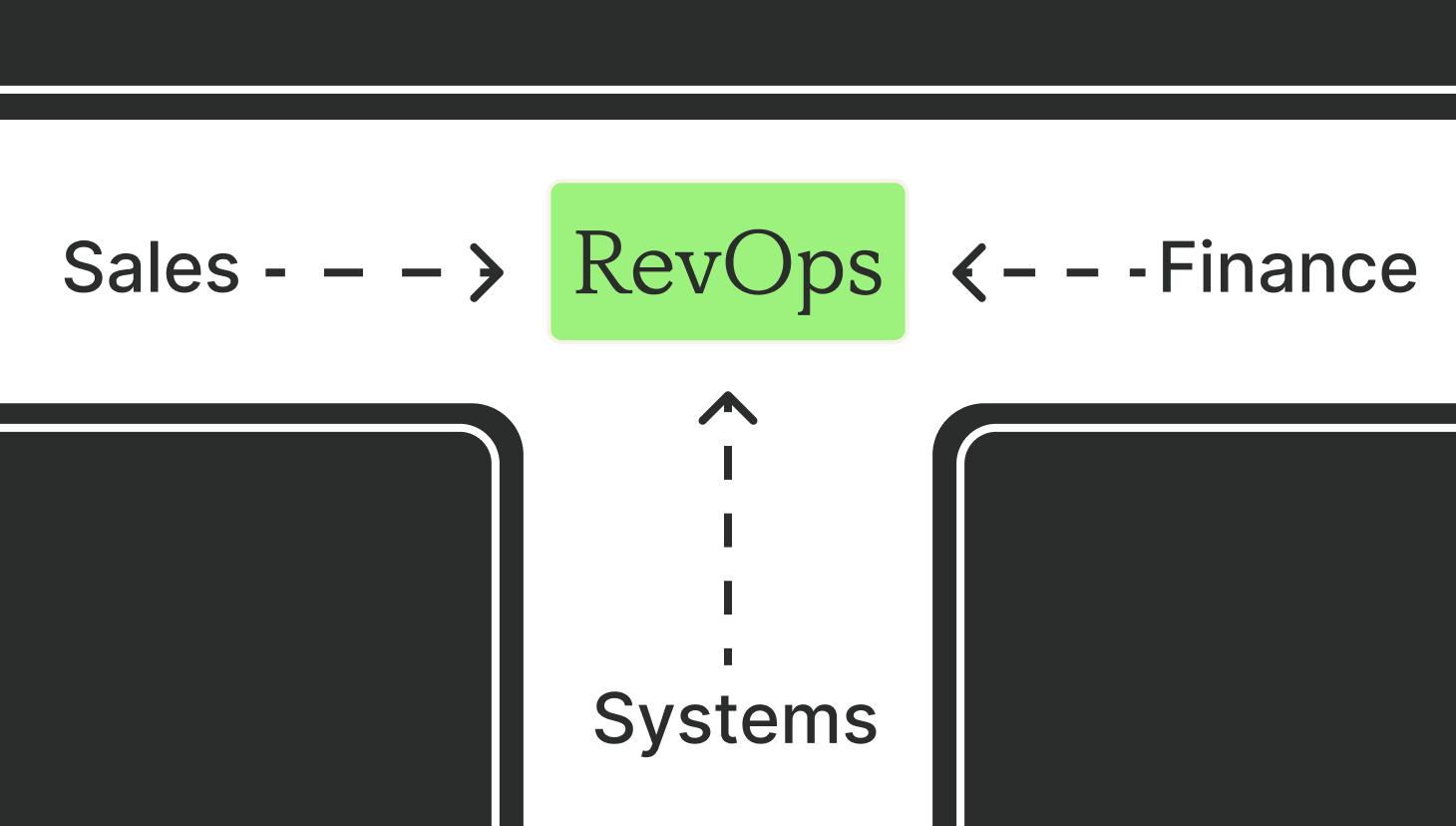
RevOps is no longer a back-office function.
Today, RevOps leaders shape forecasting accuracy, GTM efficiency, pipeline health, and how revenue teams operate day-to-day. They sit at the center of growth: translating strategy into execution across Sales, Customer Success, and Finance.
And yet, one thing hasn’t kept up with that evolution: how RevOps is compensated.
To understand what’s working, what feels broken, and where things are headed, QuotaPath partnered with RevPal to analyze compensation data from 100+ SaaS RevOps leaders across North America and EMEA.
The takeaway was clear:
- RevOps leaders aren’t asking to be paid like Sales ..but they are asking to be paid in ways that reflect their influence.
The Shift Is Already Happening…But It’s Incomplete
One of the strongest signals from the data: variable pay is becoming the norm.
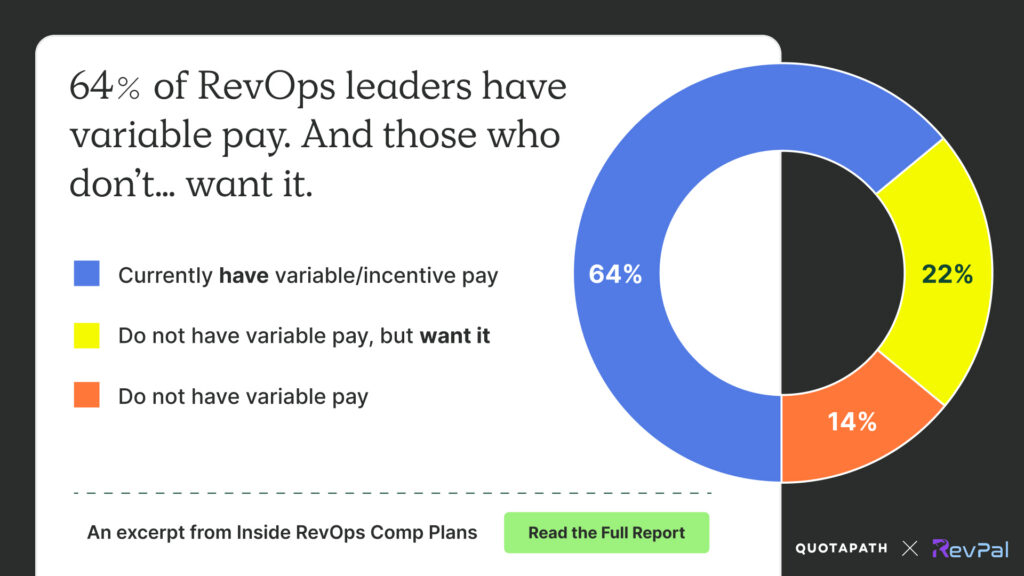
- 64% of RevOps leaders now have some form of variable or incentive pay.
- Of the 36% who don’t, 62% say they want it.
This reflects a broader shift toward outcome-based compensation as RevOps work becomes more measurable and more closely tied to business performance.
But the presence of variable pay alone isn’t enough.
Many respondents described feeling under-incentivized, misaligned, or unclear about how their bonuses actually work — especially when incentives are tied to outcomes they don’t fully control.
Design, track, and manage variable incentives with QuotaPath. Give your RevOps, finance, and sales teams transparency into sales compensation.
Talk to SalesThe Fairness Gap: Why 43% Don’t Feel Paid Fairly
When asked directly about fairness, the results were striking:
- 43% of RevOps leaders do not believe they’re paid fairly
That’s a meaningful portion of a senior, highly specialized function, and the reasons were consistent across responses.
The Top Drivers of Perceived Unfairness
- Bonuses tied to things they don’t control
Company-wide revenue or sales performance without guardrails was the most common complaint. RevOps leaders felt penalized when Sales missed but rarely credited when systems, processes, and forecasting enabled success. - Subjective bonus criteria
“Leadership discretion” without clear documentation or scoring logic undermined trust, even when payouts were reasonable. - Inconsistent payout timing or rules
Changes mid-year, delayed payouts, or unclear calculations eroded confidence in incentives meant to motivate.
For a function built on systems, logic, and predictability, opaque compensation is more than frustrating… It’s demotivating.
What RevOps Leaders Actually Want
One of the most important insights from the research:
This isn’t primarily about more money.
It’s about alignment.
Across open-text responses, RevOps leaders consistently asked for:
- Clear, documented metrics they can influence
- Outcome-based incentives (not generic corporate bonuses)
- Quarterly, predictable payouts
- Defined MBOs instead of vague performance language
- Fewer surprises
Metrics like forecast accuracy, time-to-ramp, system adoption, and revenue hygiene came up repeatedly; not because they’re easy, but because they reflect real RevOps impact.
Pay Still Varies by Title, Geography, and Company Size
The data also highlighted persistent differences in how RevOps leaders are paid:
- Director-level RevOps leaders most commonly fall in the $140K–$180K base range.
- VP/Executive RevOps roles typically pay $190K–$250K+, with a higher likelihood of variable pay.
- North America-based leaders earn roughly 15–25% more than peers in EMEA and Canada.
- Larger companies skew higher across both base salary and incentive availability.
Title alone doesn’t explain these gaps; where you sit and who you work for still matter, even as RevOps work becomes more standardized.
Equity: Common, but Increasingly Discounted
About 42% of respondents reported having equity as part of their compensation.
Sentiment, however, was mixed.
Some view equity as a signal of long-term ownership. Others see it as largely theoretical — especially without transparency around valuation or grants large enough to matter.
Equity may still play a role in RevOps compensation, but the data suggests it’s no longer a substitute for clear, cash-based incentives tied to real outcomes.

What This Signals About the Future of RevOps Compensation
We’re at an inflection point.
As RevOps becomes more strategic, measurable, and accountable, legacy compensation models are showing their cracks. Flat salaries, vague bonuses, and revenue-based incentives without guardrails are no longer enough to attract (or retain) senior RevOps talent.
The path forward is becoming clearer:
- Pay RevOps leaders for what they actually influence
- Replace subjectivity with defined MBOs
- Favor clarity, consistency, and quarterly feedback loops
- Treat compensation as a system, not an afterthought
Companies that get this right will gain stronger alignment, higher retention, and RevOps leaders fully invested in driving durable revenue outcomes.
Those who don’t may find themselves reopening the same role… again.
Want to Go Deeper?
📊 Read the full report: Inside RevOps Compensation Plans: Insights from 100+ SaaS Leaders
🎤Watch the live conversation Ryan Milligan (QuotaPath), Christian Freese (RevPal), and Mollie Bodensteiner (Engine) break down what’s fair, what’s broken, and what’s changing next in this webinar.