As we enter the second quarter of 2026, let’s remember a big stat from Q2 2025:
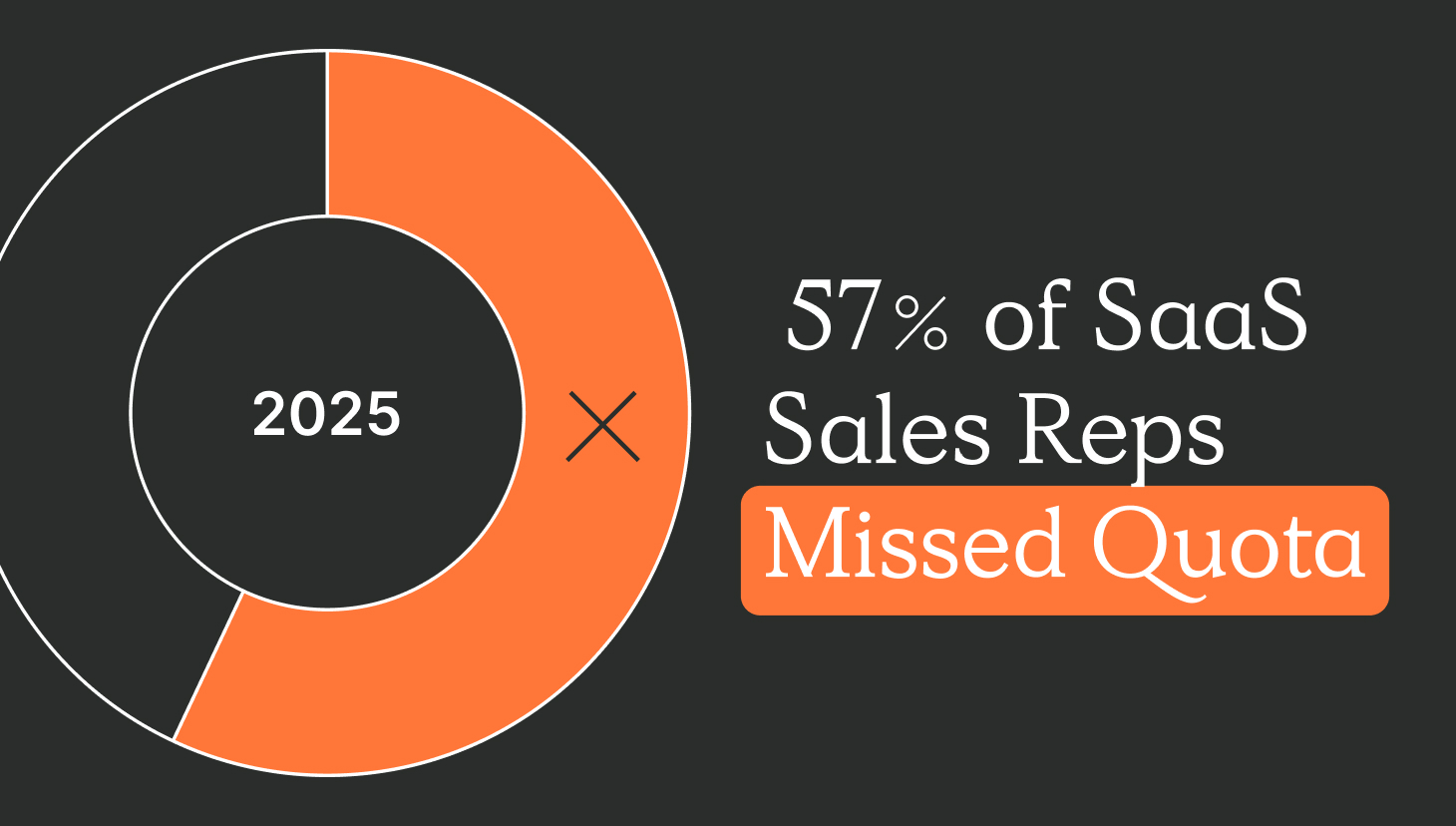
57.31% of sales reps missed their quota.
That figure comes from RepVue’s Q2 2025 Cloud Sales Index, which analyzed performance across 246 cloud and software companies and approximately 47,000 quota-carrying sales professionals.
The report found that average quota attainment reached 42.69% during the quarter.
Also known as: 57.31% of reps missed target.
At first glance, statistics like this might suggest a widespread execution problem among sales teams. But a closer look at the broader SaaS environment reveals a more nuanced story. Performance challenges today are rarely about selling harder. Rather, they’re tied to how companies:
- Design quotas
- Structure compensation plans
- Align revenue expectations with reality
Below, we look at how to better understand what this SaaS sales metric means for you and what to do about it.
Design, track, and manage variable incentives with QuotaPath. Give your RevOps, finance, and sales teams transparency into sales compensation.
Talk to SalesUnderstanding What the Benchmark Measures
First, it’s important to note that RepVue’s data reflects rep-level quota attainment, not a direct measure of whether companies themselves hit their overall revenue targets.
Because those two metrics can diverge.
A company can technically meet its quarterly revenue goal even if many individual sellers miss their quotas, especially if a smaller group of high performers carries a disproportionate share of production.
Even so, when more than half of quota-carrying reps fall short, it typically signals broader structural challenges inside sales organizations.
Over the past two years, SaaS companies have been navigating a very different operating environment than the one that shaped many current sales strategies.
Key changes include:
- Longer sales cycles
- More cautious spending from buyers
- Expanded buying committees
- Greater deal scrutiny from finance and procurement
- Heightened pressure on efficiency from investors and leadership
- And the latest: AI build vs buy
These shifts directly affect the practical achievability of quota targets.
Many quotas were originally designed around growth assumptions from a different market environment. As conditions evolved, not all compensation structures adapted at the same pace.
Quota design is under increasing scrutiny
Across the industry, revenue leaders are asking a critical question: Are quotas actually attainable?
Setting quotas has always involved balancing ambition with realism. Companies want aggressive targets that drive growth while still remaining credible to the people responsible for achieving them.
However, several structural factors can distort quota setting.
Many organizations determine targets using a combination of:
- Historical growth expectations
- Board-level revenue goals
- Pipeline projections
- Hiring plans and territory coverage
While these inputs are valuable, they do not always reflect a team’s true selling capacity.
If a territory’s market potential, deal size, and sales cycle realistically support $1 million in annual bookings, assigning a $1.5 million quota creates a gap that no amount of individual effort can fully bridge.
In those cases, the issue isn’t motivation or talent. It’s the misalignment between targets and market conditions.
Compensation plans often magnify the problem
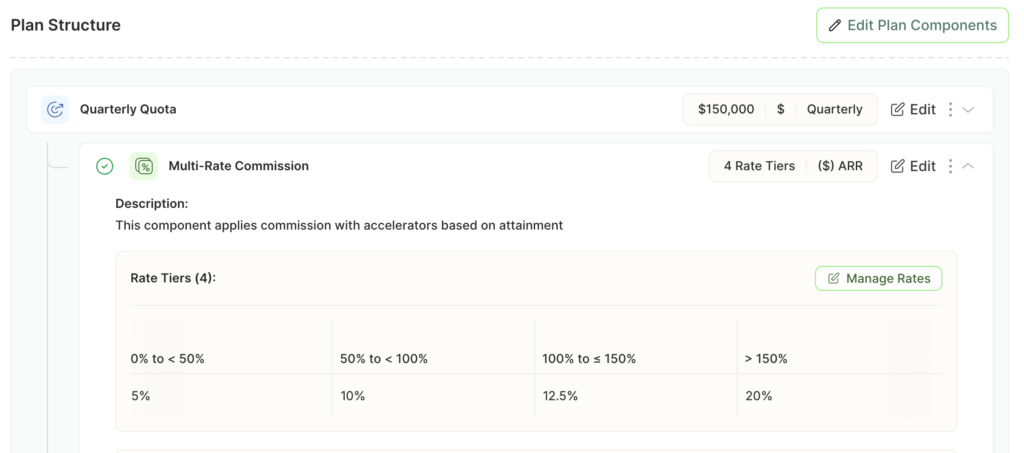
Quota attainment is deeply connected to how sales compensation plans are structured.
When quotas drift beyond what the market can realistically support, compensation models can start producing unintended outcomes.
Several patterns commonly emerge.
1. Motivation declines when targets feel unattainable
High-performing sellers are typically driven by ambitious goals. But there is a threshold at which targets stop feeling aspirational and become unrealistic.
When that line is crossed, engagement can drop. Reps may focus on protecting future pipeline or prioritizing lower-risk deals rather than pursuing aggressive expansion opportunities.
2. Pay-for-performance breaks down
Sales compensation is designed to reward impact. Ideally, it creates a distribution where top performers significantly outperform the rest of the team.
But if most sellers are clustered far below quota, compensation becomes compressed and less meaningful as a performance signal.
In those scenarios, commission plans lose some of their motivational power.
3. Forecasting becomes less reliable
Quota attainment also functions as a key input in revenue forecasting.
If quotas are set too aggressively, leadership teams lose a useful benchmark for evaluating progress. Forecast models become harder to calibrate, and revenue predictability suffers.
The Growing Importance of Compensation Transparency
Beyond quota design itself, another factor shaping sales performance is how clearly compensation plans are communicated and tracked.
Many sellers still struggle to answer basic questions about their earnings:
- How exactly are commissions calculated?
- What happens if a deal slips into the next quarter?
- When will payouts occur?
When market conditions are challenging, uncertainty around pay can amplify frustration.
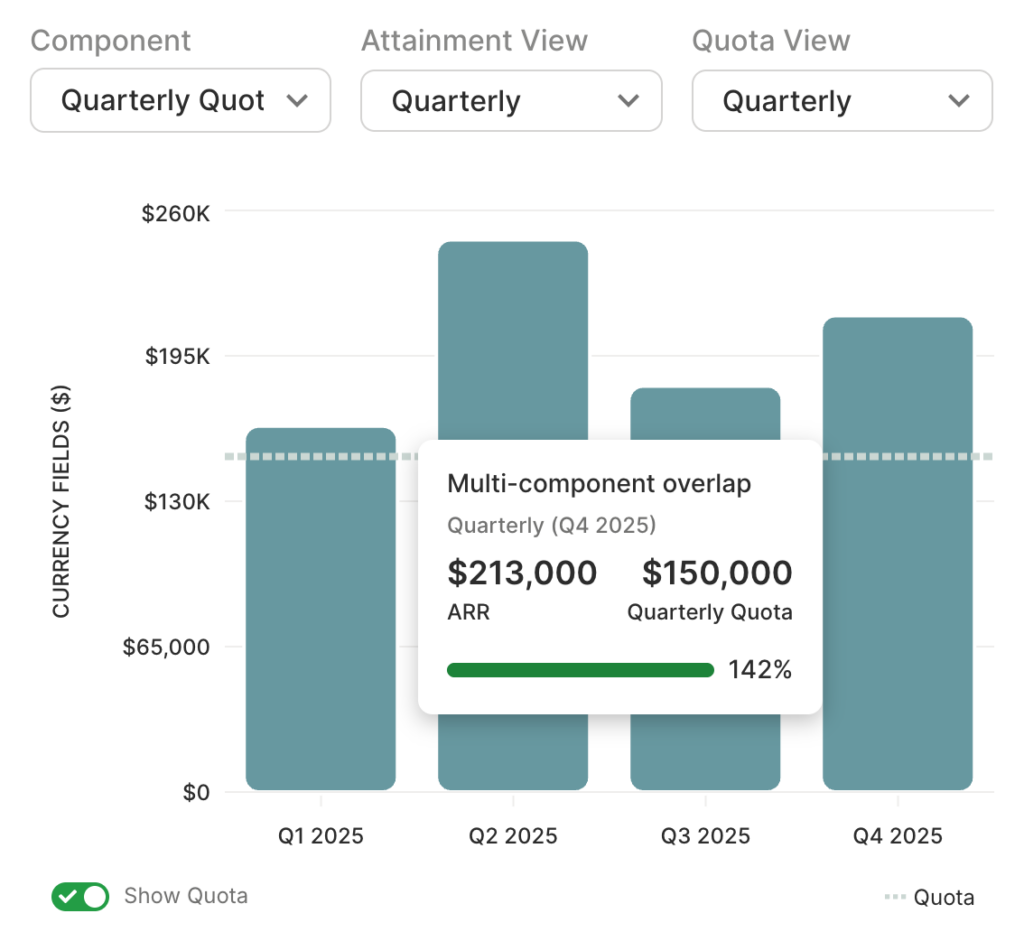
This dynamic has led to increasing adoption of sales compensation management tools that provide real-time visibility into commissions and quota progress.
When reps can clearly see how deals affect their earnings (and track progress toward their targets throughout the quarter) it builds trust in the system that governs their compensation.
That clarity becomes especially valuable in difficult selling environments.
A Shift Toward Data-Driven Quota Setting
So, what’s the fix? It’s data!
Revenue leaders are revisiting how quotas and compensation plans are designed. And the organizations that are navigating the shift most successfully are investing more heavily in:
Data-driven quota modeling
Rather than relying purely on top-down targets, companies are incorporating historical attainment data, territory potential, and pipeline capacity into quota design.
Improved compensation visibility
Providing sales teams with clear, automated, and real-time insight into commissions and quota progress helps maintain trust and engagement.
Stronger cross-functional alignment
Sales, finance, and revenue operations teams are collaborating more closely to ensure compensation structures reinforce broader company goals.
Try the most collaborative solution to manage, track and payout variable compensation. Calculate commissions and pay your team accurately, and on time.
Start TrialWhat the Q2 Data Really Signals
The headline statistic…57.31% of SaaS reps missing quota in Q2 2025…should not simply be interpreted as a sales performance issue.
Instead, it highlights the ongoing recalibration happening across the SaaS industry.
As markets mature and buying behavior evolves, the systems that guide sales performance (quotas, compensation plans, and incentive structures) must evolve alongside them.
Organizations that adapt these systems thoughtfully tend to see stronger engagement from their sales teams and more predictable revenue outcomes.
And in a market where efficiency and alignment matter more than ever, getting sales compensation right is increasingly becoming a competitive advantage.
Talk to our team today to get your sales compensation strategy in the right spot.