Are you motivating short-term behavior, or rewarding long-term performance?
Different sales incentive types are designed for different purposes. SPIFs and bonuses are often confused because they are both offered in addition to base salary. However, SPIFs are short-term, tactical mechanisms, while bonuses are long-term strategic levers intended to motivate greater performance.
Misuse of these sales compensation elements leads to misaligned incentives that reward the wrong behaviors. This results in wasted compensation spend that negatively impacts long-term growth and profitability. It also frustrates reps when incentivized behaviors contradict the base sales compensation plan. For instance, when a SPIF rewards a number of meetings in a short period, perhaps with poor-fit prospects who will churn shortly after the deal closes.
Understanding the difference between SPIFs vs bonuses ensures comp plans motivate the right behaviors to drive key business objectives.
This blog explains:
Key Takeaways
- Definitions of the terms SPIF and bonus
- Key differences between SPIFs vs bonuses
- When to use a SPIF vs a bonus
- How to combine SPIFs and bonuses effectively in sales compensation plans
- How to track SPIF payouts.
What is a SPIF?
Let’s start with a definition. SPIF stands for Sales Performance Incentive Fund. A SPIF is a targeted short-term sales incentive to improve performance or drive specific behaviors. For example, SPIFs are often used to encourage reps to sell a specific product or schedule meetings with a particular type of prospect during a designated period.
How SPIFs fit into a sales comp plan
SPIFs are supplemental incentives that are not part of the base commission structure. While the base compensation plan rewards long-term, consistent performance, SPIFs are designed to create urgency and quickly influence behavior to achieve specific outcomes or boost results during slow periods.
Common SPIF structures (flat-rate, tiered, team-based)
These three SPIF program structures are effective short-term sales incentives.
- Flat-rate: A fixed payout amount per designated action, such as a particular type of deal or deal within a set timeframe.
- Tiered: A SPIF program with increasing rewards based on volume achieved. This motivates continuous improvement while incentivizing everyone as they advance through the tiers.
- Team-based: Shared goal incentives that encourage teamwork and knowledge sharing while fostering team spirit.
Use these SPIF examples as inspiration as you develop your SPIF program.
Offer a flat-rate SPIF for deals that close within the first few weeks of the quarter to prevent excessive deal traffic during the last couple of weeks of a quarter. A tiered SPIF that rewards sales reps as they hit specific milestones toward quota helps keep them motivated as they progress. A team-based SPIF that rewards the team achieving the highest total sales within a set period.
What is a sales bonus?
Now that you know what SPIFs are, let’s look at bonuses. A sales bonus is a structured, planned incentive, typically tied to broader performance metrics.
Quota-based vs. discretionary bonuses
Two popular sales bonus structures are quota-based and discretionary.
Quota-based: A fixed dollar amount is rewarded for achieving a monthly, quarterly, and annual quota target. For instance, a salesperson is awarded $500 for hitting a quarterly target.
- Based on attainment %
Discretionary: an unplanned monetary reward given at leadership’s discretion, without advance notice or predefined metrics. Unlike standard sales compensation, discretionary bonuses are intended to recognize exceptional performance or contributions.
- Leadership-awarded
Quarterly, annual, and milestone bonus cadences
In sales compensation, bonus cadences specify the frequency and conditions under which reps receive performance-based financial rewards. Popular sales bonus cadences include quarterly, annual, and milestone-based.
- Quarterly: Most common in SaaS to encourage consistent performance, these fixed dollar payouts are tied to quarterly sales quota achievement.
- Annual: These larger, strategic payouts are tied to a salesperson’s 12-month performance and are designed to encourage rep retention and long-term performance.
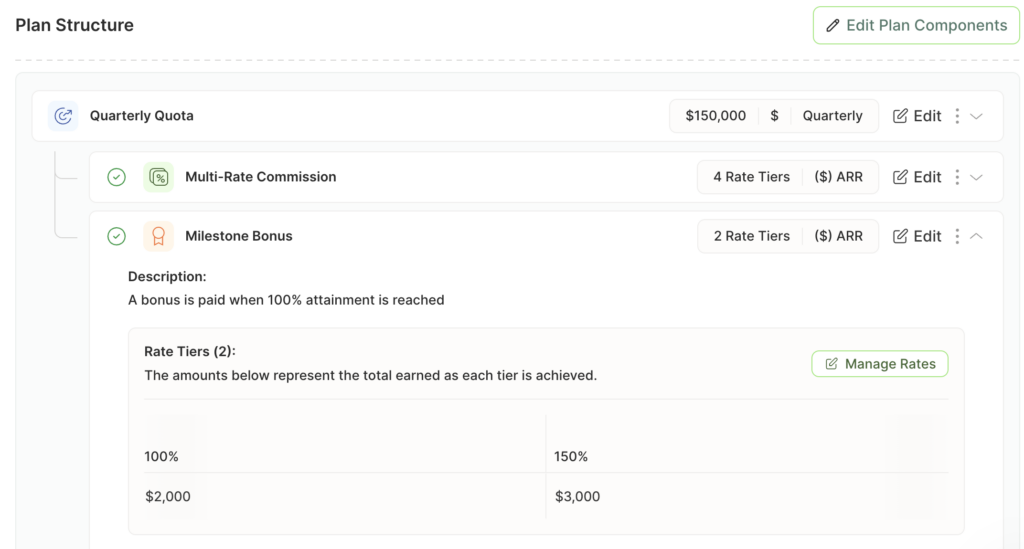
- Milestone: These fixed-sum awards are tied to specific, pre-defined goals to drive behaviors beyond overall revenue generation.
- Product launches: Reward new product sales or the sale of a specific product into a new territory.
- Revenue thresholds: A reward for deals exceeding a specific revenue threshold.
SPIFs Vs Bonuses: Key Differences At A Glance
| SPIFs | Bonuses | |
| Timing | Short-term | Long-term |
| Purpose | Improve performance or drive specific behaviors | Drive sustained or reward exceptional performance |
| Structure | Flat-rate, tiered, and team-based | Designated sum of money awarded when a target is met or exceeded |
| Predictability | Based on behavior | Based on performance |
| Use cases | Drive immediate, specific sales behaviors on the short-term | Motivate reps to meet or exceed specific targets. |
| Impact on behavior | Creates urgency and focus | Aligns behavior with long-term business objectives |
When to Use a SPIF Over a Bonus
If you need a short-term sales incentive to generate quick wins or create excitement around an initiative, is when to use a SPIF vs a bonus.
New product launch or feature push
SPIFs add urgency, create excitement, and introduce gamification as reps learn how to sell a new product or feature. For example, offer rewards for the first five deals that include the new product or feature within a designated period.
End-of-quarter pipeline acceleration
Inspire reps to hit targets before the quarter ends by shortening the sales cycle. A short-term sales incentive is well-suited to this limited timeframe. For example, add a kicker to each deal that closes before the end of the quarter.
Re-engaging an underperforming segment
Build pipeline momentum and revive stagnant territories or market segments by rewarding quick wins for a short period with a SPIF. For instance, offer a reward for booking qualified meetings or closing qualified deals during a specific timeframe.
When a Bonus is the Better Play
By contrast, it’s best to use a bonus to drive long-term objectives.
Rewarding sustained quota attainment
For instance, the quest for quota attainment continues throughout the year, making a bonus a better choice than a SPIF to encourage consistent performance. Consider a milestone bonus, a fixed-value award earned when a rep achieves a designated threshold, such as hitting quota every month or quarter.
Retention and loyalty incentives
Likewise, customer retention is an ongoing pursuit. Therefore, a bonus is the best reward for continuously achieving this type of goal. For example, offer a tiered retention bonus that pays a fixed dollar amount based on retention percentage tiers that kick in at 80% minimum, with a minimum NPS requirement before retention rewards are paid.
Multi-metric performance (revenue + retention + NPS)
NRR and NPS are common continuous performance metrics for account managers (AMs) or customer success managers (CSMs). Bonuses are the best way to reward long-term achievement of these goals. For example, a CSM receives a fixed quarterly bonus when meeting or exceeding their quarterly NRR% target and also exceeds a designated minimum NPS score during the same period.
Using SPIFs and Bonuses Together: A Layered Incentive Strategy
Sometimes it makes sense to use both SPIFs and bonuses together in a layered incentive strategy to balance long-term objectives with a short-term tactical boost or to test the effectiveness of potential future comp plan elements.
How to avoid double-counting and comp plan bloat
Consider these bonus and SPIF program best practices to prevent plan duplication and complexity.
- Avoid overlapping incentives when integrating SPIFs with your incentive strategy, where commission rewards primary goals, quarterly bonuses drive continuous performance, and SPIFs reward time-bound tactical efforts.
- Keep plans simple and trackable to ensure rep buy-in and adoption, motivating desired behaviors and goal attainment.
If the plan becomes too complex, it’s likely to backfire, causing frustration and reduced participation.
How QuotaPath customers layer SPIFs on top of quarterly bonuses
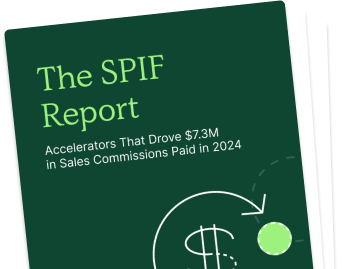
According to the SPIF report, the top four SPIFs QuotaPath customers used were:
- Multi-Year accelerators: Higher commissions for securing multi-year contracts, encouraging long-term deals.
- Fast Starts: Early-period bonuses for achieving quick initial sales targets.
- Logo-Count Milestone Bonuses: Fixed bonuses for hitting a set number of new customer acquisitions, also known as logos.
- Consistency Bonuses: Rewards for consistently meeting sales targets over a period.
For example, to layer one of these SPIFs on top of quarterly bonuses, a QuotaPath customer would offer 10% base commission on all closed deals, plus a quarterly bonus for sales quota attainment, with a fast start bonus SPIF during a designated period at the beginning of the quarter or the year to create quick momentum toward sales target achievement.
Why Tracking SPIFs and Bonuses in Spreadsheets Breaks Down
Manual data-entry errors, broken formulas, version control issues, and lack of real-time visibility are among the common operational challenges of tracking SPIFs and bonuses in spreadsheets. This method typically results in delayed payouts, sales rep disputes, shadow accounting, and frustration among reps.
Payout errors that erode rep trust
Our research shows that 80% of companies have paid reps incorrectly. When this happens, the result is reduced morale and increased disputes. Payout errors erode rep trust, often leading to shadow accounting, reduced motivation, and potentially rep turnover.
How QuotaPath automates SPIF and bonus tracking in one platform
QuotaPath commission tracking software replaces fragmented spreadsheets and manual tracking processes with centralized tracking for SPIFs, bonuses, and commissions. By continuously syncing CRM deal data, QuotaPath provides real-time visibility into incentive performance, payout calculations, and attainment, reducing errors.
Automating SPIF and bonus tracking also reduces admin time and enables organizations to measure the efficacy and impact of selling behaviors influenced by SPIF and bonus programs. Instead of relying on disconnected spreadsheets and manual reconciliation, teams gain a clearer understanding of which incentives are driving performance and revenue outcomes.
Design, track, and manage variable incentives with QuotaPath. Give your RevOps, finance, and sales teams transparency into sales compensation.
Talk to SalesHow Quotapath Handles SPIFs and Bonuses Differently Than Legacy Tools
QuotaPath SPIF tracking provides reps with real-time visibility and allows Finance to automate SPIF payouts, reducing time to close.
Real-time earnings visibility for reps
Providing reps with real-time commission visibility drives motivation and improves transparency. When they can see how deals translate into earnings, they understand their incentives and adopt behaviors that drive desired results.
“The sales team loves having the ability to see their pipeline, forecast potential commissions, and understand exactly how payouts are calculated and when they’ll receive them,” said Genevieve Moss-Hawkins, Systems Operations Manager at NeuroFlow.
Finance-ready payout reports without manual reconciliation
The QuotaPath sales compensation management platform automates commission calculations, eliminating spreadsheet errors and time-consuming manual reconciliation that slows down financial reporting. This gives Finance confidence in payout data, resulting in faster close cycles with clearer visibility into commissions and accruals.
This visibility is especially valuable, as it connects compensation data directly to broader financial reporting workflows. “The end-to-end visibility is huge. QuotaPath helps me go from deal to earnings to 606 reporting in one flow,” said Kim Stithem, Controller at CFI.
Tax and Compliance Considerations
Speaking of 606 reporting, let’s talk about SPIFs in terms of taxes and compliance.
Are SPIFs taxable income?
Yes, SPIFs are taxable income as supplemental wages. According to the Internal Revenue Service (IRS), all forms of compensation, including commissions, bonuses, and incentives like SPIFs, are reported as income.
State-level wage statement requirements
Although adhering to each state’s wage statement requirements is necessary, it also protects your business from costly penalties and legal disputes. Likewise, accurate reporting will help you ensure compliance and protect you from audit risks.
FAQs
What does SPIF stand for?
SPIF commonly stands for sales performance incentive funds and sometimes special performance incentive funds.
Is it SPIF or SPIFF?
The SPIF vs SPIFF spelling is both correct. They are terms used to describe a short-term sales incentive to motivate a specific behavior to boost results.
Can you track SPIFs and bonuses in QuotaPath?
Yes, you can track SPIFs and bonuses on the QuotaPath sales compensation management platform. In fact, the commission tracking software provides reps with real-time commission visibility, improving the effectiveness and administration of SPIF and bonus programs.
How do you measure SPIF ROI?
Measuring SPIF ROI can be difficult in spreadsheets. However, commission tracking software, such as QuotaPath, can simplify the process by monitoring total revenue generated directly from the SPIF program. This helps determine the ROI of the SPIF by comparing the cost of the incentives to the additional revenue generated.
Schedule a demo to see how QuotaPath simplifies SPIF and Bonus program administration.