December is the time of year when annual planning cycles take place — board decks are finalized, budgets are set, and compensation structures are under scrutiny. Leaders want to drive efficient growth, but compensation metrics often lag behind board planning metrics, such as Gross Revenue Retention (GRR), Customer Acquisition Cost (CAC), and cash flow.
Achieving alignment is a challenge, as only 40% of sales organizations say their compensation plans align directly to their company’s top financial goals, according to QuotaPath’s 2024 Sales Compensation Plan Report.
In this post, we’ll provide frameworks and real examples to help leaders translate these strategic metrics into practical comp mechanics that drive multi-year deals, upsells, and high-margin ideal customer profiles (ICPs).

Understanding Your Board’s North Star Metrics
Before you can achieve 2026 compensation plan alignment with your board’s priorities, you must understand what a North Star Metric is and how it relates to sales comp plan strategy.
What a North Star Metric Really Is
A North Star Metric (NSM) is a predictive, measurable, cross-functional signal of success. Not another key performance indicator (KPI) — the NSM is a single number that the entire organization can focus on to drive business growth.
Examples of effective NSMs include:
- % of revenue from high-retention customers: The percentage of the company’s revenue from customers with a high estimated lifetime value (LTV) and low churn risk—typically those that fit your ideal customer profile (ICP)
- Net Dollar Retention (NDR): The percentage of recurring revenue retained annually, reflecting customer satisfaction and retention, and helping forecast future revenue.
- CAC payback period: The time it takes a company to earn enough gross profit back to cover the cost of acquiring a customer, typically measured in months, and often used by subscription businesses such as SaaS.
- Time to value: The amount of time it takes for a customer to realize the benefits of a product or service.
Why These Metrics Matter for Comp Design
Unlike most metrics tracked by Finance, the NSM aligns finance, revenue teams, and the boardroom by providing a common focal point. Consequently, it clarifies budget and resource allocation decisions, strengthens compensation plan design, and aligns incentive structures around driving this metric.
Comp levers like commission rate, accelerators, and SPIFs can reinforce or misalign with NSMs based on the behaviors they promote. For instance, incentives that prioritize deal quantity over deal quality are misaligned with an NSM aimed at improving revenue from high-retention customers by reducing the percentage of deals with ICPs. This results in failure to meet board expectations for aspects such as capital efficiency and predictable revenue retention.
Design, track, and manage variable incentives with QuotaPath. Give your RevOps, finance, and sales teams transparency into sales compensation.
Talk to SalesFrameworks to Align Comp Plans with GRR, CAC, and Cash Flow
Now that you’ve defined your North Star metrics, the next step is operationalizing them through compensation. Using these comp plan frameworks will help you align and incentivize the right behaviors to drive NSM achievement.
Linking GRR to Renewals and Multi-Year Deals
GRR is essential, with current customers representing 61% of B2B revenue. Rewarding AEs and AMs for achieving renewal rate milestones and multi-year commitments encourages renewals and multi-year deals, driving improvements in Gross Revenue Retention (GRR).
For instance, a multi-year deal incentive might be offering a 2% accelerator on contracts that increase GRR by X%. Likewise, a renewal rate milestone enables reps to earn a bonus for renewing a specified percentage of their accounts.
In action, we’ve seen customers who have shifted CS compensation from flat bonuses to renewal-linked (GRR-based) incentives lead to meaningfully higher retention, including an 8% churn reduction within two quarters for one customer.
Reducing CAC with Efficiency-Based Comp Levers
Incentivize sales velocity and deal quality, not just quantity, to tie compensation to reducing Customer Acquisition Cost (CAC) while boosting efficiency.
For example:
- Lower CAC by paying higher commission rates for ICP deals.
- Introduce “CAC payback bonuses” for reps with efficient revenue performance.
Driving Cash Flow with Front-Loaded or Margin-Based Incentives
Compensation mechanics, such as accelerators for prepaid contracts and commission multipliers for high-margin product bundles, support cash flow efficiency. For example, tie accelerators to cash paid upfront when a deal closes or reward reps with higher incentives when closing more profitable deals.
Building Buy-In Across Finance, Sales, and the Board
Even the best comp design fails without alignment across stakeholders. Take these steps to gain buy-in across your organization and the Board.
Create a Shared Language Around Metrics
Encourage Finance and Sales to co-own definitions of GRR, CAC, and the NSM. Ask: How do you impact this number? If answers vary, refine the definition until everyone can explain it consistently.
Then share these definitions across the organization. Don’t just share them in a slide presentation. Incorporate them into team meetings, OKRs, onboarding, and comp plan design. Then encourage teams to ask, Will this move the NSM? If not, why are we doing it? Shared ownership of these metrics ensures that compensation decisions are aligned with board priorities.
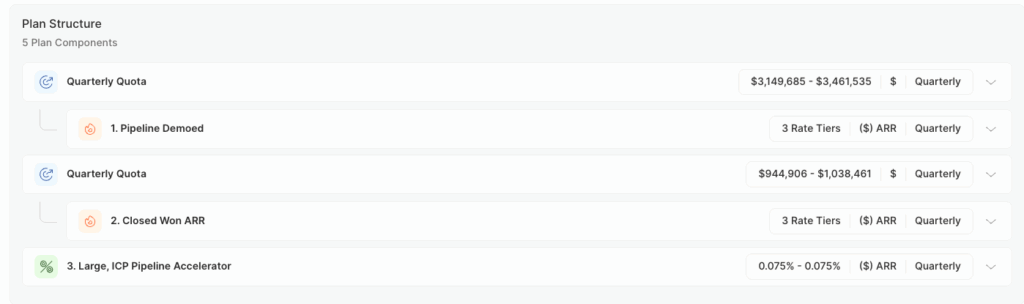
generating large ideal customer sales opportunities.
Visualize Comp’s Impact on NSM Movement
Once you implement your NSM, track its impact by team, segment, or region to identify what’s working and celebrate successes. Using dashboards, such as QuotaPath, to show how comp behaviors impact target metrics keeps results visible and easy to capture. For example, when renewal accelerators were added, GRR rose 8% QoQ. These observations help track progress and adjust comp plans accordingly over time.
Present Your Comp Plan in Board Language
Use board planning metrics to secure buy-in when presenting your compensation plan to the board. This helps unite everyone around the NSM while aligning it with the compensation plan.
These tips for formatting comp data in board decks will help improve your comp plan presentation:
- Highlight metric movement.
- Show CAC payback improvement.
- Project cash flow outcomes.
Common Pitfalls When Comp Doesn’t Reflect the NSM
Of course, misalignment can cost you. When sales compensation plans don’t reflect the company’s North Star Metric, teams may optimize for short-term wins instead of strategic growth. Here are a few common pitfalls to watch for: (BULLETS)
Paying for revenue that hurts margins: If comp plans reward total revenue without considering deal profitability, reps may discount heavily to close business. While this inflates bookings in the short term, it erodes margin and cash flow, negatively affecting board-level efficiency goals.
Over-incentivizing short-term deals that increase churn: When reps earn the same reward for all deals, they may prioritize quick wins instead of ICP contracts. This behavior undermines metrics like GRR or CAC by focusing on poor-fit customers who are more likely to churn.
Under-rewarding teams that drive expansion or renewals: Failing to recognize the impact of Customer Success or Account Management teams on revenue can stall growth. If compensation plans overlook upsells, cross-sells, or multi-year renewals, they fail to reinforce behaviors that directly support retention-driven metrics, such as GRR.
Try the most collaborative solution to manage, track and payout variable compensation. Calculate commissions and pay your team accurately, and on time.
Start TrialBringing It All Together: Comp as a North Star Driver
Comp plans shouldn’t just pay people; they should provide direction. The goal of the 2026 compensation plan alignment is to design incentives that drive achievement of the North Star Metric. When pay structures align with metrics such as GRR, CAC, and cash flow, compensation becomes a strategic lever for efficient and predictable growth.
QuotaPath believes that comp data is strategic data. With the AI-Powered Plan Builder, you can model plans around key metrics, test outcomes, and visualize how changes in incentives impact profitability and retention…before rollout.
Ready to achieve 2026 compensation plan alignment? Schedule time with a team member to see how QuotaPath helps Finance and RevOps teams connect comp to NSMs.