- A sales audit optimizes sales performance, aligns sales strategy with business goals, and improves sales tool ROI.
- Sales Audit frequency is based on organizational size, needs, and market.
- Sales audits improve customer experience.
Staying ahead of the competition and maintaining a high-performing sales team requires continuously assessing your strategies, processes, and tools to ensure that your sales operations are as efficient and effective as possible. In this guide, we’ll explore what a sales audit is, why it matters for revenue and efficiency, its benefits, and provide a detailed, actionable checklist for conducting one.
Design, track, and manage variable incentives with QuotaPath. Give your RevOps, finance, and sales teams transparency into sales compensation.
Talk to SalesWhat Is a Sales Audit?
A sales audit is a comprehensive, systematic review of a company’s entire sales operation—including strategies, processes, tools, and team performance—to identify inefficiencies, gaps, and growth opportunities.
What a Sales Audit Covers Across Your Sales Process
A sales audit involves a holistic view of the following elements of your sales operations:
- Lead generation
- Qualification
- Deal closing
- After-sales service
- Alignment between your sales strategies and execution
- Effectiveness of your sales tools and technologies
- Overall performance of your sales team
Unlike routine performance reviews, a sales audit provides a holistic view of your sales operations. It looks at the alignment between your sales strategies and execution, assesses the effectiveness of your sales tools and technologies, and evaluates the overall performance of your sales team. Often, to achieve a fully comprehensive and objective picture, managers will outsource the task or invest in audit softwares.
Sales Audit Process: 7-Step Checklist
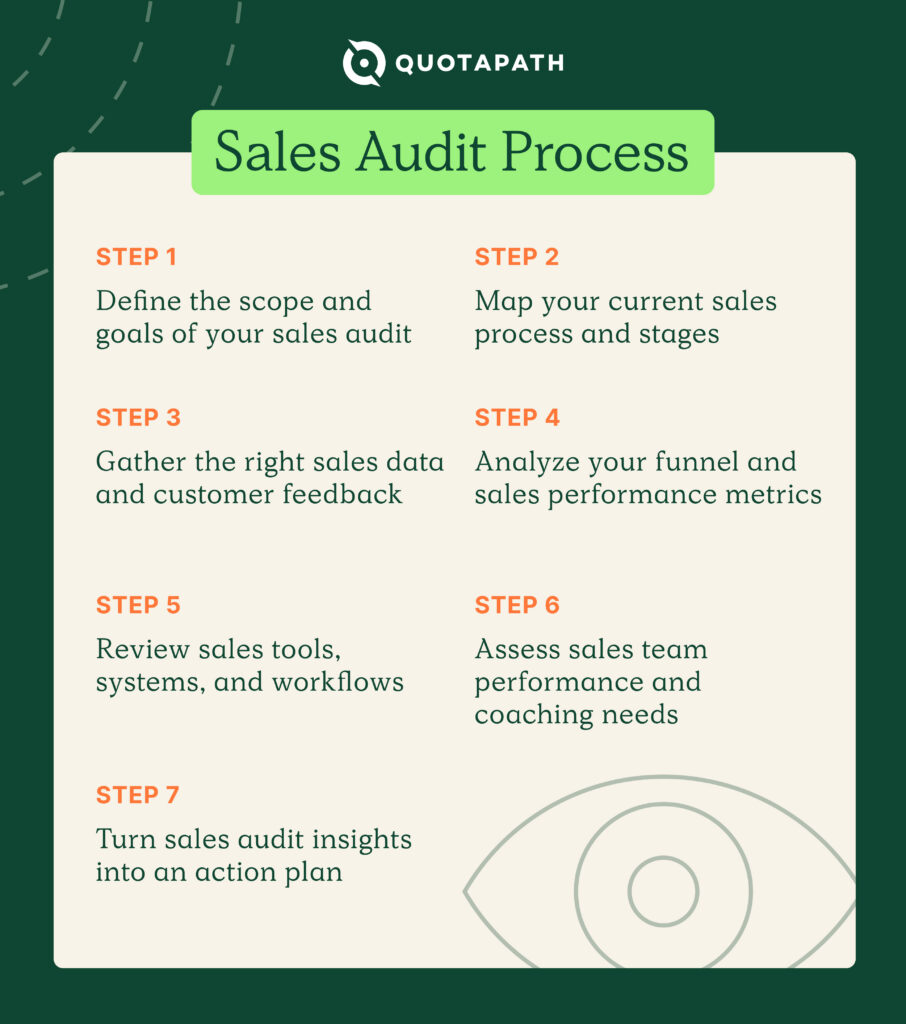
Conducting a sales audit might seem complex, but with a structured approach, it can be both manageable and highly rewarding. Here’s a detailed, step-by-step guide to help you conduct a successful sales audit.
| Step 1 | Define the scope and goals of your sales audit | Determine the focus and objectives of your audit, aligned with your current business goals and challenges. Set SMART goals to easily gauge success. |
| Step 2 | Map your current sales process and stages | Create a detailed map of your sales process, from distinguishing sales suspects from sales prospects to closing the deal and managing post-purchase care. This should include every touchpoint and customer interaction with your sales team. |
| Step 3 | Gather the right sales data and customer feedback | Review sales reports to identify trends in revenue, deal sizes, and conversion rates, breaking data into subcategories to reveal patterns. Review customer feedback from surveys, interviews, and reviews to understand customer experiences and identify common pain points, and sales team feedback to understand their challenges, needs, and sales process perceptions. |
| Step 4 | Analyze your funnel and sales performance metrics | Leverage your CRM to identify bottlenecks where leads drop off or stall, and analyze key performance metrics to assess individual and team performance. Assess whether your sales processes are aligned with your overall business strategy. |
| Step 5 | Review sales tools, systems, and workflows | Assess your sales team’s tools, systems, and workflows, including CRM systems, communication platforms, and analytics tools. Consider whether they are helping or hindering your team’s performance and if they are underutilized due to a lack of training or excessive complexity. |
| Step 6 | Assess sales team performance and coaching needs | Review individual performance metrics, such as sales volume, conversion rates, and customer satisfaction scores, helping identify top performers and those requiring additional support or training. Then implement a training and development plan based on your findings. |
| Step 7 | Turn sales audit insights into an action plan | Create a detailed action plan that specifies the necessary changes, assigns responsibilities, and sets timelines. Share this plan with your sales team to ensure everyone understands their role and the expected outcomes. |
When Should You Run A Sales Audit?
Using this sales audit process, it’s best to complete at least one annually. However, a quarterly or bi-annual audit frequency can be beneficial, depending on your organization’s size and needs, as well as the market you’re in.
Annual sales audit cadence
Annual sales audits enable you to review the performance of your sales strategies over a full fiscal cycle, identify trends, and make necessary adjustments before the next year begins. This cadence helps ensure that your sales processes align with your overall business goals and market conditions, enabling you to stay agile and responsive to changes.
Triggers that signal you need a new sales audit
There are instances when conducting audits more frequently, such as quarterly or biannually, can be beneficial. For example:
- When launching a new product
- Entering a new market
- Undergoing organizational restructuring
Why Sales Audits Matter For Revenue And Efficiency
Sales audits are important for several reasons.
First, they provide a structured way to assess the effectiveness of your sales operations, helping to identify areas for improvement and ensure that your team is working at its best.
Here are the main things sales audits help with.
- Identifying Bottlenecks
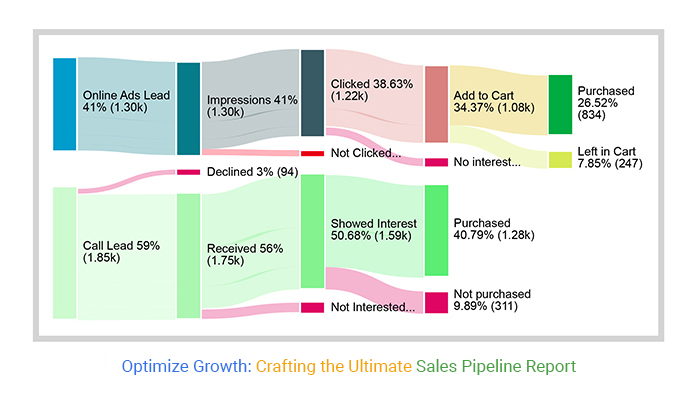
Sales processes often involve multiple stages and stakeholders, and bottlenecks can occur anytime. A sales audit helps you pinpoint these bottlenecks—whether in lead generation, qualification, or closing—and provides insights into eliminating them.
For example, if leads are frequently getting stuck at the proposal stage, the audit might reveal issues with how proposals are being presented or the time it takes to deliver them.
- Aligning Strategy with Execution
There can often be a disconnect between the sales strategy formulated by leadership and how the sales team implements it. A sales audit helps bridge this gap by ensuring that the strategy is being executed as intended and is delivering the desired results. This alignment is crucial for achieving your sales goals and ensuring everyone on the team is on the same page.
- Improving Team Performance
First and foremost, a sales audit fosters a culture of financial accountability, which helps motivate team members to perform at peak levels. Moreover, by evaluating individual and team performance, a sales audit can highlight areas where sales reps may need additional training, resources, or support.
It can reveal strengths to build on and weaknesses to address. For instance, if a particular team member consistently struggles with closing deals, the audit might suggest additional negotiation or closing techniques training.
- Maximizing ROI on Sales Tools
Many companies invest heavily in sales enablement software and tools but don’t always see the expected return on these investments. A sales audit assesses whether these tools are being used effectively and whether they are providing value to your sales process.
It might reveal, for example, that your CRM system is underutilized, leading to missed opportunities for follow-ups and relationship-building.
Try the most collaborative solution to manage, track and payout variable compensation. Calculate commissions and pay your team accurately, and on time.
Start TrialAdditional Benefits of A Sales Audit
While the primary purpose of a sales audit is to enhance efficiency and effectiveness, it can also yield several unexpected benefits:
- Uncovering hidden talent: Sales audits often reveal hidden skills within the team, such as a sales rep’s proficiency in data analysis, which can be leveraged in more strategic roles. This recognition can lead to better role alignment, benefiting both the individual and the organization.
- Strengthening interdepartmental collaboration: Insights from sales audits can benefit other departments, like marketing and customer service. Sharing these findings fosters stronger collaboration, ensuring all teams are aligned on goals and strategies and leading to more cohesive and effective initiatives.
- Improving customer service: Sales audits provide valuable insights into your high-value customers and their buying habits. This process can uncover common pain points and misalignments between customer expectations and sales processes. Addressing these issues enables customer service teams to improve onboarding, enhance satisfaction, and reduce support queries, leading to a better overall customer experience.

How The Right Tools Help You Act On Your Sales Audit
Consistent sales audits are essential for aligning and optimizing sales processes, performance, and revenue results. The right technology tools can streamline the audit process. They provide automated workflows, dashboards, real-time visibility, and analytics, enabling teams to easily identify bottlenecks, assign corrective tasks, and track progress.
Schedule a demo to see how QuotaPath streamlines the sales audit process and boosts performance.