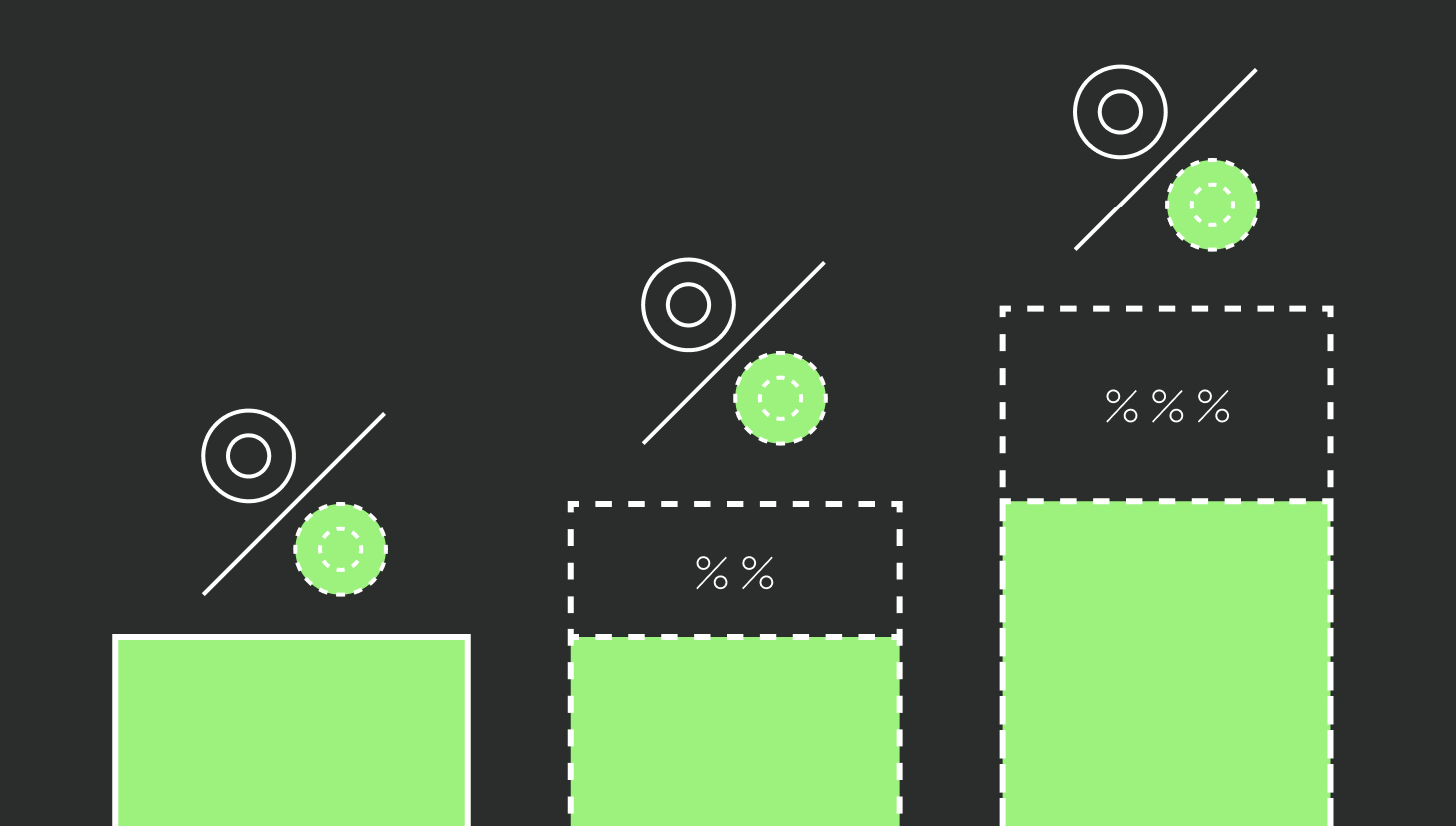
Accelerators are widely used but poorly understood, often intended as a motivational lever without a clearly defined goal. Commission accelerators are tiered compensation structures where the commission rate increases at pre-defined thresholds, such as quota. Companies use accelerators to motivate overperformance and reward top performers with strong upside to boost rep retention.
Poorly designed accelerators fail to motivate reps because they are too complex, tied to unrealistic thresholds, or poorly defined. Reps, unable to see the relationship between effort and payoff, end up feeling like they can’t control their earnings. This reduces their trust in the plan.
However, visibility into earnings increases rep performance. “Visibility into their earnings has changed what the reps are pushing for…showing your reps how much more they can make on longer contracts changed how they sell,” said Andre King, Director of Sales, Rootly.
What Are Motivational Accelerators?
Accelerators are a tiered payout structure in a compensation model, designed to incentivize sales overperformance. Commission accelerators are sales incentives that reward a salesperson for hitting a designated goal, such as quota attainment. These incentives trigger an increased payout rate once reps exceed a quota threshold.
Accelerators are common in SaaS compensation models to motivate sales reps to exceed quotas, inspire top performers, and drive rapid revenue growth, which is essential to the SaaS business model.
Simple formula example:
- Base rate: 10%
- Accelerator: 1.5x after 100%
- Rep closing $50K above quota earns higher payout
Do Accelerators Actually Motivate Reps?
The short answer: Yes, accelerators motivate reps. But how do accelerators change rep selling behavior?
We’ve found that reps push harder once they cross 80-90% attainment. Visibility into the next tier increases deal urgency as they approach an accelerator threshold. According to research by Harvard Business School, overachievement rewards, such as accelerators, are effective for keeping high-performing salespeople motivated beyond their quotas and throughout the year.
A clear payout upside in a well-structured plan influences deal prioritization by motivating reps to select deals with higher commission potential. Plus, visibility has been found to reduce mental stress, enabling reps to sell more effectively.
However, accelerators motivate reps only when tiers feel achievable and visible.
How to Design a Motivational Accelerator Plan
Understanding what an accelerator does and which behaviors it influences is foundational, but it takes a well-designed accelerator plan to achieve your desired outcomes. Let’s look at how to create a sales compensation plan with a step-by-step design process.
Step 1: Define Your Comp Plan Baseline
Accelerators only work if the baseline compensation structure is correct, providing financial stability to reps until they achieve the first threshold. The accelerator tiers motivate continuous revenue growth.
| Component | Example |
| OTE | $200,000 |
| Pay Mix | 50/50 |
| Quota | $500,000 |
| Base Commission Rate | 10% |
On-Target Earnings (OTE), quota, and payout are closely related. OTE represents a rep’s total potential compensation based on quota attainment, including payouts for rewards like a variable pay accelerator.
Lock In OTE and Pay Mix First
The first step in defining your comp plan baseline is establishing your OTE and pay mix. OTE is the total annual earnings a salesperson can expect if they meet or exceed their goals. This figure includes base salary, commission, and incentive payouts. Pay mix designates the percentages of base salary and variable pay that constitute the OTE.
Example:
$200K OTE
50/50 pay mix
$500K quota
→ base rate = 10%
Key insight: Accelerators do not fix a poorly designed compensation plan.
Choose the Right Quota Period
A quota period is a designated timeframe, typically monthly, quarterly, or annual, during which a salesperson or team must achieve their sales targets to earn commissions within a sales compensation plan.
This timeframe is commonly based on the sales cycle length, average sales price, and company stage, with quarterly being the most common. However, SaaStr recommends a monthly quota until $10m ARR, after which they recommend adjusting to quarterly.
The shorter, monthly quota cycle often employed by startups creates a sense of urgency for their reps but also increases payout volatility. By contrast, older, more established companies typically choose longer quota periods, offering more stable costs and slower motivational cycles.
| Shorter Periods vs Longer Periods | Longer periods |
| More unlock moments | More stable costs |
| More payout volatility | Slower motivation cycles |
Step 2: Decide What Behaviors You Want to Accelerate
Accelerators should reward the specific outcome that leadership cares about most.
Many plans default to total revenue because it’s easy to measure and directly influences growth. However, it may be more beneficial to leverage more focused metrics in accelerator compensation plans to drive strategic behaviors, improve profitability, and align sales activity with organizational objectives.
Revenue-Only vs Multi-Metric Accelerators
A revenue-only commission accelerator increases reps’ payout rate based solely on quota attainment, without factoring in other variables, making for simpler and easier modeling. For example, a rep earns 10% commission up to 100% of quota and 15% on all revenue above quota.
A multi-metric accelerator increases a rep’s commission rate based on multiple factors, such as revenue attainment and contract length, which encourages strategic selling. For example, a rep earns 10% commission up to 100% of quota, 15% on revenue above quota, and a 1.5x commission multiplier on multi-year contracts.
Adjust by Role
Accelerator structures differ by role based on KPIs and compensation mix.
Examples:
- Account Executives: Revenue accelerators: 10% commission up to quota and 15% on all revenue above 100% attainment.
- SDRs: Meeting or pipeline accelerators: $100 per qualified meeting, increasing to $150 per meeting after exceeding 120% of their monthly meeting target.
- Account Managers: Expansion revenue accelerators: 8% on expansion revenue, increasing to 12% after surpassing their quarterly growth target.
- Non-quota roles: 2x multiplier capped at 150%: a target bonus based on team performance, with a 2x multiplier applied for exceeding goals, capped at 150% of their target payout.
This begs the question: Should accelerator payouts be capped or uncapped? Capping a multi-rate commission plan, such as an accelerator, contradicts the intention of a tiered payout structure by limiting how much a rep can earn. This can be demotivating and encourage negative behaviors such as sandbagging.
Step 3: Build Your Tier Structure
Most SaaS organizations use 3-tier accelerator structures in sales compensation plans to motivate overperformance and optimize revenue growth. They generally design these sales commission structures with a higher payout rate once reps exceed 100% quota attainment.
Example:
| Attainment | Multiplier | Effective Commission |
| 0-100% | 1x | 10% |
| 100-120% | 1.25x | 12.5% |
| 120%+ | 1.5x | 15% |
Tiered payout structures reinforce performance milestones by offering progressively higher commission rates as reps exceed defined incremental attainment bands. That’s the difference between single-rate and multi-tier accelerators. Instead of plateauing at a flat rate after hitting quota, tiered systems incentivize reps to push beyond their goals to achieve the next tier.
Pick an Accelerator Type: Linear vs Step vs Retroactive
There are three types of commission accelerators:
- Linear: Gradual increase as each accelerator threshold is achieved. For instance, an increase of 1% at each threshold.
- Step: Higher rate only after a specified threshold is met, such as quote attainment. Then the payout rate increases significantly. For instance, 10% for deals up to 100% of quota, then 15% commission rate for deals between 100-150% of quota, then a higher payout rate for 150% +
- Retroactive: Higher rate applied to all revenue within a period once a specific threshold is reached
Set the Multiplier Without Breaking the Budget
Accelerator compensation plans commonly use commission multipliers ranging from 1.25x to 2x to dramatically boost sales rep payout rate once they exceed 100% quota attainment. Teams model cost impact by running scenarios using historical attainment data to limit budgetary risk. However, decelerators can also help offset aggressive accelerators.
Step 4: Stress-Test the Plan Before Launch
Now that you know how to design a sales accelerator plan, let’s take a final step before implementing: model payouts across the performance curve.
Model Payouts Across the Performance Curve
Attainment scenario modeling simulates various quota attainment levels to predict the impact on commission expenses, rep earnings, and total revenue.
| Attainment | Payout |
| 80% | $80K |
| 100% | $100K |
| 120% | $130K |
| 150% | $180K |
Modeling prevents runaway compensation costs, ensuring the plan is financially sustainable and motivating. Siloed data, manual formulas, version control, and a lack of transparency make running these scenarios in spreadsheets a high-risk, time-consuming, and error-prone process.
Common Design Mistakes
- Confirm that your accelerator compensation plan doesn’t contain any of these common design flaws. Otherwise, your plan may backfire.
- Unreachable accelerator thresholds damage trust, demotivate reps, and may cause high turnover
- Too many attainment bands create unnecessary complexity, making the plan hard to understand and manage, while demotivating reps.
- Tiers that reward only top performers disengage the majority of salespeople, encourage high-pressure sales tactics, decrease morale for those not hitting top tiers, and potentially cause burnout.
- Overly complex payout math makes it difficult for reps to understand how they earn, leading to demotivation, reduced trust, and higher turnover.
Step 5: Roll Out and Give Reps Real-Time Visibility
Even the best accelerator structure fails if reps can’t see where they stand. Manual commission tracking breaks the connection between effort and reward that drives desired behaviors.
Relying on delayed reports, spreadsheets, or month-end calculations, reps don’t know how close they are to the next tier or what an extra deal is worth. Consequently, the urgency and motivation that the accelerators are intended to create never materialize.
Why Visibility Is the Multiplier on Your Multiplier
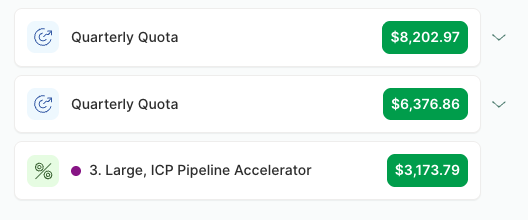
Visibility drives desired behaviors. Reps sell differently when they can see where they stand in relation to their targets, the next attainment threshold, and the reward. This visibility helps reps understand how they earn incentives and creates a motivational feedback loop. When reps can see their current attainment, they push to hit the next payout tier to maximize their earnings potential.
How QuotaPath Automates Accelerator Tracking
QuotaPath allows teams to build tiered plans with its AI-powered plan builder and simulate payouts using its plan performance modeling tool, without relying on manual, formula-heavy spreadsheets. By integrating directly with CRMs, QuotaPath automates commission calculations by syncing deal data and provides real-time earnings dashboards with clear visibility into earnings, pipeline, and quota attainment.
Design, track, and manage variable incentives with QuotaPath. Give your RevOps, finance, and sales teams transparency into sales compensation.
Talk to SalesStart with this Accelerator Plan Template
This template is a strong starting point for building your own motivational accelerator plan structure.
| Attainment | Multiplier | Payout |
| 80% | 1x | 80% of target commission |
| 100% | 1x | 100% of target commission |
| 120% | 1.25 | 150% of target commission |
| 150% | 1.5x | 225% of target commission |
Use this template to define attainment tiers and assign multipliers, then plug in your targets and commission rates to model how payouts scale with performance. From there, adjust thresholds and multipliers to align with your revenue goals, sales motion, and budget.
Use QuotaPath’s free sales compensation plan modeler to design and simulate accelerator plans before rollout.