The scope of Revenue Operations (RevOps) has grown from a narrow sales-focused function to a strategic role overseeing the entire customer lifecycle. This transformation includes the evolution of sales compensation ownership from SalesOps to RevOps, replacing an ad hoc process with a continuous, strategic, cross-functional process.
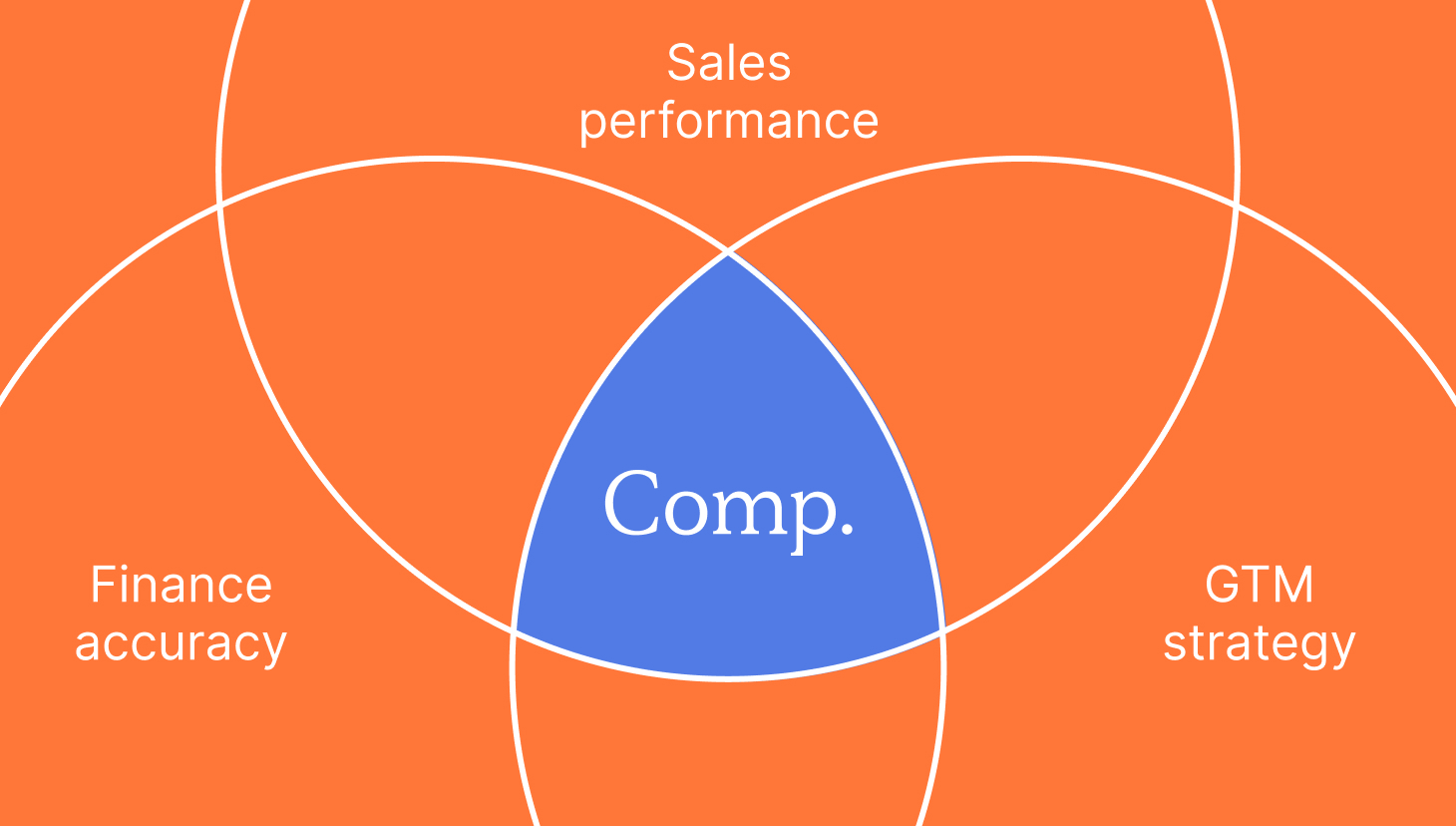
Compensation sits at the intersection of sales performance, Finance accuracy, and Go-to-market (GTM) strategy, aligning sales rep behavior with company objectives to reward performance, drive revenue, and ensure budgetary control.
By contrast, fragmented compensation ownership carries risks, including misaligned incentives, shadow accounting, and commission disputes arising from complexity or errors.
For instance, a QuotaPath report found that 78% of revenue leaders said their sales reps struggle to understand their compensation plans. Consequently, 60% of reps take 3 to 6 months to fully understand how they earn commissions under their compensation plan.
RevOps can avoid these issues by owning a “single source of truth” for sales compensation, providing all stakeholders with a shared data source. This boosts transparency, accuracy, and alignment throughout the sales compensation process.
Use our AI Revenue Strategist
Build, test and measure your compensation strategy with QuotaPath’s AI Revenue Strategist, Atlas.
Enter AtlasWhat Revops Actually Manages Across The Comp Lifecycle
Clearly, there are benefits to RevOps owning compensation, including establishing a reiterative process that better aligns with organizational objectives and drives greater revenue. But what exactly does sales compensation management by RevOps entail?
- Plan design: RevOps data-driven incentive design process uses CRM insights, historical sales performance data, and financial modeling to create plans that align sales behaviors with company growth objectives.
- Quota modeling: Scenario modeling and territory planning ensure RevOps quota setting is realistic, balanced, and aligned with company revenue goals.
- Rollout: Creating clear documentation and ensuring proper enablement is overseen by RevOps during sales comp plan rollout to ensure salespeople understand and trust the new plan.
- Real-time tracking: RevOps enforces CRM data integrity and uses dashboards to monitor KPIs, customer journey, and revenue performance. This enables them to track comp plan performance to motivate the right behaviors to drive business goal attainment.
- Payout reconciliation: RevOps creates financial alignment by comparing compensation with money received to prevent overpayments and ensure profitability.
How Revops Should Build a Sales Compensation Plan
Now that you know what RevOps manages throughout the compensation lifecycle, let’s look more closely at the RevOps compensation plan design process.
Tie plan design to business goals first
Start by defining GTM priorities aligned with organizational objectives. These priorities translate business goals into sales activities that drive goal attainment. For example, new logo acquisition to drive revenue growth or market expansion; expansion revenue to support revenue growth from existing customers; and multi-year deals to increase ARR or reduce CAC.
Once you’ve determined your priorities, you should reinforce these goals with incentives that reward desired behaviors. Reps will naturally focus on prospects and deals that boost their earnings, motivating them to support the attainment of business objectives.
Define roles and what each one controls
Ensure your plan drives the right behaviors, remains fair, and aligns with organizational objectives by clearly defining roles and the scope of control they have. Sales Development Reps (SDRs) generate new business and book meetings for Account Executives (AEs) through activities such as cold calling, emailing, and social selling. SDRs are paid based on their completed activities, including meetings booked, qualified leads (SQLs), and pipeline created.
Account Executives (AEs) manage the full sales cycle from discovery through signing and are paid based on revenue targets. Customer Success (CS) is responsible for helping customers maximize value from their use of products or services. CS is rewarded for customer retention and growth through increased revenue.
Set OTE and quota using real math
With an understanding of key revenue team roles, you’re ready to set On-Target Earnings (OTE) and quota for each role. OTE represents a salesperson’s earning potential if they achieve 100% of quota. OTE is calculated by adding the base salary plus total incentives. To ensure each target is fair and attainable, it’s best to use a data-backed quota-setting process using historical data, market trends, and overall organizational sales objectives.
After setting quotas and calculating OTEs, use the quota-to-OTE ratio to confirm the fairness and efficacy of a rep’s pay plan to motivate desired behaviors. This ratio is calculated by dividing a rep’s quota by their average monthly on-target earnings. According to a SaaStr survey, a sales rep’s quota should be 3x to 5x their OTE.
Example:
- $100K OTE
- 50/50 split → $50K base / $50K variable
- 5x quota ratio → $250K quota
Choose your commission structure
Now it’s time to set the rules for the incentive portion of the compensation plan, called a commission structure. The commission structure details what, when, and how reps get rewarded. There are three popular commission structures to choose from.
Flat rate pays a fixed value reward for every deal closed. A tiered commission structure increases based on milestones such as quota, and is also known as multiple rates, accelerators, escalators, or multipliers. A revenue-based commission structure pays reps a fixed percentage of total sales revenue generated and is often used to drive top-line sales figures rather than profitability.
While a flat rate is best for high-volume, low-cost sales or early-stage businesses with consistent pricing, revenue-based commission structures are best for high or consistent-margin products, and both drive volume and offer simplicity. Tiered commission structures, by contrast, are intended to motivate and reward overperformance, but can be complex to manage for large teams.
Layer in accelerators, decelerators, and kickers
Add specific incentives to motivate sales reps’ behaviors that drive achievement of business objectives.
- Accelerators → rewards overperformance with a bonus or incentive for exceeding a sales goal, such as 100% quota attainment. For example, 1.5x rate after 100% attainment.
- Decelerators → protect downside by reducing a rep’s commission rate until they hit quota, or on less profitable deals. For example, if the standard rate is 10%, the decelerator would be 8% if the deal falls outside of the ideal customer profile.
- Kicker incentives → encourage short-term behavior shifts by offering an additional incentive or bonus to achieve a specific goal. For example, a bonus for multi-year deals.
Scaling with compensation software
Incentive compensation management (ICM) software is a tool that simplifies the design, implementation, and management of sales compensation plans. It eliminates manual processes through automation and real-time visibility enabled by sales tech stack integration, resulting in reduced admin time, increased payout accuracy, building rep trust, and enabling operational scalability.
Sales Compensation Mistakes RevOps Teams Make
Now that you know you should build a sales compensation plan, remember to avoid the following errors.
- Overcomplicating plans: If reps cannot easily explain the plan back to you, it indicates there are too many components and that reps are unsure what to focus on.
- Ignoring CRM data integrity: Failure to clean up CRM data inconsistencies, terms, dates, and stages results in inaccurate commission payouts, revenue loss, rep frustration, and time-consuming commission dispute resolution challenges.
- Not modeling scenarios: Untested compensation plans often lead to missed revenue goals, overpaid commissions, and rep turnover due to lack of trust.
- Delayed payouts: Manual commission calculations often lead to errors, slow payouts, and increase reconciliation work for Finance, while frustrating reps and eroding trust.
- Lack of transparency: If reps can track their earnings and their goal progress or understand how they earn, they are not motivated by their sales incentives and distrust how their payouts are calculated, increasing shadow accounting risk.
Design, track, and manage variable incentives with QuotaPath. Give your RevOps, finance, and sales teams transparency into sales compensation.
Talk to SalesFAQ’s to RevOps leaders’ practical concerns
What parts of sales compensation should RevOps own vs. finance?
RevOps should own the design, tracking, and communication of sales compensation in collaboration with Finance, which owns approvals, compliance, and payouts.
How does RevOps set quotas without historical data at early-stage companies?
RevOps uses benchmarks, scenario modeling, and iterative adjustments to set quotas for early-stage companies without historical data.
What should RevOps do when reps dispute commission payouts?
RevOps should create an escalation path for when reps dispute commission payouts. Document the plan clearly at rollout to help reps understand how they earn commissions. Using real-time dashboards, such as those in QuotaPath, reduces disputes proactively by serving as a single source of truth. This visibility provides reps with clarity and keeps everyone on the same page.
How does RevOps handle comp plan changes mid-fiscal year without breaking trust?
To avoid breaking rep trust when making comp plan changes mid-fiscal year, RevOps should communicate early and clearly, avoid retroactive changes, and provide visibility into how the plan changes impact rep earnings.
Schedule a demo to see how QuotaPath streamlines RevOps sales compensation management.