Sales planning is broken for most teams. Quota-setting is often based on gut feel. Territory carving happens in spreadsheets. Commission tracking is a mess of tabs and manual reconciliation. In fact, 49% of revenue operations leaders believe their processes aren’t flexible enough, and 46% report their processes are mostly manual and lack automation, according to Forrester.
The right sales plan software changes all that by creating a process of strategy, modeling, automated agility, real-time visibility, and auditable compliance. However, picking the wrong one creates new headaches.
This guide will provide a clear framework, a comparison of leading platforms, and a recommendation to RevOps leaders, sales ops managers, and finance stakeholders evaluating sales planning tools.
Key Takeaways
- Prioritize sales plan software that improves planning, forecasting, and decision-making across Finance, Sales, and RevOps.
- AI-assisted planning, scenario modeling, and planning workflows are the capabilities that create long-term value.
- Match your sales plan software to your planning needs—enterprise governance, configurable modeling, and AI-assisted planning each serve different revenue organizations.
- QuotaPath delivers the strongest balance of planning capabilities, transparency, usability, and value for mid-market, RevOps-led organizations.
Design, track, and manage variable incentives with QuotaPath. Give your RevOps, finance, and sales teams transparency into sales compensation.
Talk to SalesSales Plan Software Comparison Table
Let’s start with a snapshot of the top sales planning tools highlighting their G2 rating, standout feature, and a brief description of who they are best suited for.
| Vendor | G2 Rating | Standout feature | Best for |
| QuotaPath | 4.7 | Atlas AI Revenue Strategist | RevOps teams that want a single source of truth for compensation |
| CaptivateIQ | 4.7 | SmartGrid™ no-code modeling engine | Mid-market to enterprise teams that want agility, clarity, and control |
| Xactly | 4.2 | Xactly Intelligence AI-powered framework | Large global enterprises that want to align strategy with execution and scale |
| Qobra | 4.8 | Specialized AI Agents | Global mid-market businesses that need a single commission platform |
| Everstage | 4.8 | AI-powered planning engine | Enterprises and high-growth companies |
The Pricing Comparison
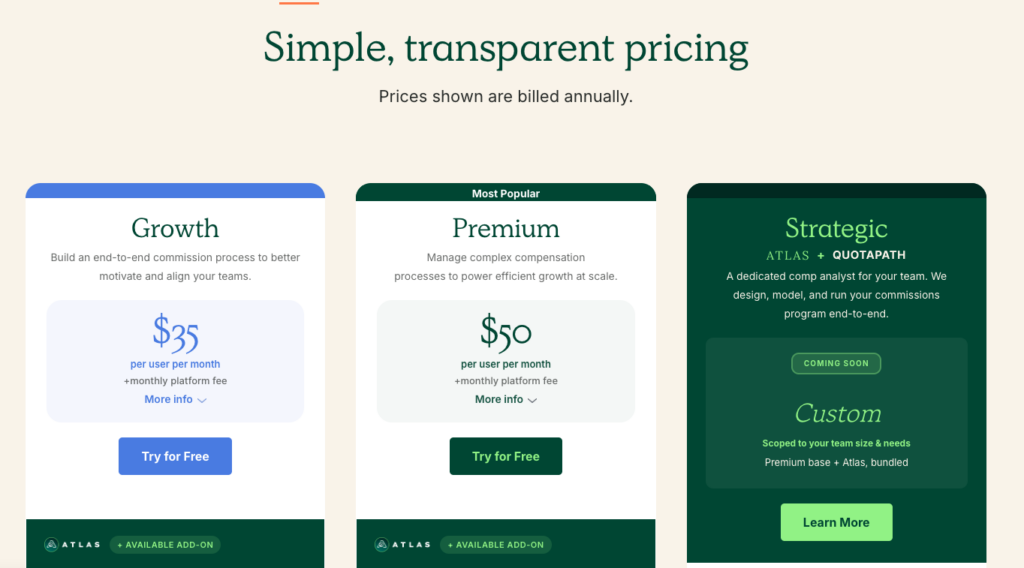
Let’s shift our focus to pricing, which is often opaque in the sales plan software category, but here’s what you can expect. Pricing models in this category are typically presented as per-seat, per-workspace, flat-fee, or usage-based.
| Starting Price | Note | |
| QuotaPath | $35-50/user/month | Premium – $50/user/month |
| CaptivateIQ | Custom | Contact for pricing |
| Xactly | Custom | Contact for pricing |
| Qobra | Custom | Contact for pricing |
| Everstage | Custom | Contact for pricing |
Hidden costs to watch for include implementation fees, support tiers, and overage charges that can add up quickly. However, QuotaPath is the only sales planning tool with a straightforward pricing model published on its website and no hidden fees.
Core Features of Modern Sales Planning Software
Here’s a side-by-side breakdown of key features available from each of these sales planning tools to help you select the solution best suited to your organization.
| Feature | QuotaPath | CaptivateIQ | Xactly | Qobra | Everstage |
| Quota planning & modeling | Atlas AI-assisted planning and modeling | Highly flexible, no-code modeling | Enterprise-grade planning | AI-assisted planning | Modern planning workflows |
| Territory management | Built for growing GTM teams | Flexible territory design | Deep enterprise territory management | Territory assignment automation | Territory planning for scaling teams |
| Commission tracking & calculation | Real-time, rep-friendly visibility | Highly configurable calculations | Complex enterprise compensation | AI-powered commission automation | Automated incentive management |
| CRM integration | Native Real-time sync | Deep CRM connectivity | Enterprise CRM ecosystem | Native CRM integrations | CRM-driven workflows |
| Reporting & visibility | Rep, manager & Finance dashboards | Strong analytics & audit controls | Executive & enterprise reporting | Real-time revenue insights | Unified planning visibility |
| Scenario modeling / What-if analysis | Atlas-guided scenario modeling | Advanced no-code modeling | Enterprise forecasting scenarios | AI-generated planning scenarios | Planning simulations |
Although every platform supports these features, their planning philosophy differs considerably. QuotaPath leads with Atlas AI-assisted planning and modeling, while Qobra and Everstage emphasize AI-powered planning workflows. CaptivateIQ offers highly configurable no-code modeling, and Xactly takes a more enterprise-centric approach, emphasizing sophisticated planning, territory management, and forecasting for large, complex organizations.
Planning approaches distinguish these platforms. Quota planning and management tools range from AI-guided planning and modeling to highly configurable design and enterprise-grade frameworks. The same pattern extends across sales territory planning software, revenue forecasting software, and sales capacity planning tools, where vendors differ in AI guidance, modeling flexibility, forecasting depth, or workflow automation.
RevOps teams often focus too much on comparing commission tracking and CRM integrations, even though they have become table stakes across leading platforms. However, RevOps tends to underweight how effectively a platform brings together quota planning, territory management, scenario modeling, reporting, and forecasting into a unified planning experience that helps Finance, Sales, and RevOps make better revenue decisions together.
Criteria for Comparing Sales Plan Software Providers
With the sales plan software market projected to grow by nearly 8% per year through 2033, comparing today’s sales planning tools can feel overwhelming. Rather than relying on feature checklists, you should evaluate how well each platform will perform as your business scales. Ease of implementation should be a key consideration. You should weigh how quickly your team can model quotas, territories, and capacity, make changes independently, and see value without relying on technical specialists. A platform that takes months to configure delays your time-to-value.
CRM integration deserves just as much scrutiny. Many vendors advertise Salesforce or HubSpot integrations, but teams often underestimate the difference between basic and native integration. Look for platforms that sync data in real time with your existing field mappings and eliminate manual imports or reconciliation. A reliable data flow gives Sales, Finance, and RevOps confidence in every plan, forecast, and payout.
Don’t underestimate the importance of rep-facing visibility and usability, directly impacting adoption, trust, and productivity. Easy-to-use digital tools have also been linked to higher employee engagement and productivity. According to HBR, 66% of organizations that equipped employees with intuitive digital tools reported stronger engagement, while Gallup found that highly engaged employees are 18% more productive.
Rep-facing visibility enables reps to easily understand how they earn and track their attainment. Otherwise, reps won’t be motivated to push to the next milestone, will continue relying on shadow tracking, and will dispute payout calculations. You should look for Finance and RevOps admin controls that support audit readiness and ASC 606 compliance, maintain data integrity and version control, and automate commission and quota logic.
Consider the future. The right sales planning software should continue to support your business as it scales, compensation plans increase in complexity, and planning cycles become more collaborative. And don’t forget to evaluate the vendor’s support model and customer success approach. Strong onboarding, responsive support, and strategic guidance often determine whether a platform becomes a long-term solution or a tool your team eventually outgrows.
How We Evaluated All Listed Sales Planning Software Vendors
Data sources such as G2, Capterra, public reviews, and product testing were used to evaluate the following sales planning tools. We focused more heavily on public reviews and product testing to reflect real-life experiences. Although we made our best efforts to remain neutral, for full transparency, QuotaPath is our product.
#1 QuotaPath
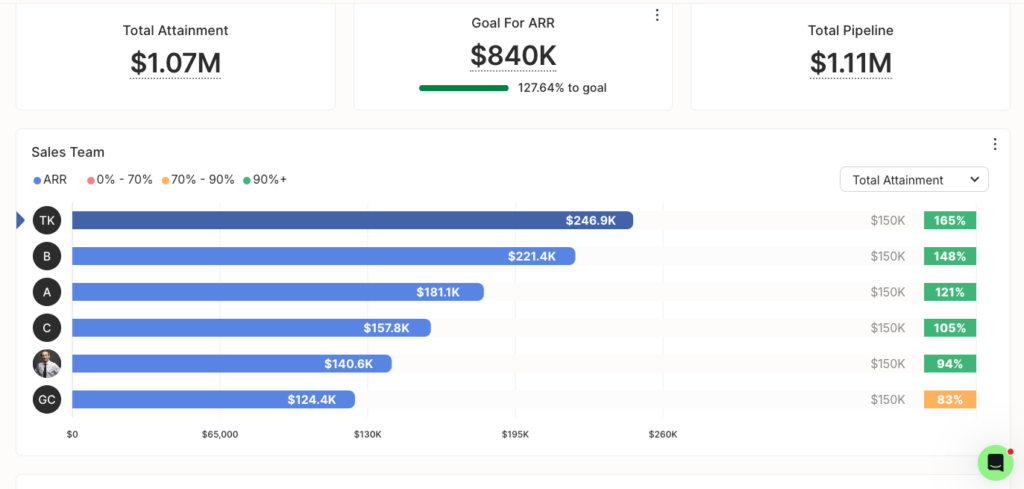
Overview: An AI native sales planning software built for revenue operations (RevOps), Finance, and Sales.
Rating: 4.7
Key Strengths:
- Comp plan management
- Rep visibility
- Real-time commission tracking
- CRM integration
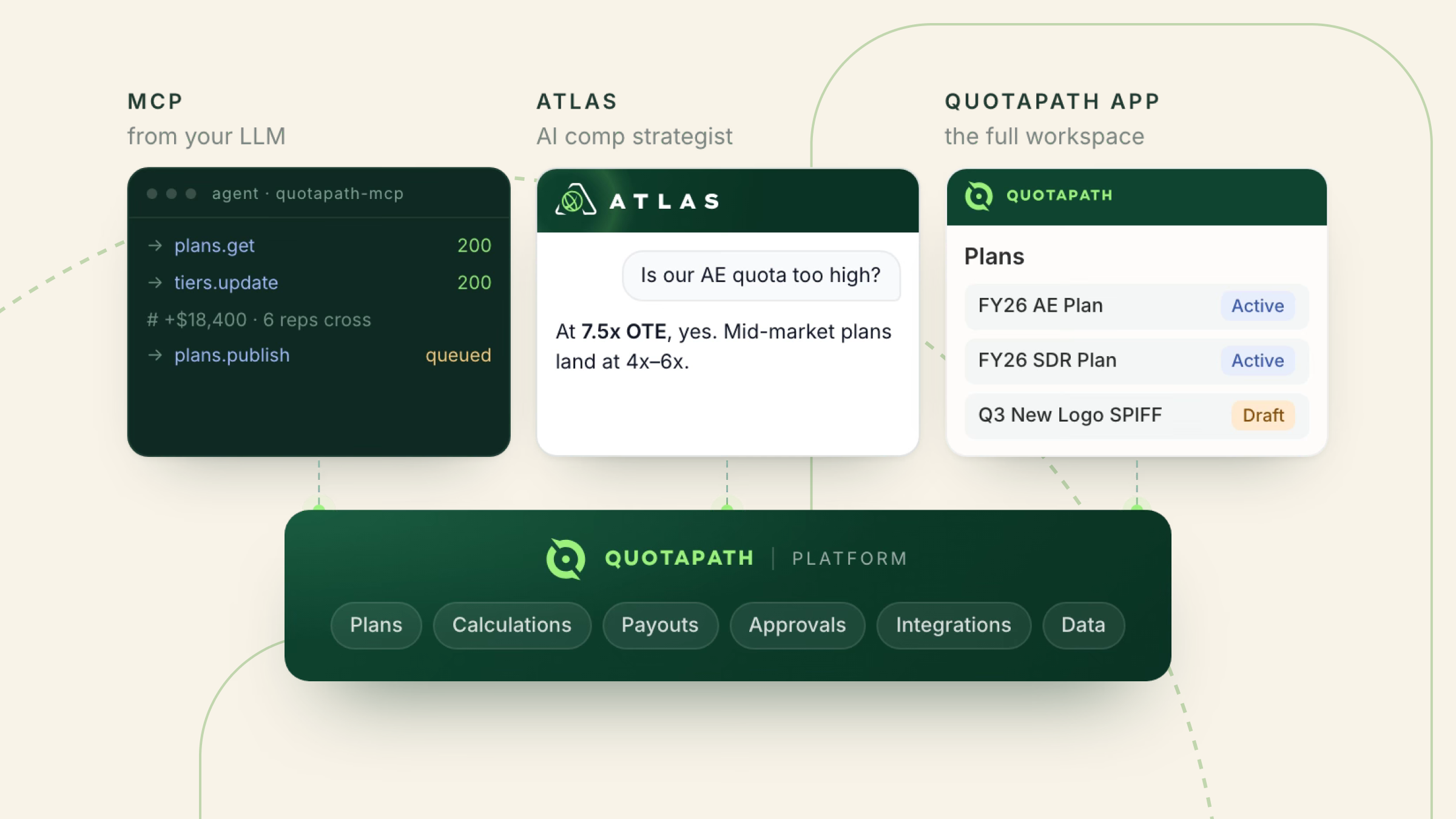
- Atlas (AI revenue strategist)
Best For: RevOps teams that want a single source of truth for compensation
Pricing: $35-50/user/month
#2 CaptivateIQ
Overview: A modern sales planning tool helping revenue teams combine strategy, execution, and measurement
Rating: 4.7
Key Strengths:
- Comp plan management
- Real-time commission tracking
- CRM integration
- SmartGrid™ no-code modeling engine
- SOX compliance and audit controls
Best For: Mid-market to enterprise teams that want agility, clarity, and control
Pricing: Custom – Contact for pricing
#3 Xactly
Overview: An AI-powered sales plan software designed to help RevOps, sales, and finance build go-to-market (GTM) strategies.
Rating: 4.2
Key Strengths:
- Comp plan management
- Rep visibility
- Real-time commission tracking
- CRM integration
- Xactly Intelligence AI-powered framework
Best For: Large global enterprises that want to align strategy with execution and scale
Pricing: Custom – Contact for pricing
#4 Qobra
Overview: An AI-native sales planning tool designed to align Revenue Operations (RevOps) with Finance
Rating: 4.8
Key Strengths:
- Comp plan management
- Rep visibility
- Real-time commission tracking
- CRM integration
- Specialized AI Agents
Best For: Global mid-market businesses that need a single commission platform
Pricing: Custom – Contact for pricing
#5 Everstage
Overview: Sales plan software that connects operational planning with incentive compensation for mid-market and enterprise organizations.
Rating: 4.8
Key Strengths:
- No-code plan design
- Rep visibility
- Real-time commission tracking
- CRM integration
- AI-powered planning engine
Best For: Enterprises and high-growth companies
Pricing: Custom – Contact for pricing
Try the most collaborative solution to manage, track and payout variable compensation. Calculate commissions and pay your team accurately, and on time.
Start TrialQuotaPath Is the Best Sales Planning Software
After reviewing the comparisons, it’s clear that QuotaPath comes out on top for mid-market, RevOps-led organizations with comp plan complexity. Offering the strongest balance of planning capabilities, usability, and transparency, QuotaPath extends beyond simply managing commissions by bringing together AI-assisted quota planning and modeling, native CRM integration, real-time visibility, scenario modeling, and reporting into a unified platform.
As this guide has shown, those capabilities matter far more over the long term than simply checking feature boxes. However, QuotaPath may not be the right fit for every organization. Enterprises with highly specialized global planning requirements or exceptionally complex territory structures may benefit from platforms built specifically for enterprise-scale planning and governance.
Likewise, organizations that prioritize extensive no-code customization may prefer a more modeling-centric solution. But for growing revenue organizations looking to align Finance, Sales, and RevOps around a single source of truth, QuotaPath delivers the best overall combination of functionality, usability, and value.
Ready to modernize your sales planning process? Start a free trial or book a demo to see how QuotaPath can help.
FAQ
What is sales plan software used for?
Sales plan software is used for sales territory design, quota allocation, sales performance management, revenue forecasting, and sales compensation management. It replaces error-prone, time-consuming spreadsheets with platforms that sync data across key sources such as CRM to automate planning processes, optimize team performance, and drive revenue.
How is sales planning software different from CRM?
Sales planning software is different from CRM in its purpose and focus. Sales planning software is used for high-level strategy to drive revenue through activities such as territory design, quota allocation, and predictive modeling. CRM serves as a day-to-day database that stores interactions with leads and customers and helps track deal progress, often feeding data into sales planning tools via integrations.
What does sales planning software cost?
Sales plan software costs start at $35 per user, per month and increase to rates in the hundreds per user, per month. Factors influencing these costs include things like implementation, add-ons, and integration.
H3: Can sales plan software integrate with Salesforce and HubSpot?
Yes, sales plan software and sales performance management (SPM) platforms integrate directly with Salesforce and HubSpot. These integrations allow the two systems to sync historical CRM data, deal pipelines, and quotas for automated capacity planning, territory mapping, and compensation management.
How long does it take to implement sales planning software?
Implementation of sales planning software takes anywhere from 4 weeks to 12 months, depending on the organization’s size and complexity and the software’s complexity. The implementation process typically takes 4 to 12 weeks for small and mid-market organizations, while complex enterprise businesses can take 3 to 12 months.
What’s the difference between sales planning software and incentive compensation management (ICM)?
Sales planning software helps businesses design territories, set sales quotas, and forecast revenue, whereas incentive compensation management (ICM) software administers variable pay such as commissions and bonuses. While sales planning software helps determine where reps sell, ICM calculates their earnings.
Book a demo to see QuotaPath sales planning software in action.