RevOps sits between two functions with competing incentives: Sales wants generous, flexible plans; Finance wants predictable, conservative ones. Comp planning is where those two forces collide, and the resulting plan often reflects whoever pushed hardest in the last planning meeting.
Most comp plans are built on opinion, not data. This leads to missed targets, frustrated reps, increased rep churn, and an evident misalignment with business goals. Sadly, this is all too common, as 39% of revenue leaders report struggling with misaligned incentives. The cost of getting it wrong shows up 6–9 months later, and by then it’s expensive to fix.
Sales compensation planning is a strategic system that translates company goals into rep behavior. Most RevOps leaders inherit a process that doesn’t acknowledge that. Our RevOps guide to comp planning shows leaders how to build a sales comp plan that drives performance and aligns with budgets.
Key Takeaways:
- Align sales compensation with business objectives by working backward from revenue target to quota, coverage, and plan design.
- Design comp plans for each role based on what outcomes they can influence that contribute to business goals.
- Use both bottom-up and top-down forecasting to confirm plans will motivate reps while protecting the budget.
- Sales compensation planning is a cyclical process, so build governance into the plan design.
Design, track, and manage variable incentives with QuotaPath. Give your RevOps, finance, and sales teams transparency into sales compensation.
Talk to SalesAligning Comp Plans to Company Objectives
This is where most plans fail before a single number is written.
Plans should flow from the business strategy, not the other way around.
Achieve this by reverse-engineering from the revenue target → quota → coverage → plan design.
By working backward, you calculate achievable quotas and proper headcount (sales capacity) to reach the target. Once this is complete, you’re ready to design a compensation plan that motivates the appropriate behaviors needed to hit the target.
Different strategic priorities demand different plan shapes because they require different behaviors. For instance, new logo acquisition, expansion, retention, and profitable growth are controlled by different roles and activities. That’s why it’s necessary to design comp plans for each role based on what outcomes they can influence that contribute to business goals.
A leadership alignment problem where the CRO, CFO, and CEO disagree about what the plan should reward often results in “we want everything” plans that try to reward 5 behaviors and end up reinforcing none. RevOps must frequently facilitate the conversation to avoid this issue, so the final plans drive achievement of revenue objectives.
Mapping Sales Roles to Comp Structures
This is the first step to consider. The frame to bring: a role’s pay mix to reflect how much control that role has over the revenue outcome.
- AEs: Have full influence over the deal, are quota-bearing, and usually receive a 50/50 mix.
- SDRs/BDRs: Since this role influences pipeline, but not close, these reps receive more base-heavy compensation, such as a 60/40 or 70/30 mix.
- AMs: Incentives depend on whether the role protects or grows revenue and typically consist of variable compensation tied to renewals and expansion.
- CSMs: Compensation is typically base-heavy, with variable pay on GRR or NRR if they own those numbers.
- SEs and Specialists: Incentives for these roles are often a team-based component that is sometimes a flat bonus tied to attached deals.
Choosing the Right Levers
The RevOps sales compensation toolkit includes base pay, commission, accelerators, decelerators, bonuses, SPIFFs, and kickers. Each one does a specific job. Treat them like instruments in a musical arrangement: too many playing at once, and the rep can’t tell what the song is.
- Accelerators reward overperformance, but only if quotas are set correctly. Otherwise, they pay for sandbagging or deal timing.
- SPIFFs should be rare and time-bound. Standing SPIFFs become entitlements.
- Multi-year and multi-product kickers can shape product mix without raising base rates.
- Decelerators are unpopular but underused. Sometimes the right answer is to stop discounting when it gets out of hand.
The Math Behind the Plan
Now that you have some background, it’s time to run some numbers and complete key elements of sales commission budgeting
Setting quota-to-OTE ratios
A quota-to-OTE ratio isn’t a target; it’s a constraint check. If yours is below 3x, you’re likely overpaying. Above 6x, you’re likely setting reps up to fail.
For compensation plan design for SaaS, the standard benchmark band is 3.0x–4.5x for earlier-stage businesses and 4.0x–5.5x at scale. Higher ratios work when the motion is mature and repeatable; lower ratios are appropriate when pipeline is less predictable, or the motion is consultative.
A simple worked example:
- OTE: $200,000
- Pay mix: 50/50
- Base salary = $100,000
- Variable compensation (target commission earnings) = $100,000
- Quota-to-OTE ratio: 4x
- Quota = $200,000 × 4 = $800,000
To determine the commission rate on quota, divide the target variable compensation by the quota:
$100,000 = 12.5%
$800,000
The rep is expected to earn $100,000 in commissions when they achieve $800,000 in quota attainment. Therefore, the commission rate is 12.5% of quota revenue.
NOTE: The 12.5% figure is considered an effective commission rate at target attainment unless the commission structure is a straight commission rate with no thresholds, tiers, or accelerators, where the rep is paid on every dollar sold.
Forecasting commission liability
Leveraging both bottom-up and top-down forecasting methods for sales commission budgeting helps confirm that RevOps sales compensation plans can motivate reps while protecting the budget.
- Bottom-up: model per-rep expected payouts at expected attainment, sum to total.
- Top-down: comp as % of revenue (typical SaaS range: 8–15% of new ARR depending on motion).
Accelerators wreck both forecasts when they aren’t modeled honestly. For instance, finance budgets at 100% attainment, when they should apply a bell-curve distribution to rep performance and factor in payout timing. Without this adjustment, the actual attainment distribution when forecasting blows the budget by Q3.
Modeling scenarios
There are 3 scenarios every RevOps leader should run before publishing a plan:
- Downside: 60–70% team attainment
- Plan: 90–100%
- Upside: 110–130%
For each one, ask the questions: what does the plan cost, where does it bend, and which reps does it leave behind or overpay?
Sensitivity analysis in sales compensation modeling helps assess how changes in key variables, such as sales volume or commission rates, affect total payouts and profitability. This practice is key to preventing budget overruns, ensuring plans drive performance and motivate reps, and balancing risk across various market conditions.
Try the most collaborative solution to manage, track and payout variable compensation. Calculate commissions and pay your team accurately, and on time.
Start TrialBalancing Performance and Budget
Sales compensation planning requires balancing motivation vs. margin, predictability vs. flexibility, and simplicity vs. precision. When you strike the right balance, you effectively drive performance and budget alignment.
How to ensure reps are motivated while finance stays happy
Finance doesn’t actually want the cheapest plan. They want the most predictable one. Predictability and motivation should be built into the design from the start.
Pay-for-performance alignment is essential to the plan’s success. Top performers should earn meaningfully more than average performers. If your curve is flat, the plan is broken regardless of the total spend. In fact, underpaying top reps is more expensive than overpaying average ones, considering that replacement costs are significantly higher than the compensation delta.
Customer acquisition cost (CAC) is the real constraint, not commission dollars in isolation. CAC measures the total investment to win a customer, while commissions represent only one variable expense. The goal is a plan that drives efficient, profitable growth, rather than minimizing commission costs.
Remember, sales compensation planning is not a one-time event. It is cyclical, so build governance into the plan, designating when to revisit, what triggers a mid-year adjustment, and who signs off.
Final Thoughts
The best comp plans aren’t built once a year. They’re a living system, designed, executed, measured, and tuned.
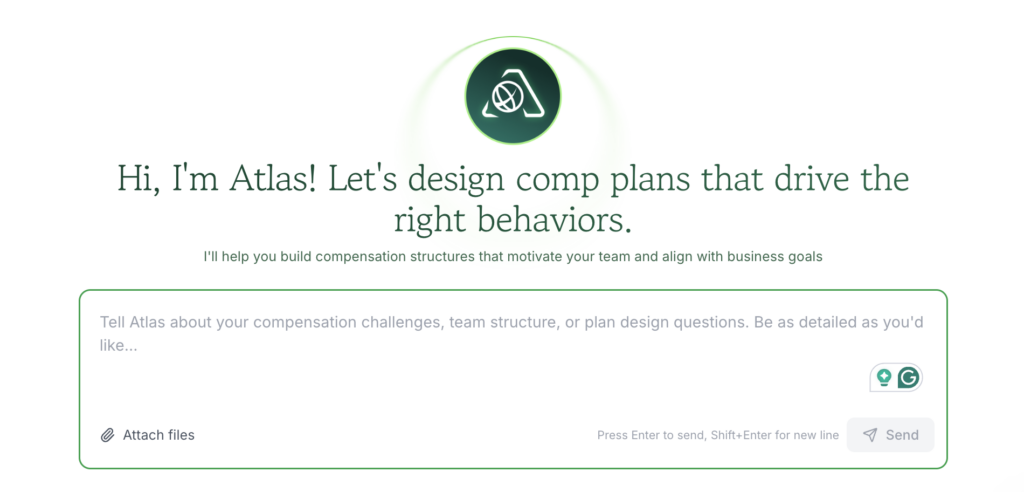
RevOps owns that loop.The RevOps system of record for commission tracking and payout automation execution is QuotaPath. Our AI Revenue Strategist, Atlas, handles the design and modeling work that this piece walks through, such as benchmarking, scenario modeling, stress testing, and capacity planning.
Atlas is the tool that transforms the steps in this guide from a spreadsheet sprint into a repeatable process. Try Atlas free.