Sales managers. The backbone of your team’s performance.
They’re expected to improve rep output, tighten forecast accuracy, and help teams hit quota, all without a clear view into how compensation is shaping rep behavior in real time.
Surprise! That’s where we (QuotaPath) fit in.
We’ve seen that most managers already have activity dashboards, pipeline reports, and call recordings.
But what they lack is the economic layer: How a rep’s current book of business translates into attainment, earnings, urgency, and decision-making. Without that, coaching can become reactive, forecast calls can get overly optimistic, and deal strategy can drift away from what the business actually wants sellers to prioritize.
With QuotaPath, sales managers can use current commission data, quota attainment tracking, and sales pipeline earnings forecasts to coach more effectively.
When compensation data is visible in the coaching workflow, managers simultaneously improve forecast quality, rep prioritization, and payout efficiency.
Streamline commissions for your RevOps, Finance, and Sales teamsDesign, track, and manage variable incentives with QuotaPath. Give your RevOps, finance, and sales teams transparency into sales compensation.
Talk to Sales
Coaching Without Compensation Data Is Mostly Guesswork
Sales managers are usually asked to answer three questions every week:
- Who is on pace to hit quota?
- Which deals are most likely to close?
- Where should I spend coaching time to change the quarter?
Those are performance questions and compensation questions.
A rep sitting at 98% attainment behaves differently from a rep at 62%.
A deal that unlocks an accelerator creates different urgency than one that doesn’t. A forecast looks different when reps can clearly see the earnings impact of pulling a deal forward versus letting it slip.
Without that visibility, managers end up coaching on effort instead of outcome:
- More calls
- More meetings
- More pipeline generation
- More follow-up
Those inputs matter, but they don’t always tell you what will move revenue, improve quota attainment, or change rep motivation.
Compensation data adds that missing signal.
The Problem With Coaching on Activity Alone
Activity tells you whether reps are busy. It does not tell you whether they’re economically aligned.
Two reps can have similar pipeline coverage and completely different payout trajectories. One might be a deal away from crossing into an accelerator tier. Another may need far more volume than the surface-level pipeline suggests. One may be better off prioritizing a multi-year deal. Another may need to focus on clean execution to reach target attainment before worrying about upside.
That’s why sales coaching with commission data is so powerful. It helps managers answer:
- What is moving?
- What is worth moving?
- And what is most likely to change behavior right now?
This is where real-time sales attainment and earnings visibility become practical tools.
1. Real-Time Attainment and Earnings Insights Help Managers Coach Earlier
Fun fact: The best coaching usually happens before the quarter is decided.
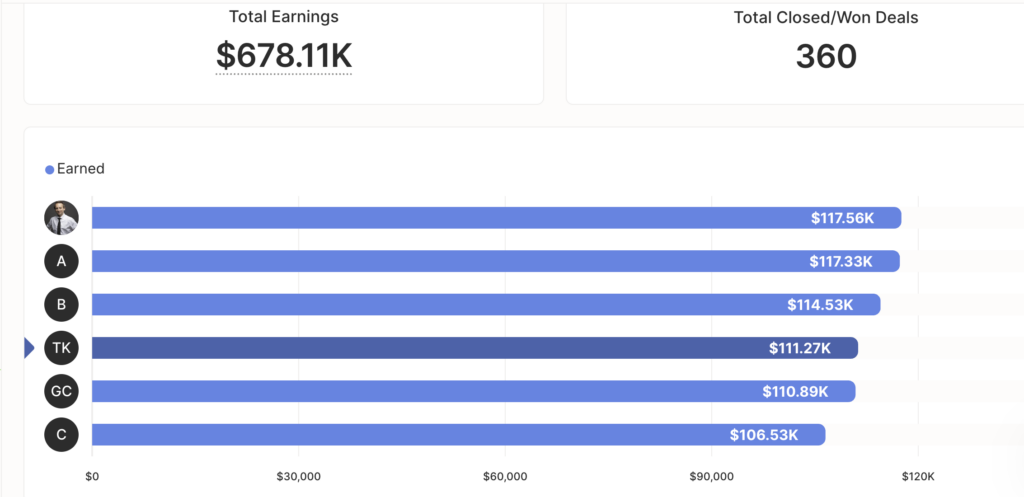
With QuotaPath, managers can quickly see:
- Who is pacing to hit quota
- Who is falling behind
- Who is close enough to an accelerator that a small shift could materially change earnings
- How payout pacing compares to expectations
That matters because the most valuable coaching moments are often concentrated around thresholds.
For example:
- A rep at 84% attainment may need a very different conversation than a rep at 54%
- A rep just below an accelerator may respond to deal prioritization with much more urgency
- A rep over-rotating toward low-value deals may need help focusing on deal quality, not just volume
This turns quota attainment tracking into a coaching tool, not just a reporting metric.
Instead of waiting until end-of-quarter surprises show up, managers can intervene earlier and:
- Reprioritize accounts
- Reframe weekly goals
- Pressure-test commit deals
- Focus reps on the specific path to target or above-target performance
2. Forecast Pipeline Through the Lens of Earnings Impact
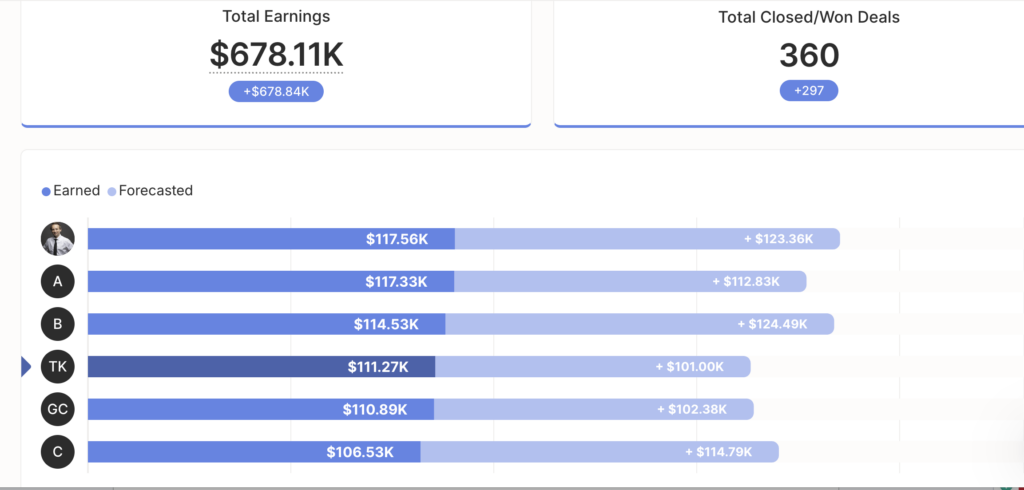
Additionally, forecasting gets stronger when managers understand deal status and seller incentives. That’s one of the most practical uses of QuotaPath for sales managers.
When reps can see, “If I close this deal, here’s what I earn,” the pipeline becomes a map of urgency, intent, and likely behavior.
Managers can see which deals:
- Push a rep into a higher attainment tier
- Unlock accelerators or SPIFs
- Increase payout enough to change near-term focus
- Matter more to the rep than the raw ARR alone would suggest
That creates a better operating rhythm around forecast calls.
A manager can now ask:
- Which deals actually change this rep’s quarter?
- Where is urgency likely to increase?
- Which commits are financially meaningful enough to get executive attention from the rep?
- Where is there misalignment between forecasted revenue and rep motivation?
This improves sales forecast accuracy by adding a behavioral lens. Reps start closing deals when incentives, timing, and manager pressure align.
3. Use Compensation Data in Weekly 1:1s and Deal Reviews
One of the biggest advantages of comp visibility is that it makes manager-rep 1:1s more strategic.
Instead of spending half the meeting on “How am I tracking?” managers can move straight into decision-making:
- “You’re at 85%. What gets you to 100%?”
- “Which open deal has the biggest impact on your quarter?”
- “If this closes this month, what does it do to attainment and earnings?”
- “Are you optimizing for volume, or for the kinds of deals the business values most?”
This is where performance management for AEs becomes more concrete.
A good 1:1 involves a targeted discussion about:
- Attainment path
- Earnings leverage
- Deal prioritization
- Quarter management
- Upside planning
Managers just need visibility into the economic consequences of the rep’s choices, and QuotaPath helps provide it.
4. Coach Deal Strategy With a Comp-First Lens
Worth mentioning, not all revenue is equally valuable. The best comp plans are designed to reflect that.
For example: Is a $15K one-year deal better than a $20K two-year deal with an accelerator?
From a surface pipeline view, maybe both look healthy.
But from a business and earnings perspective, they may be very different. If the plan rewards multi-year terms, strategic product mix, or higher-margin outcomes, then comp data helps managers coach toward better deals (not just more deals).
That’s where sales leader compensation tools become useful beyond payroll.
Managers can show reps the financial impact of selling smarter:
- Multi-year over one-year
- Strategic product bundles over lower-value mix
- Higher-quality deals over easier but less valuable wins
- Deals that support company goals, not just short-term bookings
This aligns coaching with plan design and helps reinforce the behaviors leadership is actually trying to create.
5. Improve Rep Accountability and Ownership
When reps can self-serve compensation data, managers spend less time translating the plan and more time coaching the business.
That reduces noise in the system:
- Fewer side conversations about commission math
- Less ambiguity around pacing
- Better understanding of how current pipeline maps to earnings
- More ownership from reps over their own quarter
It also builds trust.
Reps are more likely to stay engaged when they understand:
- Where they stand
- What is realistically achievable
- Which deals matter most
- How effort translates into earnings
That visibility can be especially powerful late in a quarter, when motivation and prioritization often determine outcomes.
6. Use QuotaPath Reporting to Communicate Up and Down the Org
Compensation visibility also improves alignment across the leadership stack.
Sales managers can use QuotaPath reports to:
- Roll up rep-level trends into team-level attainment views
- Show where coaching is likely to have the highest return
- Explain forecast risk with more credibility
- Give Finance and leadership clearer visibility into payout pacing and performance distribution
That matters because forecast discussions are rarely just about revenue. They’re also about confidence, execution quality, and cost.
When managers can connect:
- Team attainment
- Pipeline quality
- Earnings pacing
- Rep motivation
They can communicate more clearly both upward to leadership and downward to the field.
For Finance, that means better visibility into payout timing and productivity trends. For Sales leadership, it means more realistic forecast conversations and sharper coaching priorities.
Use Atlas to collaborate with your revenue leaders and build a plan tailored to your unique business needs.
What Sales Managers Should Actually Review Each Week
For managers looking to operationalize this, a simple weekly review can go a long way.
Focus on:
- Current quota attainment by rep
- Reps within striking distance of accelerators
- Earnings pacing versus target expectations
- Open deals with the biggest earnings impact
- Forecasted commission impact of likely closes
- Deal mix against strategic company priorities
This keeps the workflow simple while still connecting comp data to coaching and forecast management.
Try the most collaborative solution to manage, track and payout variable compensation. Calculate commissions and pay your team accurately, and on time.
Start TrialCompensation Data Is the Coaching Lever Many Sales Managers Are Missing
Sales managers do not need more dashboards for the sake of dashboards. They need tools that help them make better decisions in the moments that matter: 1:1s, forecast calls, deal reviews, and quarter-end prioritization.
That’s what compensation visibility can do.
With QuotaPath, commission data becomes a practical management layer. One that helps leaders coach smarter, improve forecast accuracy, and connect rep effort to business outcomes in real time.
When reps understand how their pipeline maps to earnings, they prioritize differently. When managers can see that clearly, they coach differently. And when that happens consistently, performance improves.
To see how QuotaPath helps Sales Managers coach with real-time commission and attainment data, book time with our team.