When a software purchase comes up late in the year, most teams push it to January. A new year feels like the right time for a new system.
For commission software, that timing usually backfires. A Q1 start means January commissions get calculated in the old spreadsheet while the new tool is still being configured. Finance ends up running two processes at once, and the first payout of the year carries the most risk.
Q4 is when next year’s plan, this year’s data, and the budget are all being reviewed together. That makes it the best time to rebuild how commissions get calculated. Below are five reasons to start in Q4, how to handle the capacity crunch, and a timeline that makes January 1 your go-live date.
Commission timing is a Finance decision
Commissions affect cash forecasting, sales expense, payroll accuracy, rep trust, and whether the annual operating plan holds up. Those are all finance concerns, so the timing of a commission implementation is a finance decision too.
In Q4, Finance is already reviewing these numbers for next year. Implementing then lets you align calculation rules, commission expense forecasts, and governance in one pass instead of revisiting them in February.
Design, track, and manage variable incentives with QuotaPath. Give your RevOps, finance, and sales teams transparency into sales compensation.
Talk to SalesFive reasons Q4 beats Q1
1. Year-end data gives you a natural baseline
By Q4 you can see the whole year: how attainment was distributed, what you spent on commissions, and how many overrides, clawbacks, quota exceptions, and payout disputes came up along the way.
That’s the dataset you want when you design next year’s plans. Implementing in Q4 lets you configure the new system with a complete record of what worked and what didn’t. A Q1 start often means designing from partial data or from memory.
A useful exercise: count every manual exception your team made this year. Each one points to a rule that the plan or the system should handle next year.
2. The annual plan is being finalized anyway
Quotas, OTE, territories, crediting rules, and payout policies typically get approved in Q4. Plan changes are close to universal. According to Alexander Group survey data reported by WorldatWork, 97% of companies changed their sales compensation plans heading into 2026, up from 86% the year before.
If you implement in Q1, you’re configuring software around decisions that were made without the system in mind. If you implement in Q4, the plan and the process get built together, and the technology can shape the plan instead of being retrofitted to it. Tools like Atlas, QuotaPath’s AI comp consultant, let you model plan changes and test their cost while the plan is still a draft. Our year-end GTM comp planning playbook covers how to tie those plan decisions to company goals.
3. You avoid carrying spreadsheet debt into the new year
A Q1 implementation almost always means calculating January, and often February, commissions by hand while the new system is being set up. That’s two processes to maintain, two sets of numbers to reconcile, and the highest error risk in your first payouts of the year.
Spreadsheets are a weak foundation for that work. A 2024 literature review published in Frontiers of Computer Science found that 94% of spreadsheets used in business decision-making contain errors. Commission spreadsheets, with their tiers, splits, and manual adjustments, are especially prone to them. As we’ve covered in what Finance and RevOps lose by waiting to ditch commission spreadsheets, the cost shows up as payout errors, slower closes, and reps who stop trusting their statements.
Starting in Q4 gives you time to validate the logic, clean historical data, and enter January with a process that already works.
4. January 1 gives you a clear cutover point
A new fiscal year gives you one date for plans, quotas, assignments, and reporting to switch over. That’s much easier to govern than a mid-year change, when several plans and exceptions are already in effect and some deals span both the old and new rules.
A clean cutover also helps with audit readiness. Under ASC 340-40, most sales commissions must be capitalized and amortized, and Deloitte describes cost accounting as one of the more challenging parts of the revenue standard, particularly for tiers, clawbacks, and commissions paid across multiple periods. Starting the year in a system built for commission accounting and ASC 606 amortization means one record from day one rather than a reconstruction later.
5. Q4 surfaces your most expensive failure points
The most expensive commission errors tend to come from year-end accelerators, large deals, multi-year contracts, manager rollups, and manual adjustments. Most of these show up in Q4.
Running those real cases through the new system before the year starts lets you catch problems while they’re still test results. Consider a large multi-year deal paid at the wrong accelerator tier. Found in December, it’s a configuration fix. Found in production, it’s an overpayment, a clawback conversation, and a rule that keeps misfiring until someone notices.
The tradeoff: Q4 is busy
Q4 is also close to planning and budgeting season, and Finance teams have limited capacity.
You don’t need a full launch in Q4. You need to finish design and validation in Q4 and go live in January.
A phased approach works well:
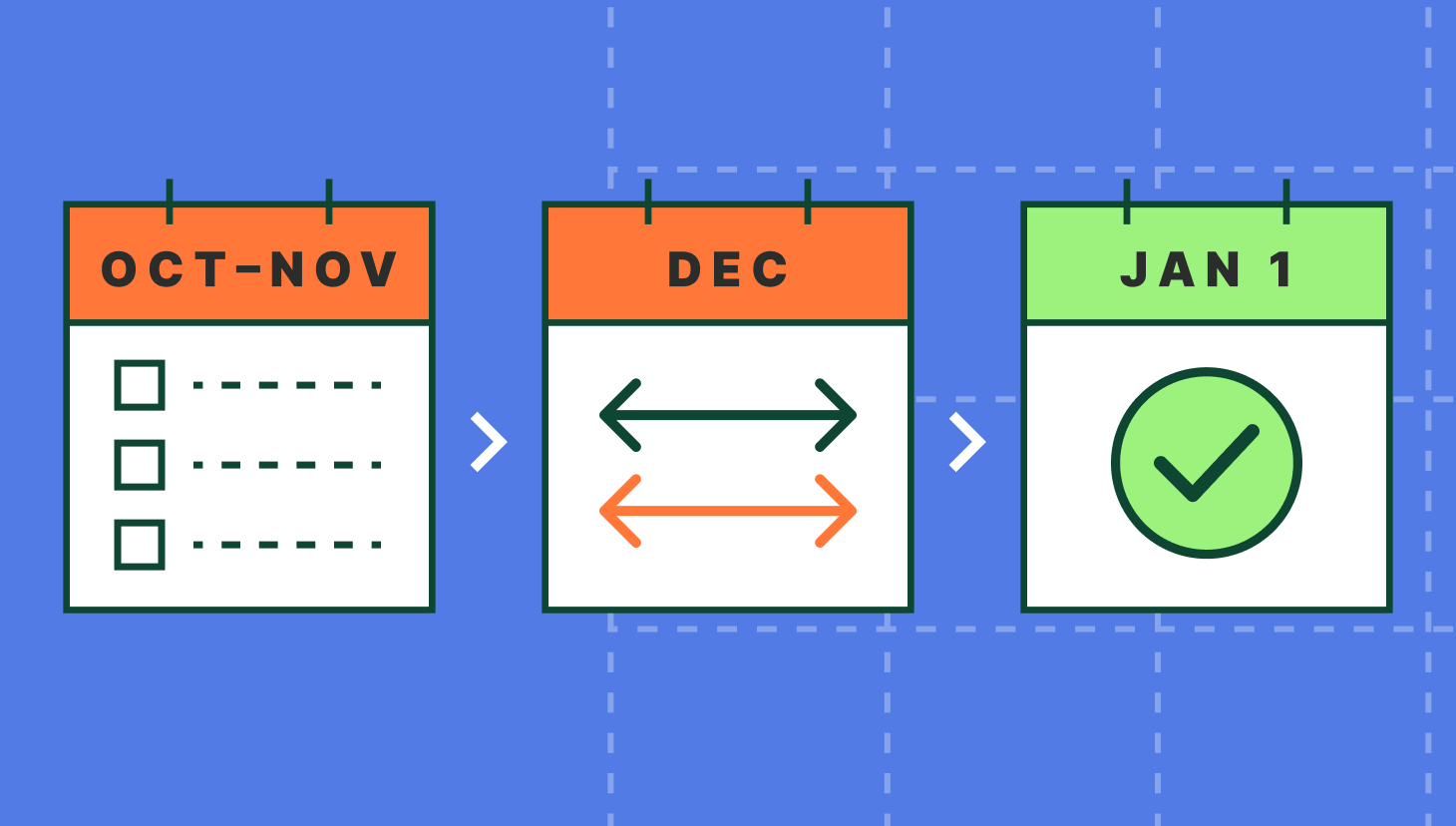
- October to November: Align on plan design, collect and clean data, and configure the calculation logic.
- December: Run a controlled parallel calculation. Calculate commissions in both the old process and the new tool, then reconcile the differences.
- January 1: Make the new system your system of record.
Most of the work in these phases is decisions and validation. Configuration can largely sit with your vendor’s implementation team. Our guide to what to expect during a commission system migration walks through each phase, including how to structure parallel runs.
Q4 also leaves time to prepare people for the change. In a WorldatWork and OpenSymmetry survey reported by SHRM, half of respondents said training sales managers and getting their support is critical to a compensation program’s success. December is a better time for that training than the week January statements go out.
Q4 vs. Q1 at a glance
| Q4 implementation | Q1 implementation | |
|---|---|---|
| Data baseline | Full-year actuals | Partial or prior-year data |
| Plan alignment | Built with the new plan | Retrofitted to an approved plan |
| January payouts | Run in the new system | Calculated in spreadsheets |
| Cutover | Clean January 1 switch | Transition mid-stream |
| Edge-case testing | Year-end deals tested first | Found in production |
Try the most collaborative solution to manage, track and payout variable compensation. Calculate commissions and pay your team accurately, and on time.
Start TrialThe bottom line for CFOs
Implementing in Q4 makes the new fiscal year a controlled reset. Implementing in Q1 usually means managing the old process while trying to build the new one.
You’re ready to start in Q4 if:
- Next year’s comp plan is in draft or close to final.
- You have this year’s commission and deal data available.
- Someone in Finance or RevOps can own the project through January.
If that describes your team, the best time to start is this quarter.
Talk to QuotaPath about a Q4 implementation timeline, or use Atlas to stress-test next year’s plan before it’s finalized.