Every compensation software vendor will tell you their platform calculates commissions accurately.
Let’s just get this out of the way. That claim is table stakes and not a differentiator.
If two platforms can both handle a tiered accelerator correctly, what actually separates the RevOps and Finance teams who love their tool from the ones still fighting spreadsheets at 9pm before payroll runs?
It comes down to six things that rarely make the front page of a vendor’s website:
- how usable the tool is for everyone who touches it
- how transparent the pricing is
- how fast and consistent the support is
- whether the services model fits your team’s bandwidth
- whether the AI is built on data you can trust
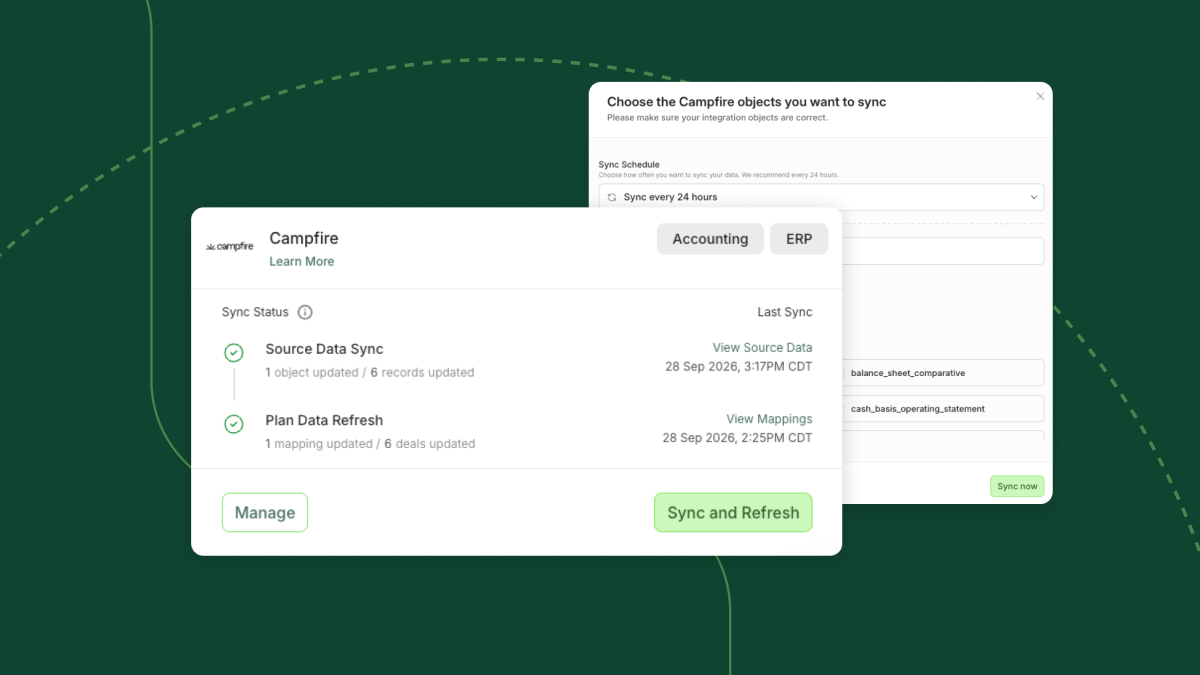
- and whether the platform actually talks to the tools you already run on
Zapier’s then Manager of Revenue Operations, Katie Huson, put it well when she was evaluating vendors: “One thing that’s really important to me is: if I win the lottery and I’m not coming back tomorrow, could somebody else take this over really easily?”
That question has nothing to do with whether the math is correct and everything to do with whether the software works for the humans using it.
So, here’s what to look for, backed by what actual customers have said.
Usability: Can Anyone on the Team Actually Use It?
Commission software fails quietly.
It’s rarely a calculation error that sinks a tool. It’s the admin who’s the only person who understands the formulas, or the rep who has to email Finance every cycle to ask “why is this number what it is.”
On G2, QuotaPath customers consistently point to this first.
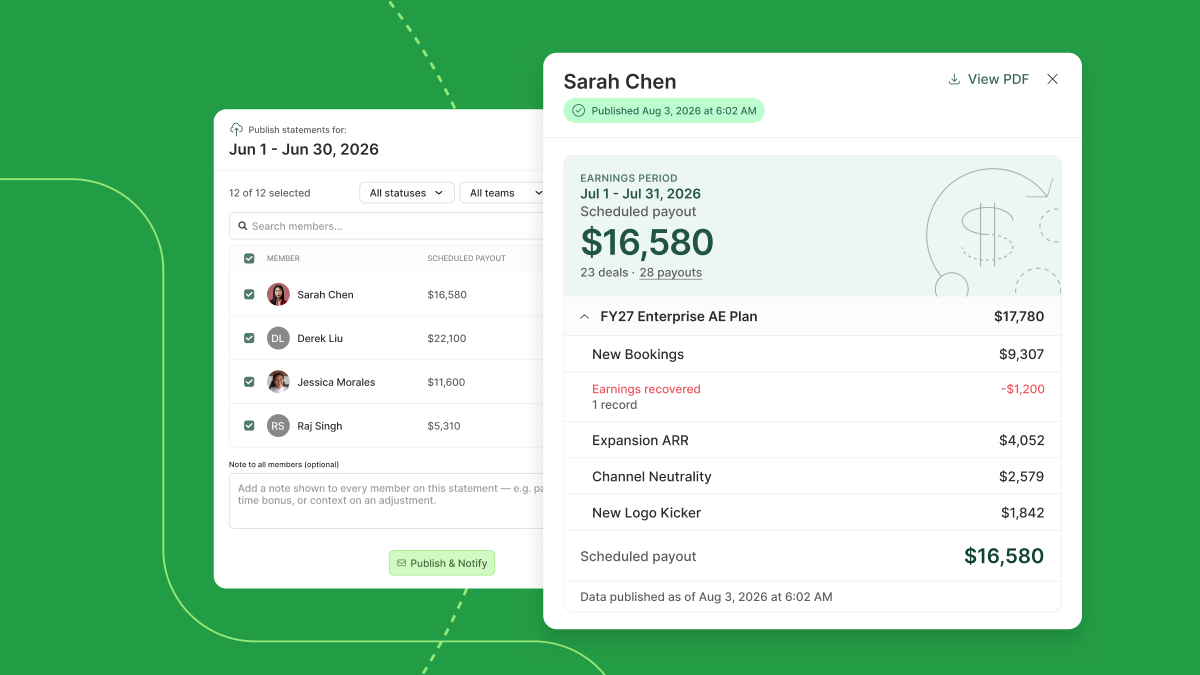
Genevieve M., a Revenue Operations Sr. Manager, wrote: “The ease of use of the platform is excellent. I love the transparency it provides on how earnings are calculated for a deal… The UI is informative and very usable by administrators and salespeople alike.”
Chris S., a Sales Operations Manager, echoed the same thing: “I love how easy the UI is for me in Admin, and for the reps.”
And Jacob L., a Sr. Sales Operations Manager, noted that “deployment was so easy that I was able to get around 99% complete with some niche items requiring minimal support.”
Katie from Zapier said usability was the deciding factor when she evaluated vendors after first seeing QuotaPath at HubSpot’s INBOUND conference: “QuotaPath felt very drag-and-drop. Very simple to understand.”
The payoff shows up in day-to-day operations. Reps at Zapier can now see “every deal, the exact math, and why it’s mathing that way,” and Katie says she “rarely gets questions” anymore.
At Forthright Capital Partners, RA Principal Charles Nguyen saw the same gap when comparing tools.
“Even with other software like Spiff or Salesforce-native tools, it was hard for agents to understand their payouts,” said Charles. “But with QuotaPath, they can just pick it up.”
When you’re evaluating a platform, test usability from three seats:
- The admin building the plan
- The rep checking their earnings
- The person who’d have to take the whole thing over if you left tomorrow.
Pricing Transparency and a Low-Risk Way to Try It
Buyers are tired of opaque, sales-led pricing that only shows up after three demo calls and a “let me check with my manager” email. Look for vendors who publish pricing and let you try the product before committing to a contract.
Jay Wallace, Sales Founder & VP of Worldwide Sales at runZero, said this shaped his entire evaluation: “We buy from companies that look and feel like us. Free trial. Easy to install. No professional services… The no professional services was a hard requirement.”
His team went from signed contract to fully automated commissions in less than two months, and 24 weeks without a single sales compensation error.
David Taub, Senior Director of Revenue Operations at HydroCorp, chose QuotaPath in part because of the reduced risk of the investment: “A big driver of it was the level of investment into QuotaPath was less, a lot less risk than going into some of the more legacy players.”
The payoff was immediate. Rebuilding a past comp plan in QuotaPath surfaced enough costly errors that, as David put it, “we essentially paid for QuotaPath in one month.”
At Three Point Mortgage, Connor Adkisson named pricing as one of three deciding factors against Everstage and mortgage-specific tools that were “prohibitively expensive or too rigid.”
Transparent pricing paired with a free trial signals something important: a vendor confident enough to let the product sell itself before the contract is even on the table.
Design, track, and manage variable incentives with QuotaPath. Give your RevOps, finance, and sales teams transparency into sales compensation.
Talk to SalesSupport That Actually Responds
Support quality only becomes visible after you’ve signed.
That’s exactly why it’s worth asking pointed questions in advance: how fast does the team respond, and will you be talking to the same person twice, or starting over with a new rep every time?
Katie described QuotaPath’s support as “answers, not tickets”: “The chat is the easiest thing ever. Whenever I put in a ticket, I get a Loom back showing me what to do, so I don’t have to ask the same question twice.”
Charles said the same thing about response speed: “Each time I use a chat bubble, I get a response back within 30 minutes. Any formula issues are always fixed same day.” When he had an implementation emergency, he emailed the team directly and got a reply “within an hour every time.”
When you’re checking references, ask how fast and reliable support is.
A Services Model That Matches Your Team’s Bandwidth
It’s also important to remember that no two RevOps or Finance teams have the same in-house capacity.
The best comp platforms offer a spectrum of support, from fully self-serve to white-glove build-and-manage, rather than forcing every customer into the same delivery model.
Three Point Mortgage, for example, needed the white-glove end of that spectrum.
Their commission structure involved multiple role-based plans, overrides, recoverable draws, and branch-level P&L carve-outs, complexity that had broken their previous vendor’s rigid framework.
QuotaPath’s implementation specialist “logged every payment method, mapped out all the possible combinations, and guided the team through key decisions,” and the company’s co-founder personally built a custom workflow to solve their trickiest problem: calculating draws intelligently based on actual pay-period earnings instead of a blanket assignment.
Virtuous took a similar hands-on path when they joined the beta for QuotaPath’s Rippling integration.
Director of Accounting Joan Schiffer got direct support through setup, and her feedback during the beta directly shaped product features like bulk-send. “It was a no-brainer,” she said. “It only made sense to have these systems communicate.”
At the other end of the spectrum, runZero explicitly wanted the opposite: “no professional services needed” was a hard requirement for a lean, fast-moving SaaS team.
Both approaches worked because QuotaPath let each customer choose. The question worth asking any vendor is simple: what happens in week one if your comp plans are more complex than a template? The answer tells you whether their services model is real or just a line on a pricing page.
AI That Understands Compensation, Not Generic AI
Next up is AI, a checkbox now on every vendor’s homepage (some mention it more than others).
What matters is not the number of agents they offer but what the AI actually reasons over.
For instance, is a solution’s AI a wrapper around a public LLM that can guess at compensation best practices? Or is it a tool trained on proprietary comp data that can tell you something specific and defensible?
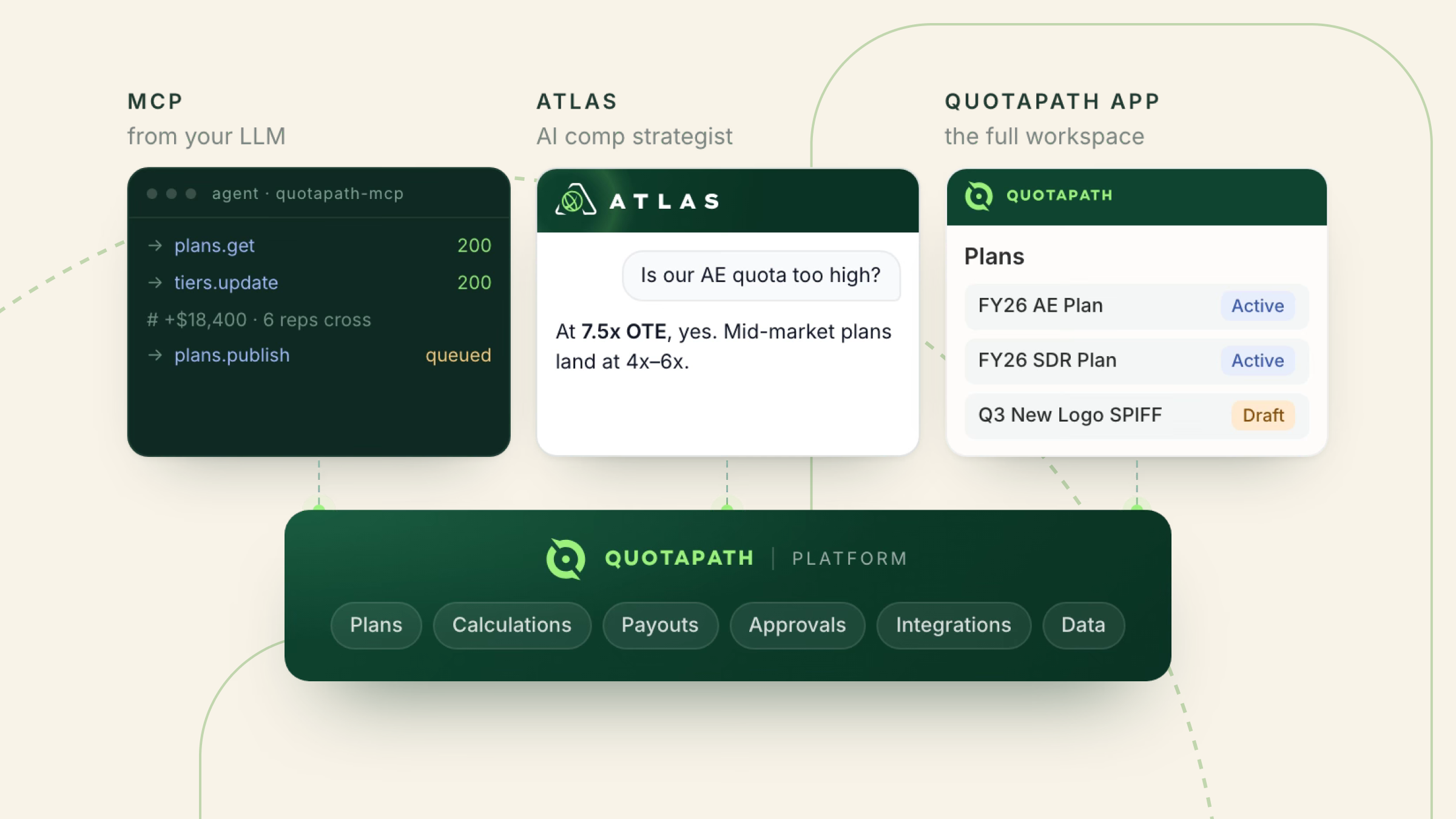
Atlas, QuotaPath’s AI Revenue Strategist, runs on proprietary QuotaPath data and benchmarks from roughly 10,000 real comp plans, not generic internet text.
Its “Grade My Comp Plan” tool evaluates an existing plan against those benchmarks, flags structural fixes before rollout, and predicts how the plan will shape rep behavior and GTM motion.
It also solves a familiar RevOps problem: getting analysis in front of leadership.
Atlas generates shareable, C-suite-ready briefs, so an evaluation doesn’t stay buried in a spreadsheet.
One more thing worth asking any AI comp vendor: does it train on your data?
(Atlas doesn’t; your data stays private.)
Native Integrations With the Tools You Already Run On
Lastly, some RevOps leaders may argue this is the most important factor: a vendor’s integration capabilities.
Look for direct, native integrations with your CRM and your payroll system.
On the CRM side, runZero automated commissions by syncing directly with HubSpot, reaching 100% adoption across 33 reps and five-plus comp plans, and going 24 weeks without a single commission error.
On the payroll side, Virtuous connected QuotaPath directly to Rippling to close the loop from commission calculation to payout. “Thanks to the Rippling integration, I’m confident our payouts are accurate and faster. No more triple checks,” said Joan, who now saves roughly 30 minutes per pay run across 70 commissionable employees.
Three Point Mortgage got a similar result, even though the Rippling integration wasn’t part of their original purchase decision. “It wasn’t part of the original sales conversation,” Connor said, “but it became one of the most meaningful parts of the relationship… We just load QuotaPath and hit send.”
Native integrations remove the two riskiest manual steps in the entire comp process: pulling deal data in, and pushing payout data out to payroll.
That’s exactly where copy-paste errors and trust problems start. When you’re evaluating a shortlist, ask any vendor to show you the integration live.
A Quick Evaluation Checklist
Before you sign anything, run your shortlist through six questions:
- Can a non-technical rep understand their own commission math without help?
- Is pricing published, and is there a free trial with no forced professional services?
- What’s the average support response time, and will you have a consistent point of contact?
- What does onboarding look like if your comp plans don’t fit a template?
- What data trains the AI features, and can it produce something leadership-ready?
- Which CRM and payroll systems have native, two-way integrations today, not on a roadmap?
The Bottom Line
Commission accuracy is the price of entry.
Revenue teams who are genuinely happy with their compensation software point to the same handful of things: software their whole team can actually use, pricing they understood before they signed, support that answers instead of routes them to a ticket queue, a services model that flexes to their complexity instead of the other way around, AI they can trust with sensitive data, and integrations that remove manual work instead of adding a new spreadsheet to reconcile.
Ready to see how it holds up for your team?
Try QuotaPath for free or talk to sales to walk through your own comp plans.