
Commission errors are common. In fact, 80% of companies admit they’ve paid reps incorrectly, according to QuotaPath’s Compensation Challenges Report. When commission calculations rely on manual processes, small mistakes can quickly compound, slowing down payouts and creating additional reconciliation work for Finance.
The result is familiar to many RevOps and Finance teams: month-end chaos, delayed payouts, and rep disputes. Instead of focusing on strategic work, teams spend days exporting CRM data, checking formulas, reconciling numbers, and answering questions about commission statements.
Reducing commission calculation time is operational…not just technical.
Faster commission processing requires an improved sales commission workflow: centralizing revenue data, standardizing commission logic, and eliminating spreadsheet-driven processes that slow calculations down.
In this blog, we show you how to reduce commission calculation time by automating the commission calculation process.
Key Takeaways:
Reduction in commission calculation time requires using a modern commission automation tool that centralizes CRM data, automates commission logic, and eliminates spreadsheet dependency.
- Manual commission calculation processes often take 3–10 days per pay cycle.
- Spreadsheet-based workflows increase commission calculation errors.
- Automation reduces commission processing time by 50–90%.
- Real-time dashboards eliminate shadow accounting.
- Faster commission payouts improve trust and motivation.
Design, track, and manage variable incentives with QuotaPath. Give your RevOps, finance, and sales teams transparency into sales compensation.
Talk to SalesIndustry Commission Calculation Times
Based on customer benchmarks, commission calculation times vary by industry.
| Industry | Manual Calculation Time | Automated Calculation Time |
| SaaS | 3–5 days/month | 1–4 hours |
| Manufacturing | 1–2 weeks/quarter | <1 day |
| FinTech | 4–7 days/month | Same-day |
| Agencies | 2–4 days/month | 1–2 hours |
| Enterprise Sales | 5–10 days | <6 hours |
Commission calculation time doesn’t vary randomly. It’s driven by structural complexity inside the revenue engine.
Here are the core factors that create industry differences:
- Comp Plan Complexity (accelerators, margin-based commissions, SPIFs, etc.)
- Volume of Transactions (high-transaction environments, like retail or usage-based SaaS, require more data processing)
- Number of Revenue Roles (multi-touch deal attribution increases review time)
- Commission Splits and Multi-Rep Deals (team-selling models, geographic overlays, partner revenue splits introduce additional calculation layers and potential disputes)
- Usage-Based or Consumption Pricing Models (monthly fluctuating revenue, true-ups, retroactive adjustments, and clawbacks require extra time to review and suss out)
- Manual Data Consolidation Across Systems (industries with complex billing, like SaaS, telecom, and manufacturing, feel this most.)
- Frequency of Plan Changes (fast-scaling industries see more structural volatility)
- Regulatory and Compliance Requirements (industries like healthcare, finance, and public companies require stricter validation around audit trails and revenue recognition)
- Geographic Expansion (multi-currency payouts, regional compensation policies, and tax compliance differences offer another hurdle)
Why Commission Calculations Take So Long
Although there are many factors influencing commission processing time, these core elements hinder commission calculations efficiency.
Manual Data Pulling From Multiple Systems
Pulling data from multiple systems, such as Salesforce, HubSpot, payroll, and billing tools, is time-consuming. CSV exports and VLOOKUP chains involve error-prone manual data manipulation, creating significant bottlenecks in the sales commission workflow that delay commission calculations. Version control issues further lengthen the commission calculation process with hours spent reconciling conflicting data, formulas, and payout rates.
Complex Plan Structures (Tiers, Accelerators, Clawbacks)
More complex commission plans take longer to calculate and verify.
● Tier logic errors: Occur when the rules defining commission rates based on performance levels are incorrectly defined or calculated. Often caused by complex, manual spreadsheet formulas, tier logic errors typically result in considerable overpayments or underpayments.
● Multi-product splits: The method of applying various incentive pay rates based on individual product line items within a single deal, rather than a single percentage for the entire deal. This increases the time required for data entry, manual reconciliation, and dispute resolution.
● Clawbacks on churn: Occur when a sales rep pays back commission received on a deal when a customer cancels their contract within a designated period. The time-consuming process of recovering commissions requires retroactive adjustments to previously paid earnings, quotas, and compensation statements, leading to payout delays.
● Retroactive quota changes: Modifications to sales targets, performance goals, or incentive compensation plans that are applied to completed or current performance periods increase commission processing time and dispute resolutions. These sales compensation shifts require admins to re-evaluate historical sales data, reconcile prior payments, and recalculate commission tiers and accelerators.
The Spreadsheet Error Spiral
Research shows that 90% of organizations still rely on spreadsheets to manage critical business information. Spreadsheets introduce risk into the commission calculation process. A single formula error can cascade across multiple rows and tabs, forcing teams to spend hours tracing calculations and validating payouts.
The lack of visibility creates another layer of work. Reps build shadow spreadsheets to track commissions while Finance double-checks the numbers, further slowing the payout process. As Genevieve from NeuroFlow explains, “Both the finance team and the salesperson were doing their own calculations in separate spreadsheets, and we had to slowly come to a consensus together on what the payout would be. It was very much a manual process.”
Reducing commission calculation time starts with addressing operational bottlenecks.
5 Ways to Cut Commission Calculation Time
Reduce manual commission work by implementing these five methods.
1. Centralize Your Data Sources
CRM integrations such as Salesforce and HubSpot enable you to auto-sync deal data and create a single source of truth for the entire organization, making it easier to create a sales compensation plan. This also eliminates manual exports and errors while improving the efficiency of commission calculations.
2. Standardize Plan Templates
Leverage pre-built comp plan components in a modular structure to build sales compensation plans with less effort. This reduces customer formula sprawl and administrative errors while increasing plan transparency and motivating the sales team to achieve goals.
3. Automate Rate Calculations and Tier Logic
Use automated accelerators, clawback triggers, and auto-apply splits to increase payout accuracy and reduce time spent on commissions. Automation prevents commission calculation errors before they happen.
4. Build Real-Time Dashboards for Reps
Live attainment tracking allows reps to see quota attainment and progress toward accelerator tiers, motivating them to sell with purpose as they stretch to achieve the next incentive milestone. Earnings visibility enables reps to see income values instantly as each deal closes in CRM. This motivates reps to keep data current, leading to reduced shadow accounting, faster commission payouts, and fewer disputes.
5. Replace Spreadsheets With Purpose-Built Software
Switching to sales commission automation software from Excel results in error-free commission calculations, streamlines approval workflows, and creates an audit trail. This ensures compliance, reduces payout questions, and builds trust with reps. Automated payout exports eliminate mundane manual processes, increase accuracy, reduce payroll disputes, and save finance and admin time.
Sounds great, but what does this look like in reality?
Try the most collaborative solution to manage, track and payout variable compensation. Calculate commissions and pay your team accurately, and on time.
Start TrialWhat Real Commission Automation Looks Like With QuotaPath
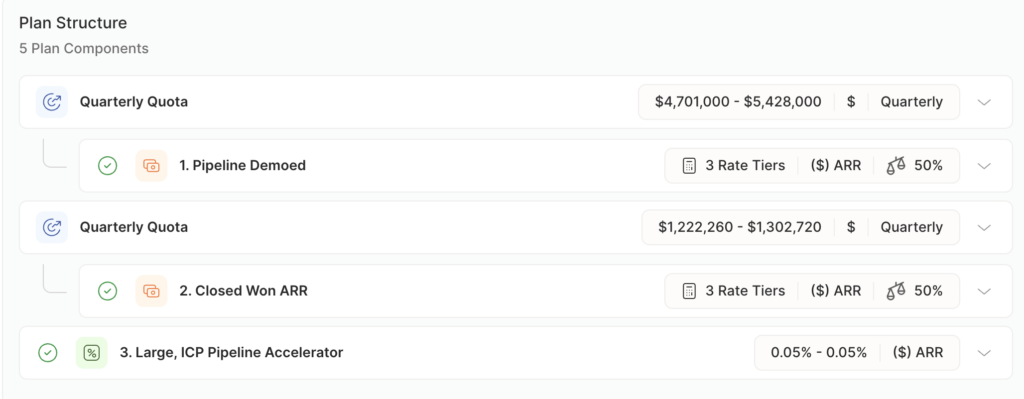
No CSV exports. No spreadsheet formulas. Commission automation software, such as Quotapath, reduces manual commission work and commission calculation errors while boosting visibility and sales performance.
CRM-to-Payout in One Workflow
A modern sales tech stack includes a fully integrated sales commission workflow that reduces commission processing time and improves accuracy.
- Direct Salesforce+HubSpot integrations: Native CRM integrations allow deal data to automatically flow into QuotaPath for commission tracking and calculations, also displaying updated commission data in Salesforce and HubSpot.
- Auto-applies tiers, accelerators, clawbacks: Direct integrations with data sources, such as CRMs and billing systems, facilitate quota and trigger tracking to automatically apply predefined rules to commission calculations without human intervention.
- Approval routing: Eliminate delays due to email-based routing by automating the entire sales commission workflow.
- Push to payroll: QuotaPath’s seamless Rippling integration streamlines commission payments, eliminating manual, error-prone processes for faster commission payouts.
Real-Time Earnings Visibility That Kills Shadow Accounting
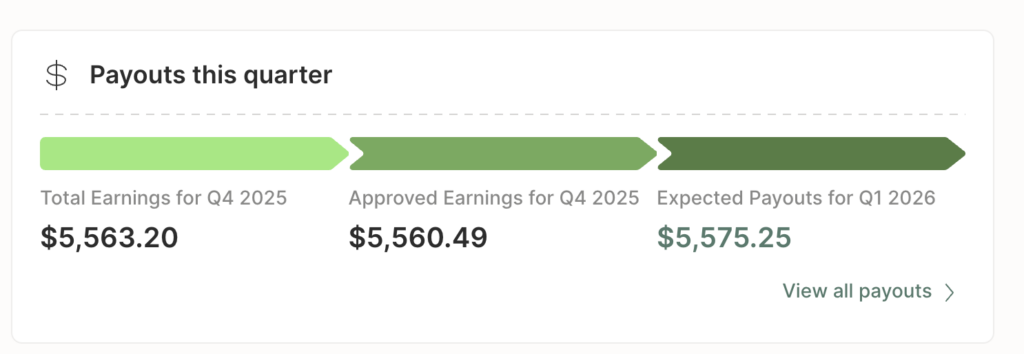
Reps see earnings immediately and often adjust their selling behavior, prioritizing deals and contracts that align with their incentive plans. With real-time visibility into commissions as deals close, there are no end-of-month surprises. This transparency eliminates the need for “side spreadsheets” and builds trust in payout accuracy.
The Time Savings Are Measurable
These customers saved measurable time by using QuotaPath to automate their commission calculation process.
- Augury cut commission processing time by 66%
- Rootly went from 4+ hours/month to 1 hour/month
- Zapier pays commissions now 10 days earlier in the month
- HydroCorp went from 3–5 days down to a couple of hours
These results highlight the operational impact of commission automation. By reducing commission calculation time, organizations also reduce time spent on commissions, payout disputes, and administrative burden. Instead of reconciling spreadsheets and answering compensation questions, Finance and RevOps teams can focus on strategic work that drives revenue performance. Schedule a QuotaPath demo to see how commission automation can reduce your commission calculation time.