
Commission audits have a way of turning even the calmest Finance leaders into late-night spreadsheet detectives.
One minute, you’re closing the books. The next, you’re digging through old comp plans, reconciling payouts from six months ago, and answering the same question over and over: “Can you show how this commission was calculated?”
The problem isn’t that Finance teams don’t know how to do commission audits… It’s that commissions sit at the intersection of payroll, revenue recognition, compliance, and human emotion, which makes audits uniquely stressful.
The good news? Passing a commission audit doesn’t require heroics, panic, or the need to rebuild history from memory. It requires clear systems, consistent documentation, and a mindset shift from reactive to audit-ready.
This guide walks through how Finance leaders can pass a commission audit with confidence and keep their sanity intact.
Why Commission Audits Feel So Much Worse Than Other Audits
Commission audits are different from most financial reviews because the stakes are personal.
Errors can appear as:
- Sales rep disputes
- Escalations to leadership
- Questions about trust and fairness
- Scrutiny under ASC 606
When auditors ask how a commission was calculated, they’re not just validating math. They’re validating the process, controls, and consistency.
And when those answers live across spreadsheets, inboxes, and institutional knowledge, stress skyrockets.
As Amy Walker, CPA, Co-Founder & Director of CAS at Walker Glantz, shared during QuotaPath’s Early Stage Finance Foundations webinar:
“Not cheaping out on your financial systems early saves you from a lot of friction later. The more experienced your processes are, the easier it is to document, explain, and scale them as compliance requirements increase.”
That friction shows up loudest during commission audits.
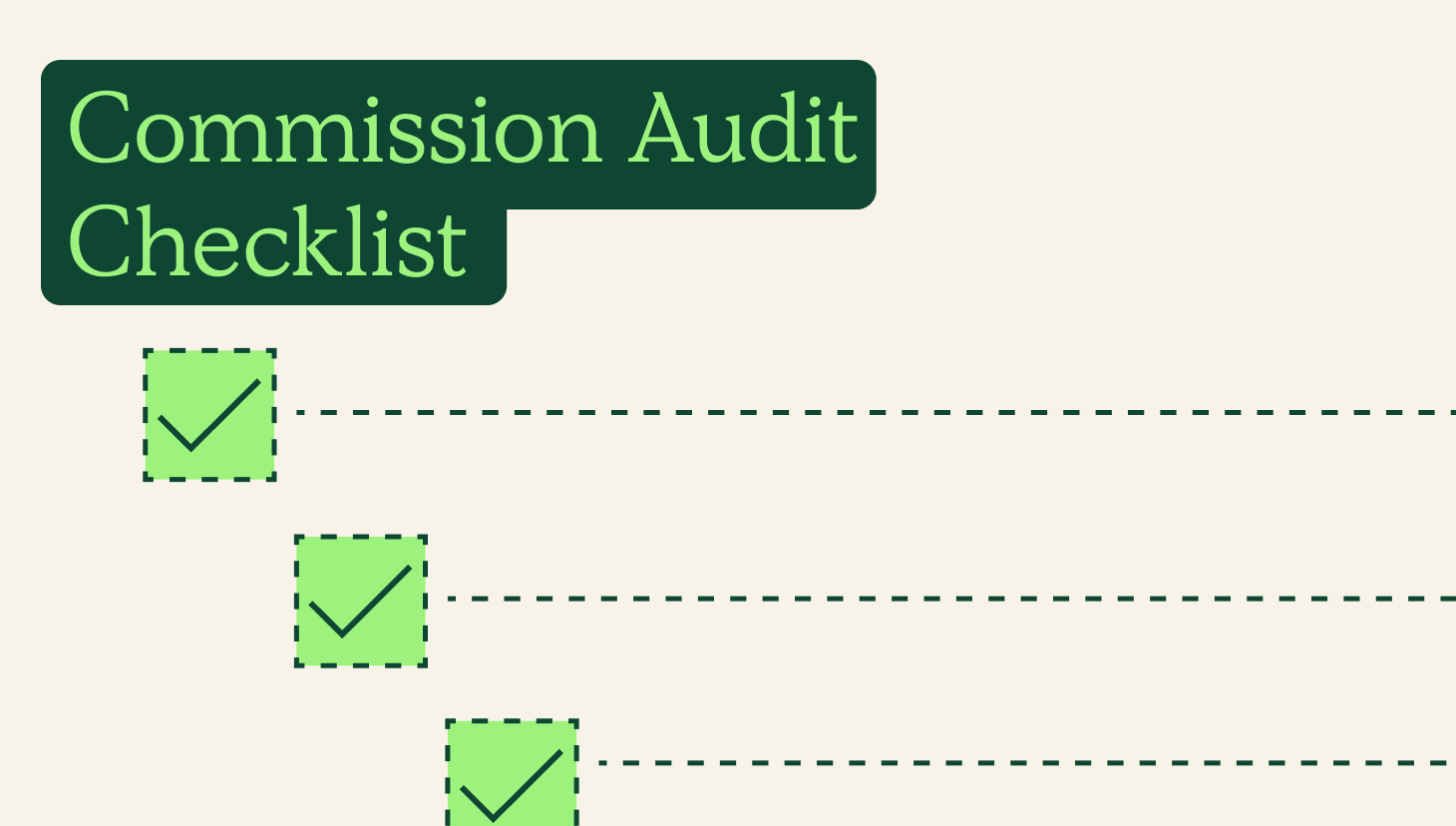
What Auditors Care About in a Commission Audit
One of the biggest sources of audit anxiety is over-preparing the wrong things.
Most auditors aren’t looking for:
- Perfect compensation plans
- The “best” incentive structure
- Complex explanations delivered verbally
However, they are looking for four things:
1. Accuracy
Can you prove the numbers are correct?
Auditors expect:
- Clear calculation logic
- Consistent application of rates and rules
- The ability to trace earnings back to source data
2. Consistency
Are commissions calculated the same way for everyone under the same plan?
Red flags include:
- Manual overrides without documentation
- Spreadsheet formulas applied differently by rep or period
3. Documentation
Can you show why something changed…not just that it did?
This includes:
- Comp plan versions
- Policy updates
- Clawbacks and adjustments
- Approval records
4. Internal Controls
Who can change commission, and who approves those changes?
Auditors want to see:
- Segregation of duties
- Locked periods after payout
- Evidence of review and sign-off
If you can answer those four areas cleanly, you’re already ahead.
Get the commission agreement template
The 5 Biggest Commission Audit Stress Triggers (and How to Defuse Them)
1. Rebuilding Comp Plans from Emails and PDFs
Nothing spikes stress faster than trying to prove which version of a comp plan applied six months ago.
How to defuse it: Maintain version-controlled comp plans with timestamps and approval history. Auditors care less about plan complexity and more about traceability.
2. Spreadsheet Logic No One Can Explain
Hidden formulas and manual adjustments are nearly impossible to audit confidently.
How to defuse it: Use transparent, rules-based calculations that show how earnings were derived, without requiring Finance to explain cell logic under pressure.
3. Retroactive Changes Without a Paper Trail
Backdated fixes may be necessary, but undocumented ones are audit red flags.
How to defuse it:
Document every adjustment with:
- A reason code
- Supporting evidence
- Approval history
4. Payroll and Commission Mismatches
Even small discrepancies between commission systems and payroll raise questions.
How to defuse it: Reconcile commissions to payroll before every payout and keep evidence that reconciliation occurred.
5. “Why Did This Rep Get Paid?” Questions Months Later
If Finance can’t answer quickly, audits slow down fast.
How to defuse it: Ensure every commission can be traced back to:
- The deal
- The plan
- The calculation logic
- The approval
How Calm Finance Teams Prepare for Commission Audits Year-Round
The Finance teams that pass commission audits smoothly don’t treat audits as a season—they treat them as a byproduct of good process.
That means:
- Monthly reconciliations instead of annual scrambles
- Locked commission periods after payouts
- Centralized documentation instead of scattered files
- Role-based access so changes are controlled
Strong audit readiness is about doing small things consistently so nothing piles up.
A Sanity-Saving Commission Audit Playbook
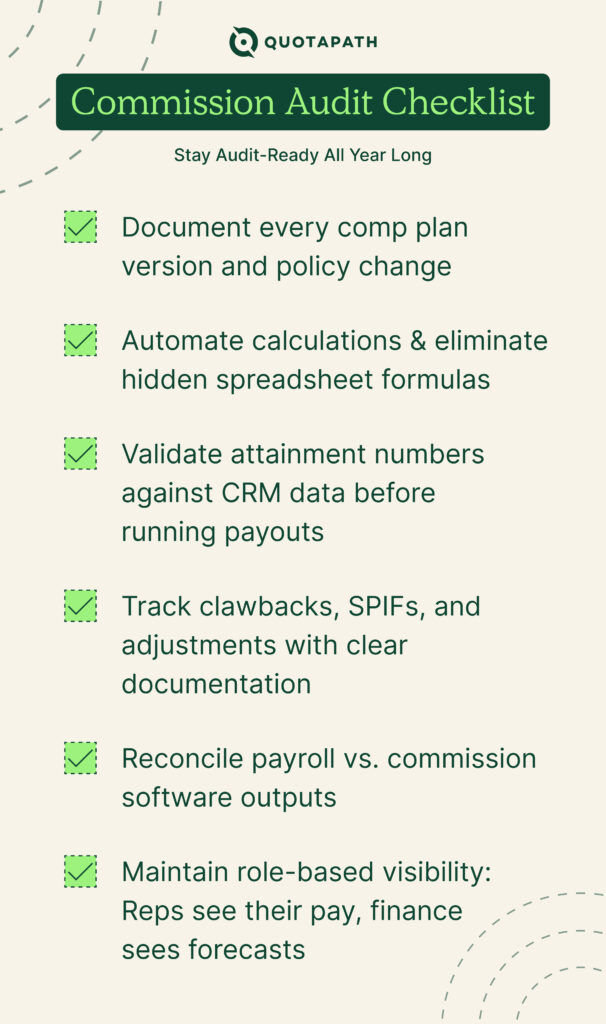
Finance teams that avoid audit chaos tend to follow the same playbook:
- Centralize commission documentation: One system of record beats ten shared folders.
- Automate calculations wherever possible: Fewer manual steps mean fewer audit questions.
- Document exceptions immediately: If something needs explanation, write it down while it’s fresh.
- Reconcile early, not at audit time: Monthly checks prevent compounding errors.
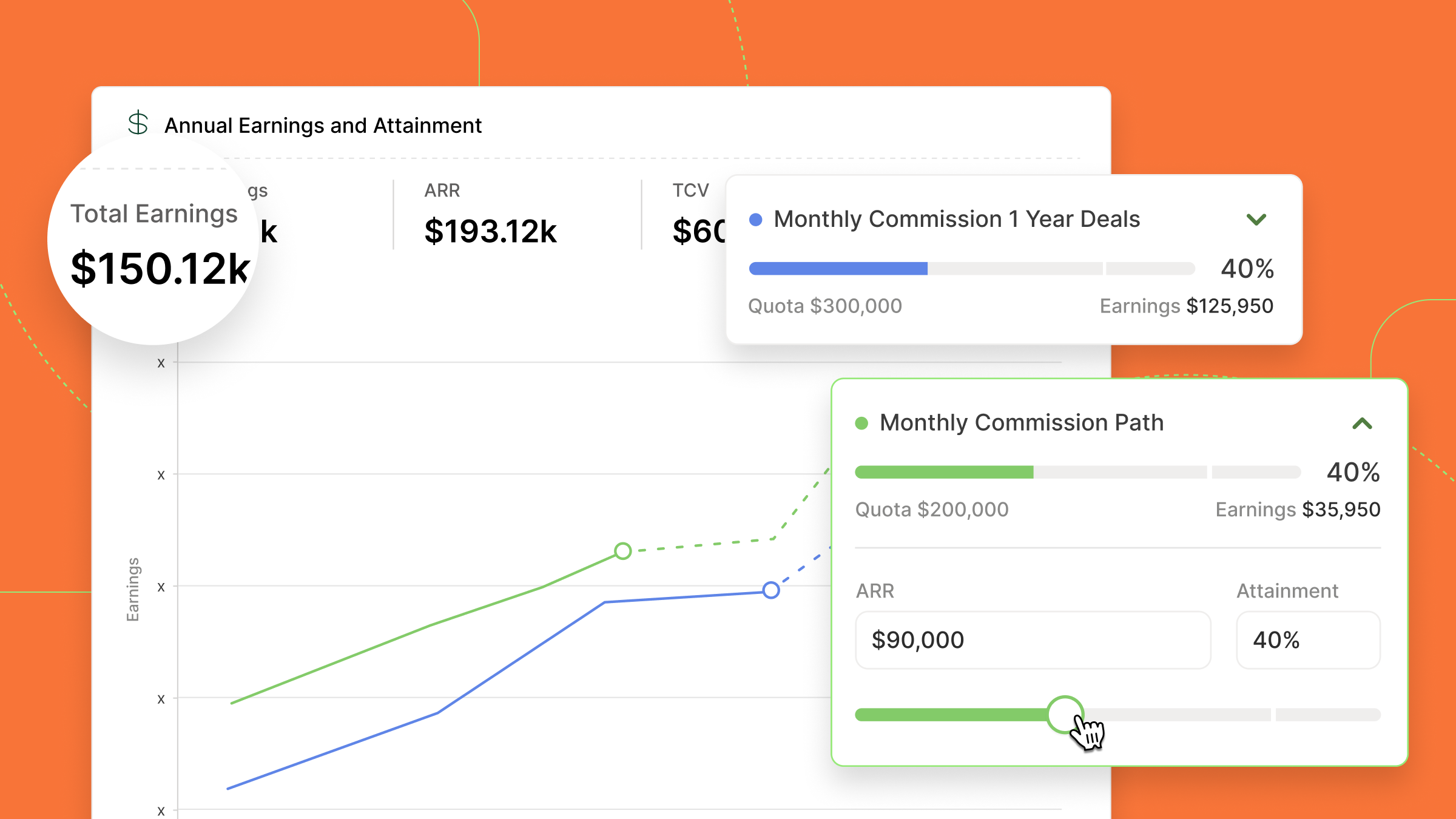
- Give reps visibility before auditors ask: Transparency reduces disputes and escalations.
This is the difference between reacting under pressure and responding with confidence.
— Kenza Sebbar, Director of Revenue Operations at Actabl
“For FP&A, it was about trusting the numbers and being audit-ready.”
How the Right Technology Makes Commission Audits Boring (in the Best Way)
The fastest way to lose your mind during a commission audit is to rely on memory and manual processes.
The fastest way to keep it?
Build audit-readiness into the system managing your commissions.
With QuotaPath, Finance teams get:
- Automatic audit trails for every calculation and change
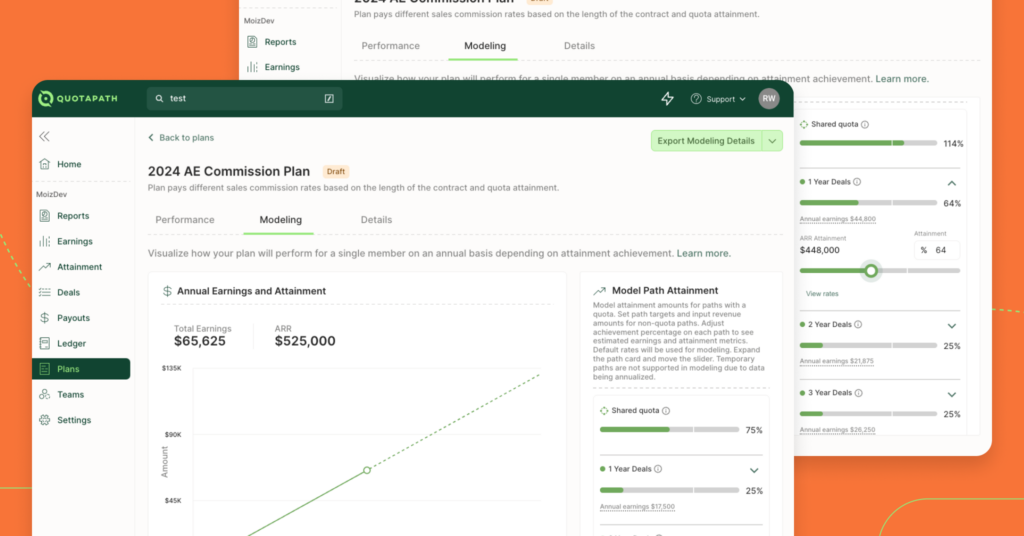
- Version-controlled comp plans with approval history
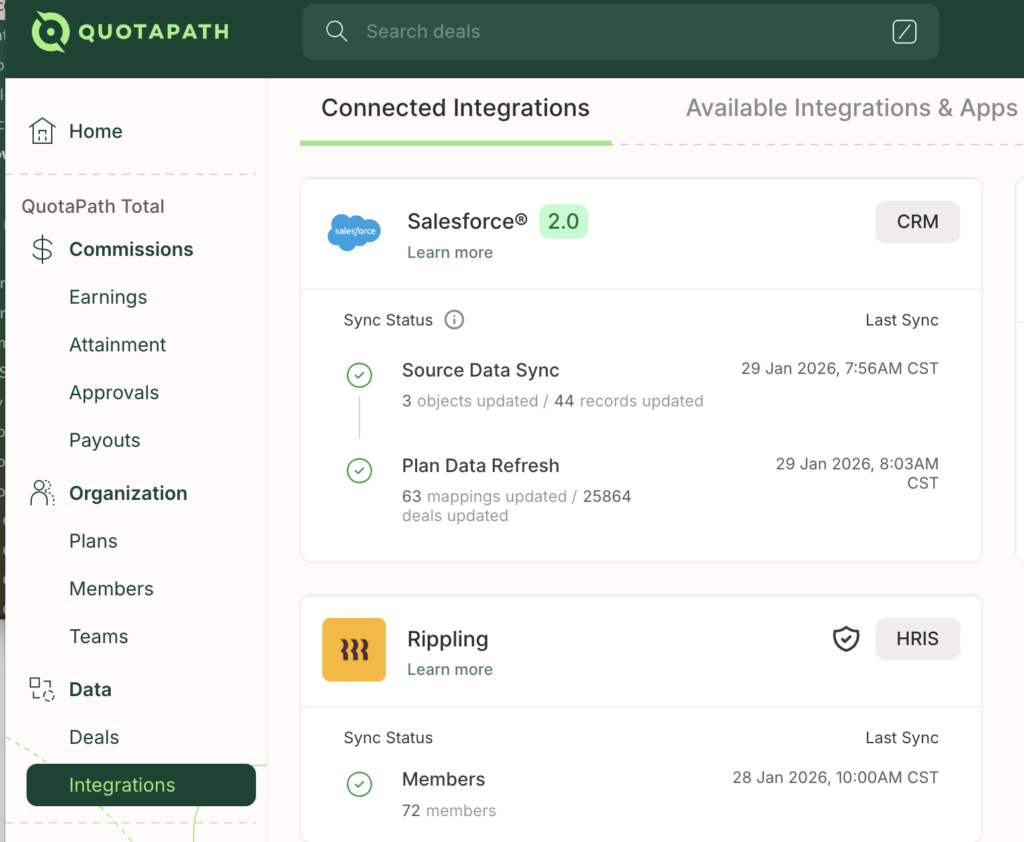
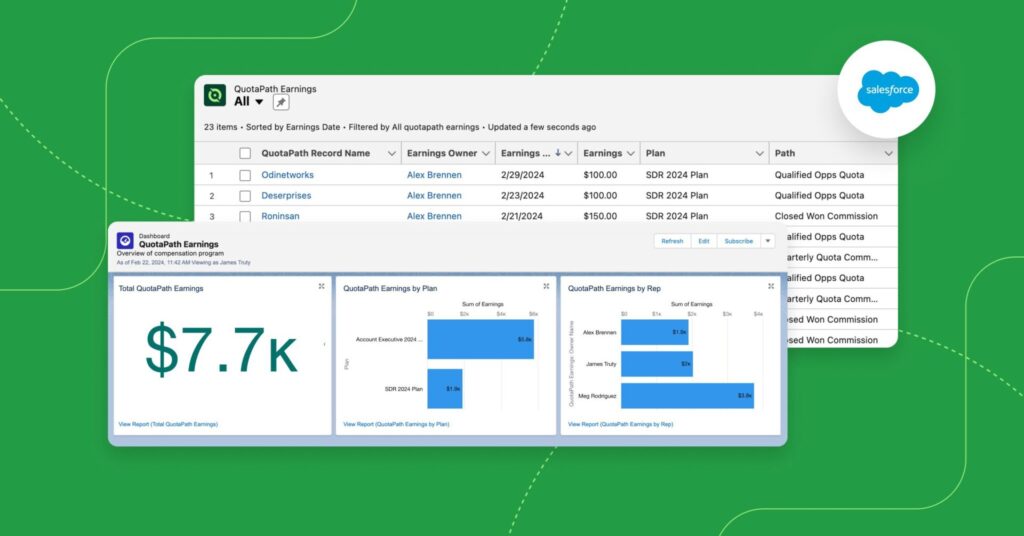
- CRM-synced data that reduces reconciliation gaps
- Payroll integrations that align payouts with earnings
- Built-in support for ASC 606 and capitalized commissions
When auditors ask how a commission was calculated, Finance doesn’t scramble…they pull the report.
Design, track, and manage variable incentives with QuotaPath. Give your RevOps, finance, and sales teams transparency into sales compensation.
Talk to SalesFinal Takeaway: You Don’t Need Perfect Commissions. Just Defensible Ones
Auditors don’t expect perfection. They expect clarity, consistency, and proof.
Passing a commission audit without losing your mind isn’t involves creating a process you can confidently stand behind, month after month.
With QuotaPath, you’re audit-ready by default.
Every change is logged, every calculation is traceable, and Finance gets the transparency needed to pass commission audits with confidence.
Book a demo to see how automated commission tracking turns audits into a non-event.











Recent Comments