
Economic volatility makes commission expenses one of the hardest cost lines for Finance to predict. Historic data becomes less reliable for forecasting, making it difficult to estimate future commission payouts based on past sales trends.
Revenue fluctuates due to rapid market shifts, changing customer behavior, and uneven sales performance. Consequently, attainment swings, shifting headcount, and mid-year plan changes can break even the most reliable financial models.
Accurate commission forecasting is critical for protecting margins, improving budget accuracy, and building board confidence. It enables informed decision-making, improves ASC 606 commission amortization, and reduces financial risk during periods of uncertainty.
This guide explains why:
- Forecasting is getting harder
- Where teams commonly go wrong
- And how Finance leaders can build resilient, data-backed sales commission forecasting models with tools like QuotaPath
Common Forecasting Pitfalls
In volatile markets, commission expense forecasts break down when the tools and processes used to model payouts can’t keep pace with changing revenue conditions. The following challenges directly limit Finance’s ability to estimate commission expense accurately and consistently.
- Spreadsheets breaking under complexity: Inherently error-prone due to manual data entry and intricate formulas, spreadsheets become increasingly inaccurate for forecasting commission expense as plans evolve.
- Finance + RevOps operating on different assumptions: When Finance and RevOps rely on different data sources during sales planning, commission expense forecasts no longer reflect the true cost of achieving sales goals, undermining forecast accuracy.
- Limited deal-level visibility into effective commission rate (ECR): Finance’s inability to see how commissions compound across multiple contributors, accelerators, and incentives on individual deals forces reliance on averages that mask high-cost transactions, resulting in an underestimate of commission expense.
- Inflexible tools that don’t support scenario planning: The inability to model potential future commission payments forces Finance to rely on single-point estimates, reducing forecast accuracy by limiting visibility into upside and downside commission expense exposure in volatile conditions.
How to Build Resilient Accurate Commission Forecasting Systems
In volatile markets, improving commission forecast accuracy requires shifting from static, backward-looking estimates to models that reflect how commissions actually accrue and scale. The following practices strengthen forecast reliability by grounding commission expense in real financial and expected performance outcomes.
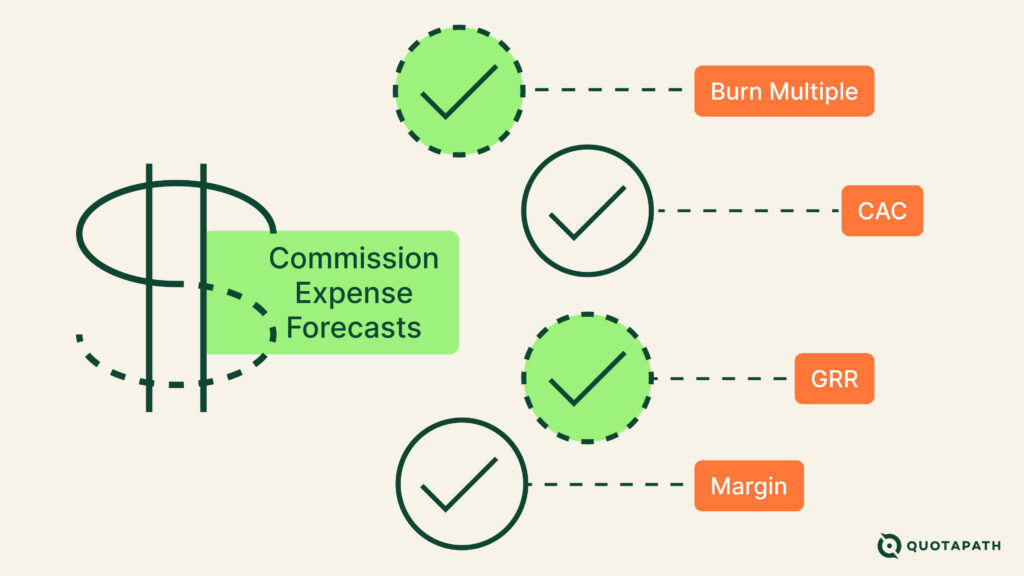
- Align forecasting to financial KPIs (burn multiple, CAC, GRR, margin): Tie commission expense forecasts to core financial KPIs to help Finance anticipate how commission payouts impact margins, unit economics, and cash flow as performance fluctuates.
- Blend historical attainment + active pipeline: Combining historical attainment trends with current pipeline data improves forecast accuracy by reflecting both past performance and near-term revenue expectations.
- Include accelerators, clawbacks, SPIFs, and multi-year structures: Using all incentive compensation elements ensures forecasts reflect how actual commission expenses behave at different performance levels, providing more accurate projections.
- Build downside/base/upside scenarios to support board planning: Scenario-based forecasting improves accuracy by quantifying commission expense exposure across various performance outcomes.

The QuotaPath Advantage
Putting these forecasting practices into action requires commission expense planning tools designed to support them. QuotaPath enables more accurate, resilient commission expense forecasting through sales commission automation capabilities such as:
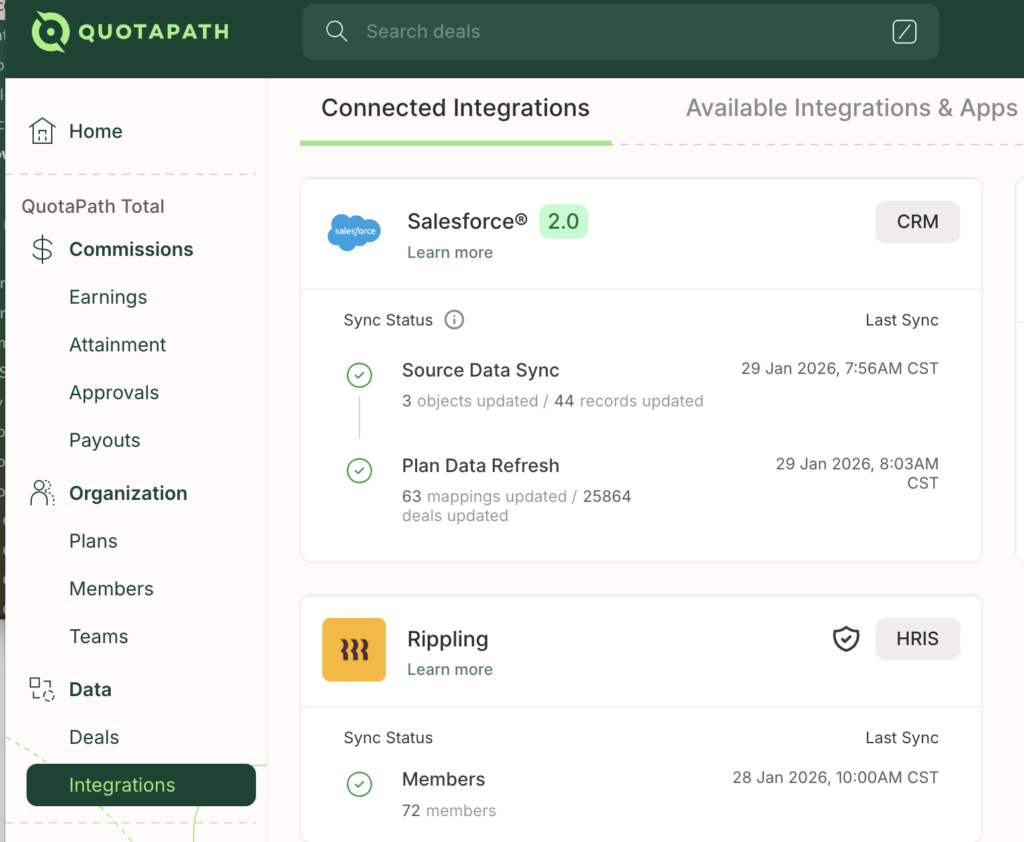
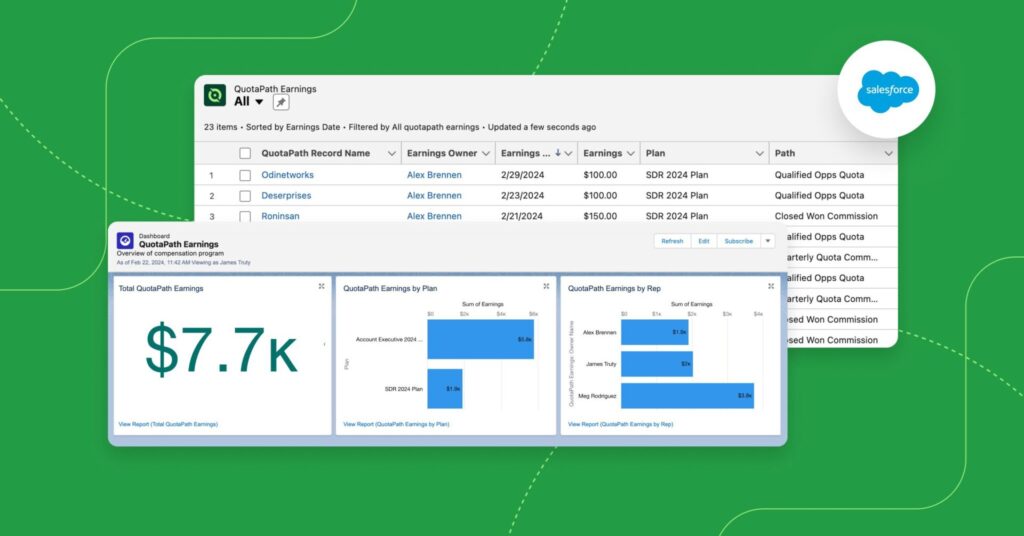
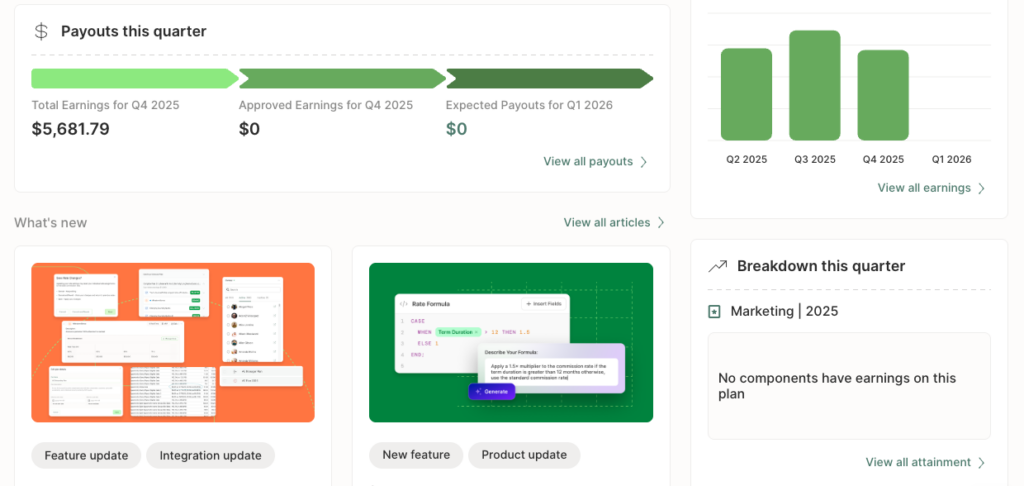
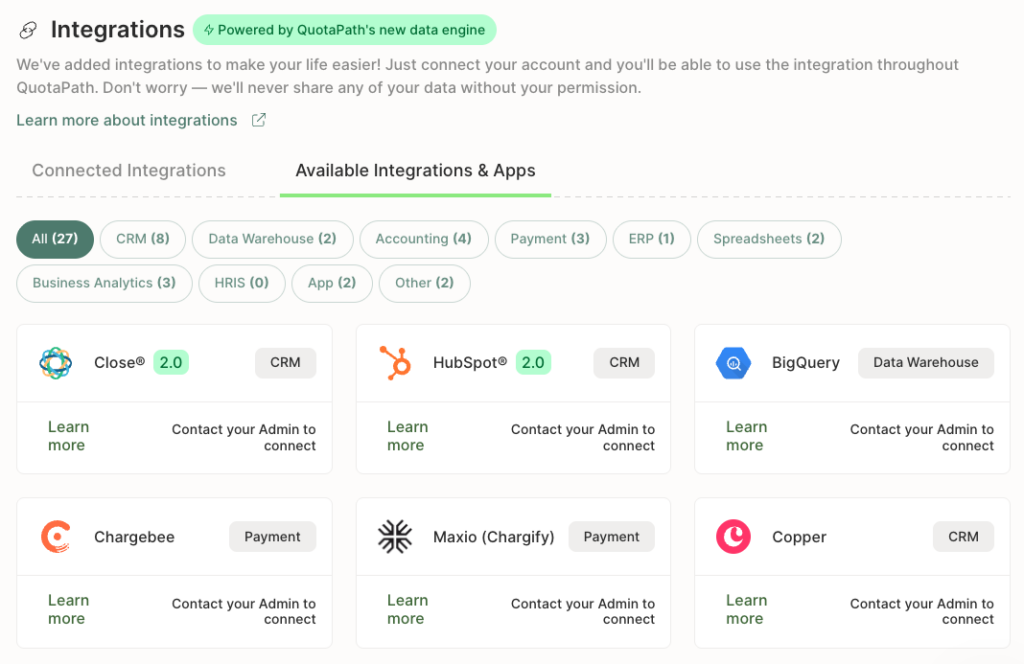
- Real-time CRM sync for updated pipeline + forecast accuracy
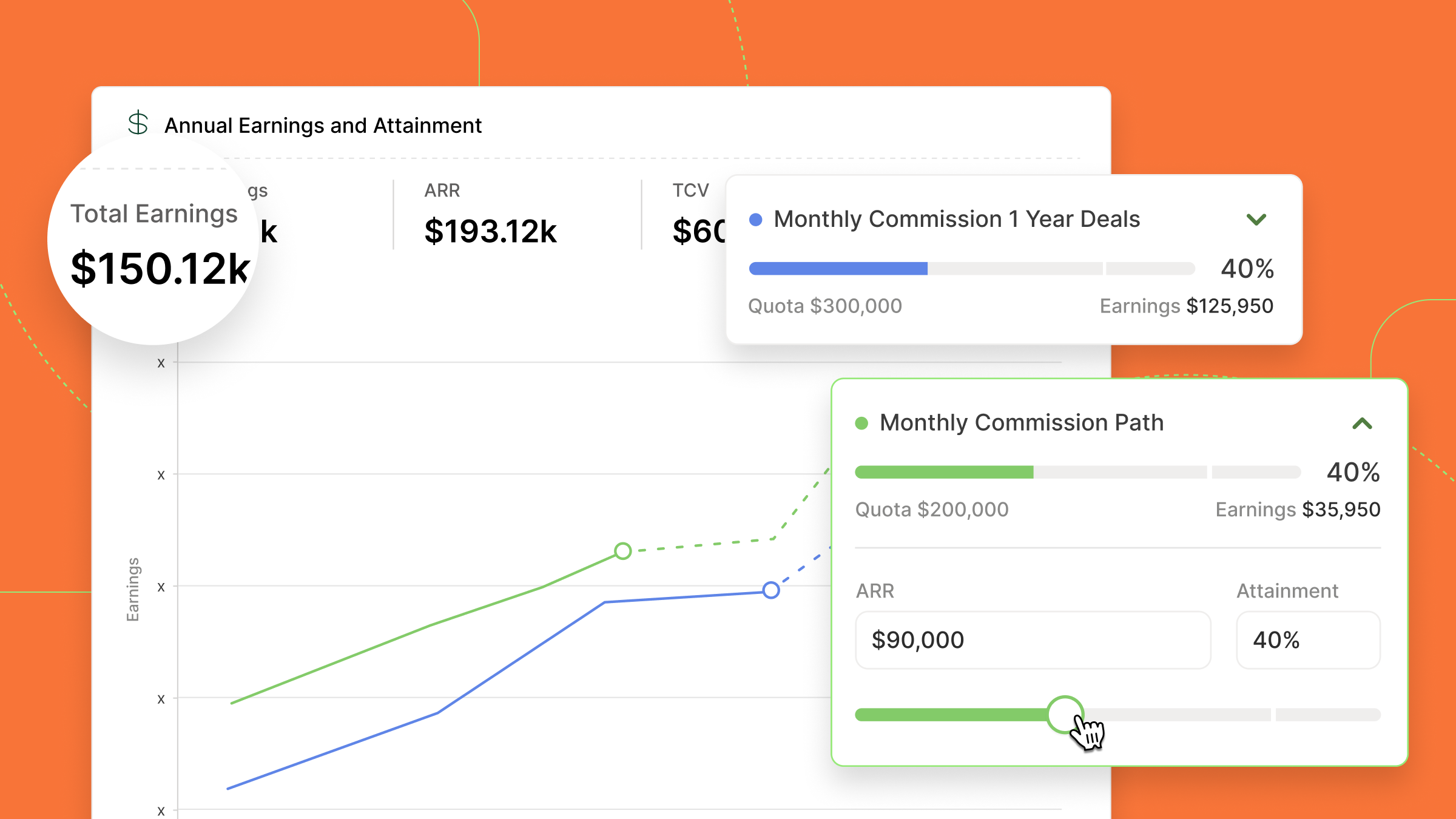
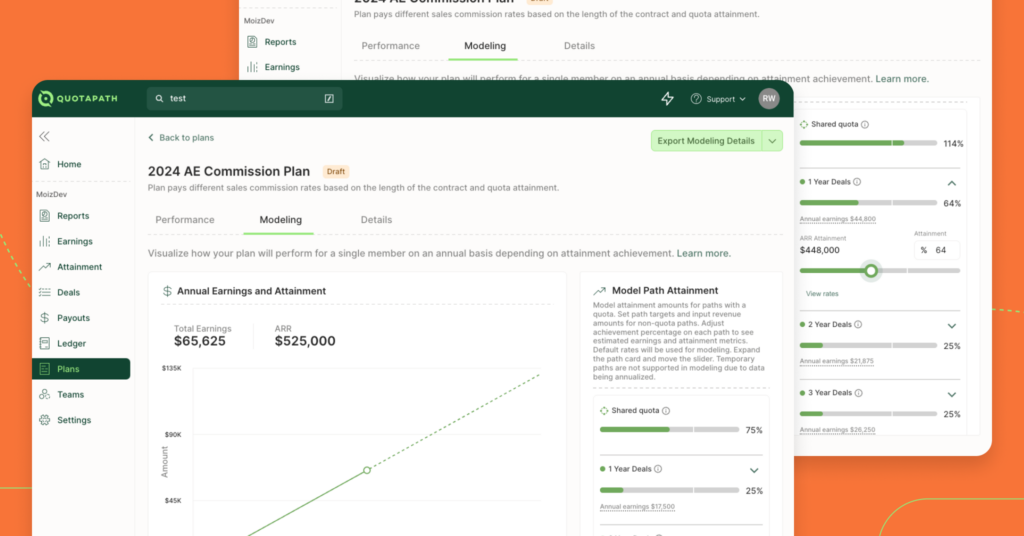
- Scenario modeling by plan, role, and performance band
- Deal-level ECR visibility to understand profitability
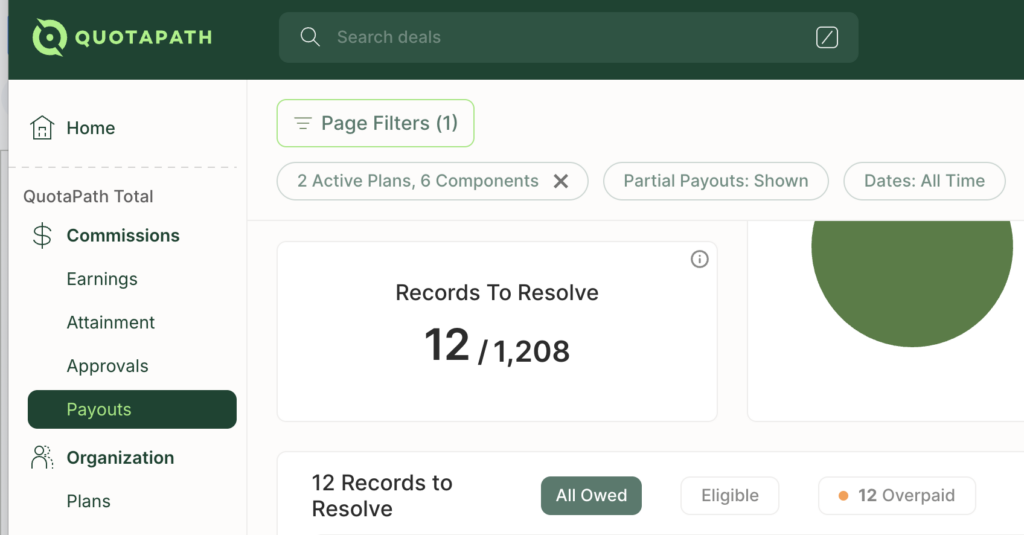
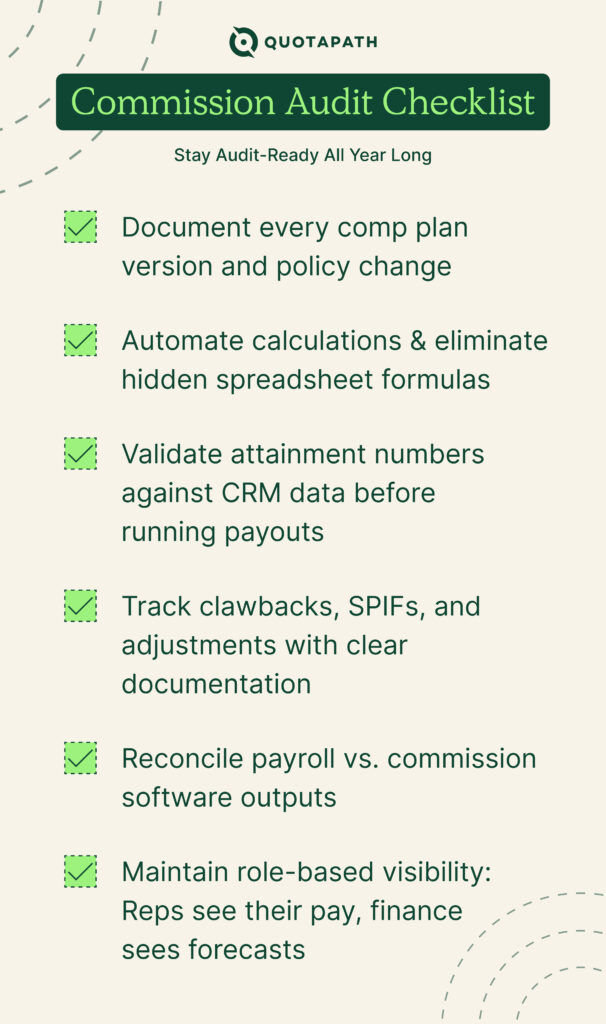
- ASC 606 + audit support with clear documentation & sign-offs
Our customers appreciate having a single, connected view of commission data that carries cleanly from deal activity through payout and revenue recognition. As Kim Stithem, Controller at CFI, shared, “The end-to-end visibility is huge. QuotaPath helps me go from deal to earnings to 606 reporting in one flow.”
They also value how easy it is to run scenario modeling commissions in QuotaPath to forecast commission expenses safely before changes go live. As Genevieve Moss-Hawkins, Systems Operations Manager at NeuroFlow, highlighted, “Really early on, we provided feedback about wanting to mock up a plan and run scenarios without using the production environment… During our time as customers, QuotaPath built and released Draft Plans.”
Design, track, and manage variable incentives with QuotaPath. Give your RevOps, finance, and sales teams transparency into sales compensation.
Talk to SalesKey Takeaways for Finance Leaders
In volatile markets, the accuracy of commission forecasts depends on how well Finance models real-world compensation dynamics and adapts to changing conditions. Reliable forecasts require moving beyond static assumptions and manual processes to systems that reflect how commissions actually accrue and scale.
- Forecasting must reflect real comp mechanics
- Manual processes aren’t built for volatility
- Automation improves accuracy, speed, and compliance
As Kenza Sebbar, Director of RevOps at Actabl, put it, “For FP&A, it was about trusting the numbers and being audit-ready… and for me, it was not spending hours each month on commissions.”Modernize the spreadsheet guesswork. Get proactive with commission forecasting. Book a demo of QuotaPath’s forecasting & modeling tools today.



Recent Comments